
Behind screens, AI and doctors work together to tailor your health plan. Sounds helpful. But some say it brings about alienation rather than motivation.
While technology has revolutionized people’s daily life experience in many sectors, it is also transforming the healthcare sector with the emergence of healthcare Apps. The fast-growing penetration of mobile phones facilitates mobile-based health technologies to become the primary battleground for investments and innovations. According to a report by Zion Market Research, the global mobile health (or ‘mHealth’) apps market was about $8 billion in 2018 and is expected to be $111.1 billion by 2025 (Zion Market Research, 2019).
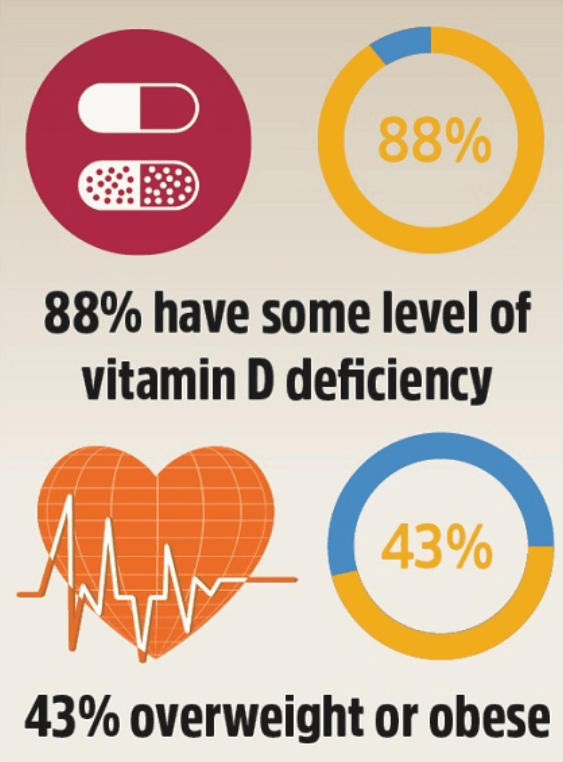
MHealth market also has a tremendous regional appeal. Nowadays, approximately 95 percent of Qatar people own a smartphone (Media Use in the Middle East, 2019), which means mobile is an ideal medium to provide health services for local people. Meanwhile, dietary problem is a severe headache to Qatar. About 43 percent of the population were found obese; 88 percent had Vitamin D deficiency, and 17 percent had diabetes (Qatar Biobank report 2018/19).
Droobi Health, a digital therapeutic start-up under Qatar Science & Technology Park (QSTP), is one of the local pioneers in this market. Available on both IOS and Android, Droobi Health combines technologies from behavioral science, gamification, data analytics, artificial intelligence, and human coaching to help people build healthier habits. The digital health coach is designed as an app, aiming to reduce behavioral risk factors for developing chronic diseases.
“All these technologies serve one purpose…that is to tell the obese and diabetes people that they are not left alone,” said Majed Lababidi, the managing director and co-founder of Droobi Health. “Many of them have poor access to the healthcare system and do not know where to seek help,” he added.
Droobi starts with capturing user behavioral data and incorporate the scientific research related to Qatar and the region. It then uses behavior science to design predictive analysis module. It also adopts AI and machine learning to analyze data and develop personalized interventions. The app also offers educational materials adapted to suit Arabic cultures and values.
Droobi Health now has seven hundred active users in Qatar. Although the company works closely with local health institutions such as Al Ahli Hospital, its revenue primarily comes from user subscriptions. Lababidi is confident that many more people will use and purchase Droobi Health subscriptions in the future.
However, a survey shows that the Droobi app has some difficult conflicts to resolve. “It is good to have technologies tracking my health, but I prefer face-to-face consultation because I feel more engaged,” said Ghanim Nasser Al-Mohannadi, 22, a university student who is overweight. Al-Mohannadi is not an active user of Droobi Health app, but the reporter has shown and explained to him how it works. “I may not buy the package because all these functions look complicated,” Al-Mohannadi added.
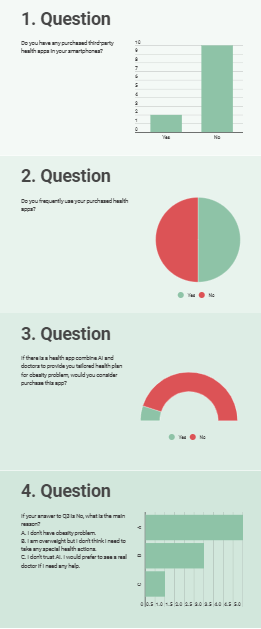
Ahmed Hussein, 54, a patient who has diabetes, expressed similar concern. “Maybe I am old-school but I feel more motivated when I am supervised by doctors. An app being my supervisor is creepy,” said Hussein.
While Droobi Health intends to remove the bridges between patients and professional consultants, its fine technologies create some alienations to some patients. The technical gap is one of the challenges it needs to overcome.
Sources:
mHealth Apps Market by Type: Global Industry Perspective, Comprehensive Analysis, and Forecast, 2018—2025, Zion Market Research, 2019
Qatar Biobank report 2018/19, Qatar Biobank, 2019
Media Use in the Middle East, Northwestern University in Qatar, 2019
 talkk.tech.blog