

- Research finds that overeating is caused by brain connection, a hormone called MCH.
- An increase in the MCH is responsible for impulsive behaviors such as gambling, addiction and overeating.
- This new discovery hopes to contribute to therapy, as an alternative method to lose weight.
New Research
Fitbit? MyFitnessPal? These apps may no longer be necessary to fight obesity. New research finds an alternative method, therapy.
The research from the University of Georgia links overeating, formally known as binge eating disorder, to an increase in Melanin Concentrated Hormone (MCH) production in the brain. This hormone is responsible for impulsive behaviors, causing a lack of self-control when it comes to eating, leading to obesity.
Meaning that, if you find yourself finishing the popcorn before the movie starts do not blame hunger.
So, overeating is not a cheat meal that you decided that you can have once a week. Impulsivity is a decision that does not take into consideration the consequences of the action.
Even with the technology available at our fingertips, almost half of the Qatari population suffers from obesity, according to the latest Qatar Biobank annual report, a medical research facility based in Qatar Foundation that focuses on studying obesity, diabetes, and cancer. These obesity rates are not slowing down in Qatar or anywhere in the world, says Tamara Al-Abdi, an adjunct Psychology professor at Virginia Common Wealth University in Qatar, who also teaches Nutritional Science at Qatar University.
If left untreated, obesity can have long-term effects on people’s health putting people at a greater risk of developing heart diseases, type 2 diabetes and high blood pressure, according to Stanford Health care.
As none of these methods prove to be effective enough to solve the obesity epidemic, researchers turn to new approaches to tackle obesity, Al-Abdi adds.
That’s why, in the last two years, researchers focused on a psychological approach to treat obesity as a mental health issue, says Al-Abdi. The research published in the journal Nature Communications tested on lab rats that were trained to push the lever every 20 seconds to get food at the beginning. However, after increasing their MCH levels through injection, researchers found that rats grew impatient and started to push the lever several times, demanding food. Researchers hypothesize similar effects of impulsiveness in humans, which can explain overeating.
Though at its early stages, this knowledge in this research might contribute in the future to an alternative approach which is developing treatments such as therapy to control the hormone responsible for impulsivity, according to the study.
Using this would help therapists is to understand the emotions that trigger a person’s response to overeat and try to eliminate them and controlling their bad habits, says Al-Abdi.
Societal and Social Media Pressure on Body Image
Emotional eating also plays a big role in Omar Fakharany’s struggle to lose weight.

“When I am bored or feeling depressed, sometimes you just want something to make happy, by eating,” says the 21-year-old university student.
From the age of seven, Fakharany recalls always having an unhealthy relationship with his body image. In hopes of mending that relationship, he tried several methods of weight loss such as going on the keto diet, speaking to a nutritionist and exercising throughout his teen years but ultimately failed.
“Every time I felt like a method didn’t work, I changed. So, it was very inconsistent. When I felt demotivated I go back to my old habits”, says Fakharany.
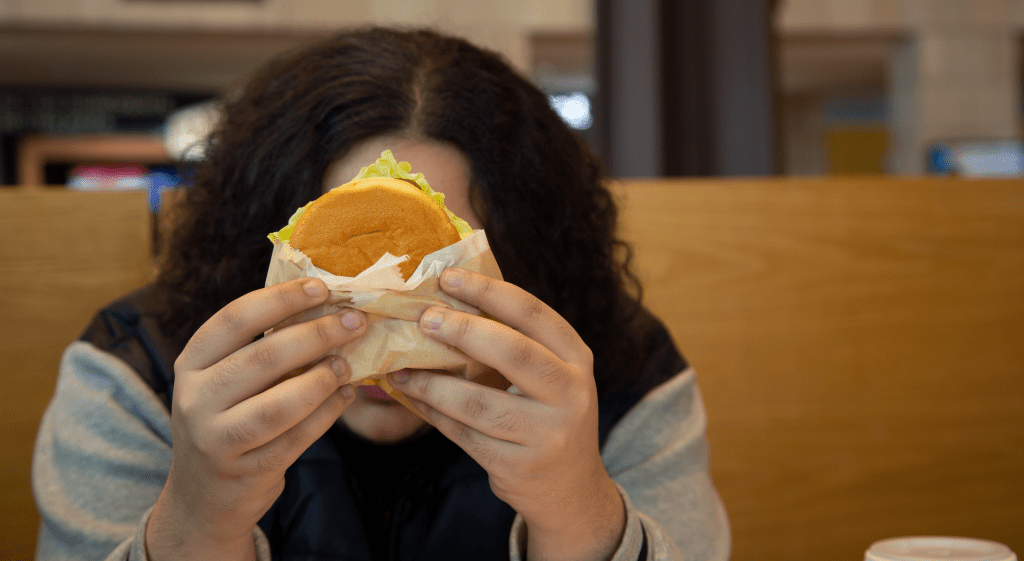
It is a monthly task for Fakharany to search for new ways to lose weight because of the pressure from society. “When you are obese, it affects your interactions with other people because they assume you are lazy,” he adds.
But, the pressure from society does not stop there, it extends onto social media. As Fakharany, scrolls through his Instagram feed, he finds himself surrounded by people taking pictures of their toned bodies.
One must remind themselves that social media does not reflect reality. “Social media is a world of perfection where people can edit their bodies and faces to look a certain way,” says Meerna Muhanna, a clinical dietitian.
Marta, a personal coach, explains that social pressure encourages people to try unsustainable methods of losing weight. In other words, diets that work in the short term, but in the long term will make the body lose out on important nutrition.
Health Fad or Diet?
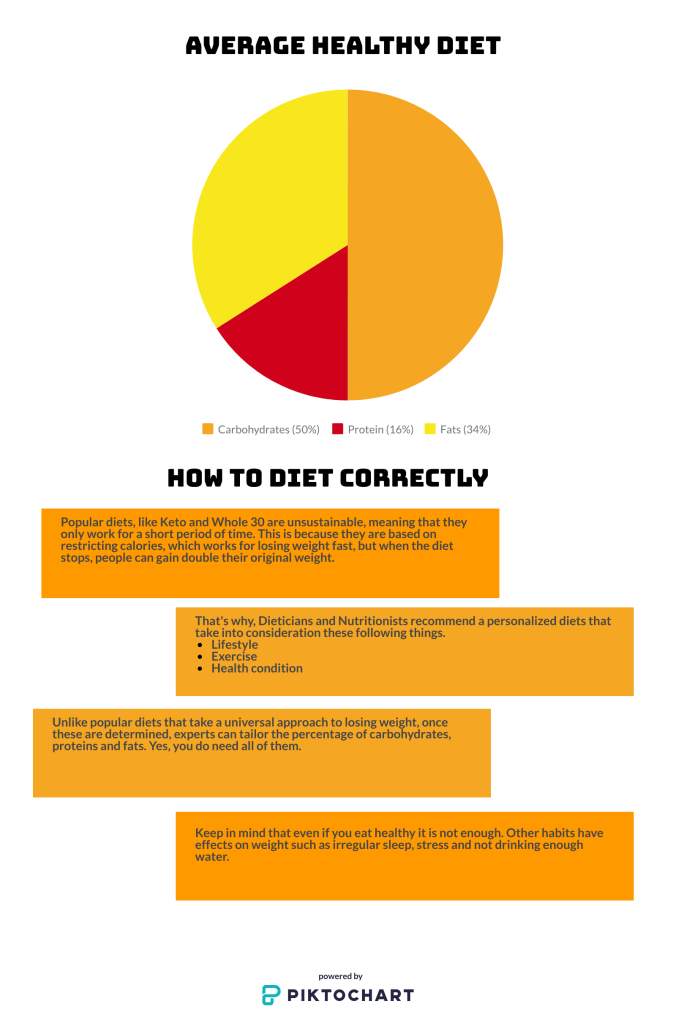
The methods that Fakharany tried such as the Keto Diet are called health fads. Their only purpose is to give you immediate results because they are based on restricting calories. The initial weight loss from these diets come from water weight instead of fats, says AlAbdi.
So, it is important to keep in mind that no healthy diet will let you lose one kilogram per week. Instead, a healthy diet should include the correct balance of carbohydrates, proteins, and fats. Although it will be a slower process, it will ensure that the body has the right nutrients for long-term effects, says Muhanna.
 talkk.tech.blog