
As a vegan influencer based in Qatar, Ghanim Al-Sulaiti does not see the word #halal popup or used in his social media feed and he does not use it on his posts on a daily basis. To him, it is the religious notion relating to the slaughtering of animals, which he does not support and does not engage in. In fact, he opposes the notion entirely, as he believes that no animal can actually be slaughtered with no pain as the technique is believed to do.
However, the use of #halal is drastically changing online based on a data study done by the Qatar Computing Research Institute. It is no longer just a religious notion. Based on the results, #halal can be assumed to be evolving into a lifestyle and is becoming highly commercialized and secularized, which could be used to target a growing millennial Muslim population.
“We can see it already in the data…there are all these social media websites that are making money on promoted content, which is explicitly labeled. But there are also all these influencers who are paid to promote content while not looking like an ad,” said Yelena Mejova, lead author of the study.
The study analyzed two Instagram datasets, using Halal in Arabic (325,665 posts) and in English (1,004,445 posts), which provide a global view of major Muslim populations around the world. A great variety is found in the use of halal within Arabic, English, and Indonesian-speaking populations. Animal trade makes up 61 percent of the language stream, food is second with 80 percent, and cosmetics and supplements are third with 70 percent.
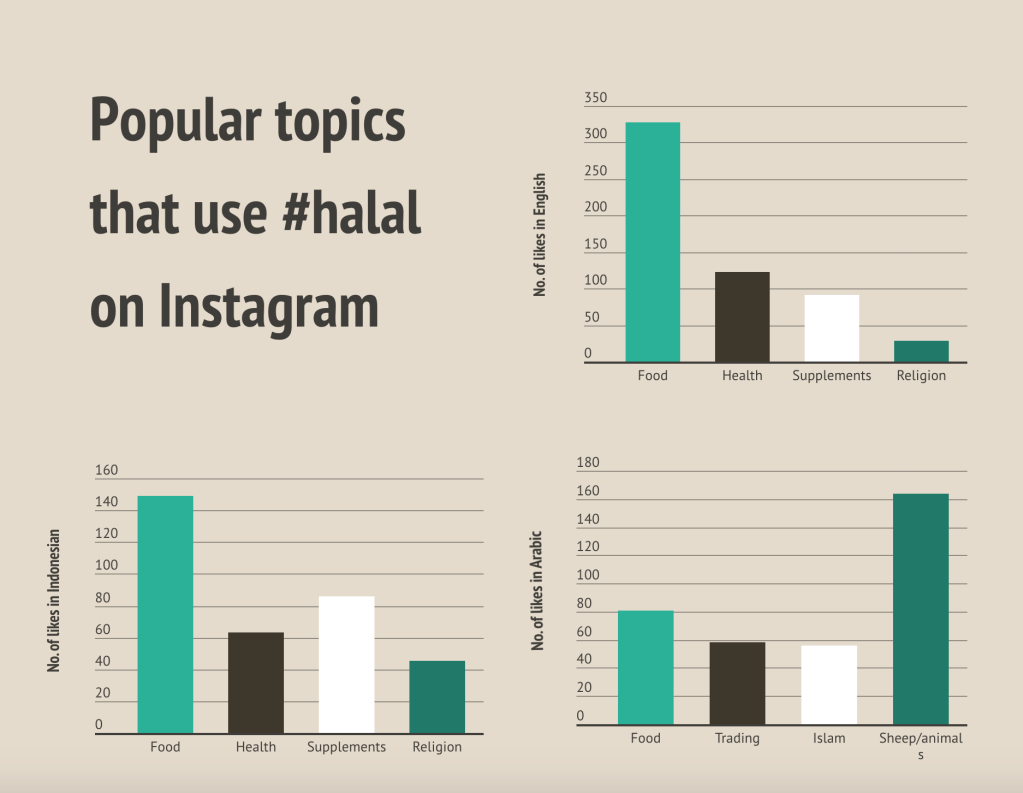
The commercialization of the term halal is a powerful signal of its shift from its traditional roots. Posts mentioning religious terms, such that when a food-related post is accompanied by a religious term, it on average gets more likes in English and Indonesian, but not in Arabic, indicating a potential shift out of its traditional moral framing, according to the study.
Currently, Muslims have the youngest median age (23 in 2010) of all major religious groups, 7 years younger than the median age of non-Muslims. The Pew Research Center projects the Muslim population will grow more than twice as fast as the overall world population between 2010 and 2050, likely surpassing Christians as the world’s largest religious group. As the generation of Muslim millennials asserts itself in the webspace, it brings its culture to the world’s social media stage, potentially redefining its traditions.
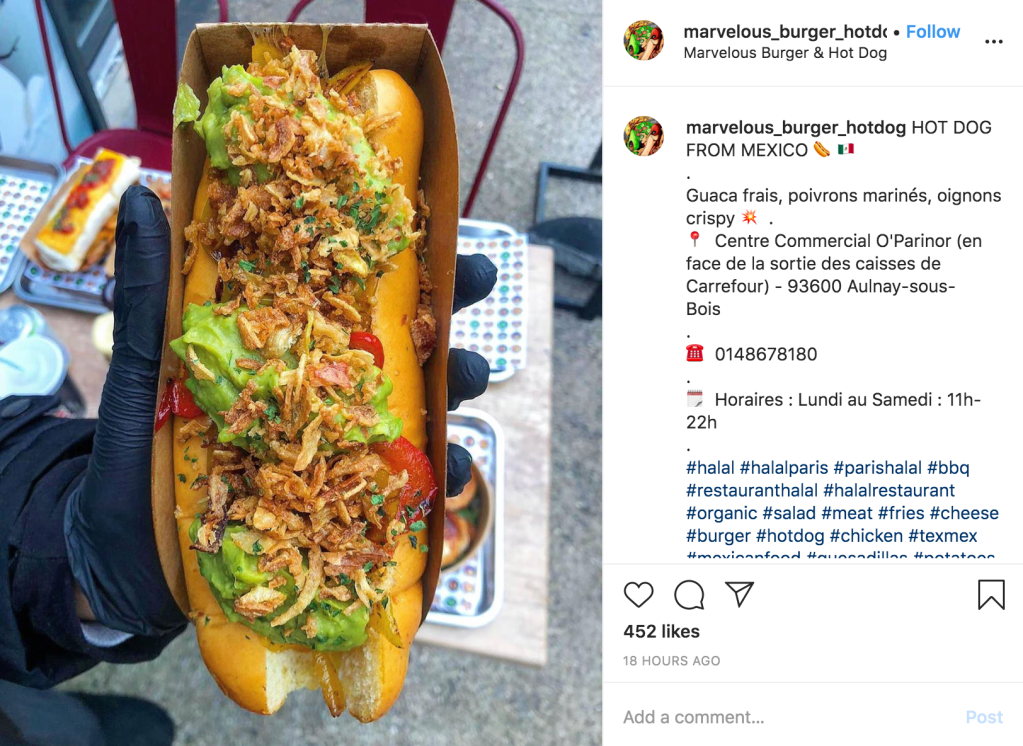
Comprising more than a billion of the world’s population, Muslims represent an important market segment—one which unites under the practice of halal—yet, it is largely considered marginalized in Western mainstream marketing.
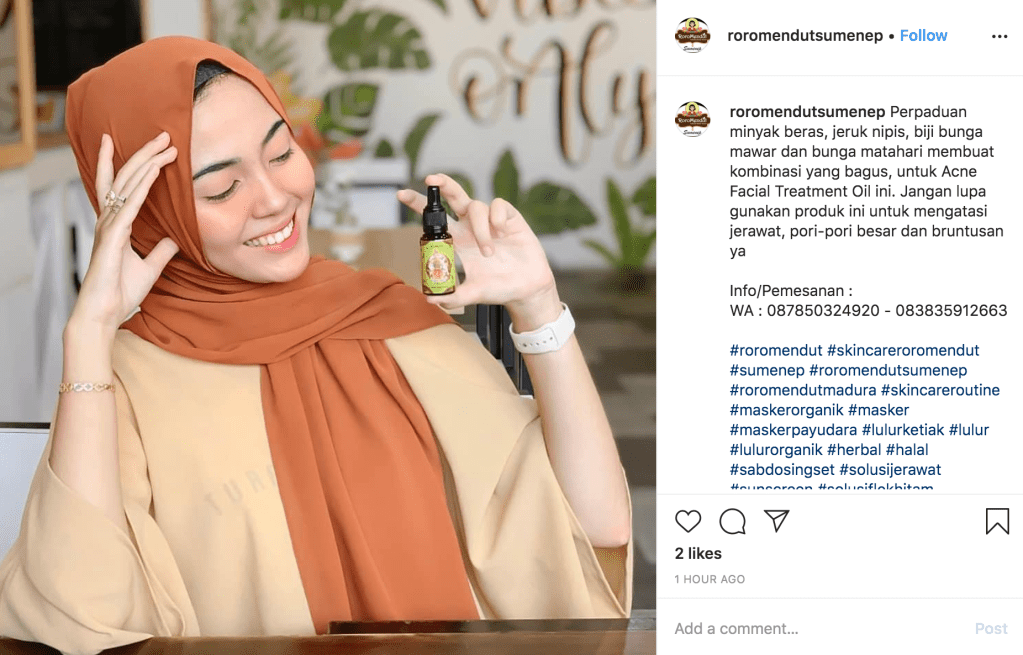
However, new marketing approaches to this new generation of Muslims extend its application beyond diet, emphasizing a whole halal lifestyle, which is maintained not only in practice but also in philosophy. As corporations aggressively label their products as halal, it becomes increasingly important to understand the definition of halal by the new generation of consumers and their relationship to old and new authorities on the matter.
“Halal refers to actions and deeds that are permissible [in Islam],” said Ibrahim Abusharif, a scholar of media and religion, and journalism professor at Northwestern University in Qatar. “And I think people today tend to be lazier. They’re just looking for labels… digital media is deluding religious authority. And so what people say means following them no matter what.”
In Arabic, religious keywords decrease the average likes from 168 to 144, showing the shifting social engagement with religious authority. The most prolific users, in all three languages, are the commercial entities selling sheep and animals in the case of Arabic, food, and supplements in English and Indonesian. However, the likes bring out different users, with the most liked posts generated by celebrities. The top 10 Arabic accounts include humorous accounts and those of actors and political commentators.
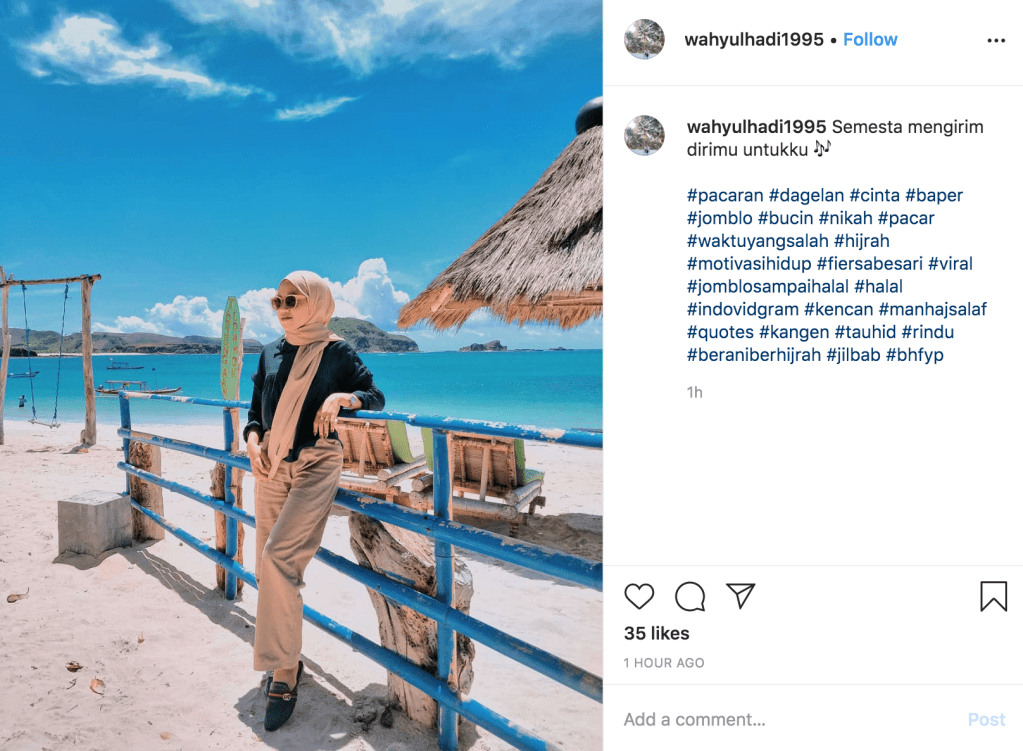
The study further found the definition of halal extended beyond food, as a part of an identity. Throughout the data, they found examples of posts that received thousands of likes, for instance, promoting a “halal” fashion show, “halal” fitness culture, a “halal” movie, and other lifestyle posts emphasizing clothes and stylish surroundings. The visual appeal of the content was also paramount.
“[However], if your post is liked a few billion times, it doesn’t make it right,” added Abusharif. Marketing is about profit, it is not about ethics and truth, according to Abusharif. If it’s something sells, you’re going to go for it, whether it’s right or wrong, whether it’s fully truthful or not.
In the marketplace of ideas, what sells is paramount. “[Marketers] would kind of zoom in to the wording that is more likely to keep the customers right. That is more likely to, you know, for people to like. The market will encourage people to use words or concepts that are more likely to result in profits,” added Mejova
However, for Al-Sulaiti, this trend is due to a lack of education. “We can’t say, look, it’s a trend if the trend is working, but the trend is working because these people who they are targeting are not educated,” he said.
 talkk.tech.blog