
Categories
-

To Social Media Or Not To Social Media? Which Side Are You On?

So far people have done well hyping up the issues of social media without mentioning the benefits. Nowadays, people are digitally entangled in one way or another. Social media sites are now a gateway to the lives of those who choose to use it. For this article, we gathered some answers from a study that looked into the top ten reasons why we use social networks and compared it to some of our own. Therefore, let us look at people’s social media habits and experiences and see what they have to say on the matter.

Habits and Experiences

Amna Al Hammadi enjoys surfing Instagram and Snapchat. “I like to post about my daily life and enjoy seeing what others are up to as well,” she said. Amna’s favorite social media habits are viewing, liking, and commenting on other people’s posts. 

Hessa Al-Attiya, on the other hand, likes to be more specific when sharing about her day. “I like to let people in on what I’m doing at times. Like if I’m drinking tea or at the mall hanging out,” she said. However, when Hessa is not enlightening her followers on the benefits of tea, she is bouncing from one social media platform to the next to pass the time. “It allows me to escape boredom,” she said. Similarly, 39 percent said they use social media to fill up spare time, which is the third reason on the list, according to the study. Out of all the popular social sites, Twitter is the one Hessa is drawn to the most. “I have a “secret” account where I can speak freely and complain about stuff without family members knowing,” she revealed. 30 percent said they use social media to share their opinion, which ranks at number eight on the list, as stated by the study.

Advantages

Amna mainly uses social media to stay connected with friends and family. “It keeps me updated with what is going on in the world and in people’s lives,” she said. Like Amna, Hessa is also hoping it will bring her closer to those who are not around her. “It helps me connect with my friends and family, not to mention celebrities, to see what they are up to,” she remarked. According to the study, it is the number one reason on the list with 42 percent saying they use it to stay in touch with what friends are doing.

Amna finds less visual media-oriented apps like WhatsApp advantageous as it speeds up communication, which is why she added the app to her social media repertoire. “Not that you can’t do that on Instagram and snapchat,” she said. “I just appreciate the convenience of not having to get distracted by content people post.”

Sharing something about yourself and your journey on social media can be a fulfilling experience, Amna said, which corresponds with reason number seven, with 32 percent respondents saying they use it to share photos or videos with others. According to Amna, “giving out nice comments to people encourages them be confident about themselves, especially if they decide to post selfies.”

Disadvantages

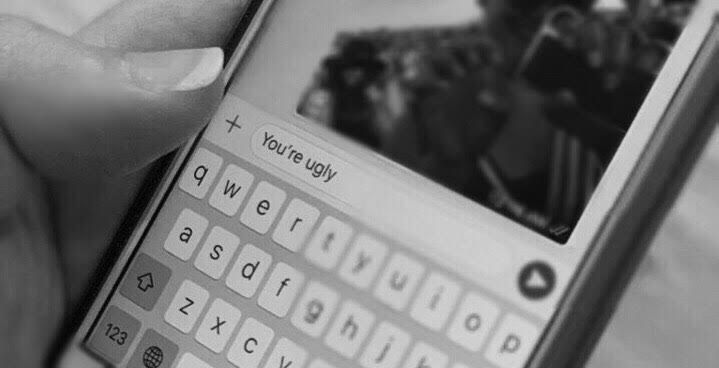
Of course, we cannot conclude without touching upon the negative aspect of social media. Although for many people online, staying in cyberspace makes for a better reality, Amna admits social media can have its drawbacks. “It is addictive and there are a lot of people out there who can be rude,” she said. Like with all good things, social media can be misused. For example, Amna believes that cyberbullying is an issue on social networks that might seriously affect someone’s life. “Posting negative comments about a person’s appearance could lower their self-schema, self-love, and self-confidence,” she said. “Which ultimately could lead to depression or even suicide.”

A person could connect with others on social media platforms with just a click of a button, but they would end up disconnecting with the ones who are right beside them. Hessa dislikes the fact that social media is pulling her away from her family. “The worst part about it would have to be getting distracted when I’m sitting with family or even “trying” to do homework,” she admitted. “I feel the need to check my social media.”

Categories
-

Think you’re old enough to handle bullies? Think again.

Cyberbullying

Fear of missing out is one main reason why young technology users stay online longer than they need to, which puts them at risk of getting cyberbullied. Students in Education City are not an exception.

When naming the dangers of technology for kids and teenagers, cyberbullying is high on the list. However, young adults are just at risk of encountering cyber bullies and may even struggle to deal with it appropriately. 

Students’ experiences

One such person is Hadeel Al-Kohaji. A 20-year-old student at Virginia Commonwealth University. Cyberbullying is something that Al-Kohaji encounters quite frequently on social media. 

According to Al-Kohaji, it tends to be anonymous and mostly via comments from complete strangers on social media. She would comment on posts “like any person would” and sometimes someone would not approve of her opinion and therefore would attack her with hurtful comments rather than offer constructive criticism or just let her express her own opinion.

“There was actually a time where I ended up arguing with an atheist who’s advocating for the abolition of all religions and refused to listen to perspectives of practicing people,” she said. “That person has since ended up blocking me and several others but that’s mainly out of her own ignorance and refusal to understand different perspectives.”

On some days it is pretty draining for Al-Kohaji. “More than anyone would think,” she said. Especially since it is the only impression of her that they got. “I end up overthinking about it for ages until I faze it out with coping mechanisms.”

While she does do her best to ignore cyber bullies, she lets it slip on certain days, well aware that she would be taking the bully’s bait. “On those days I tend to feel more drained than I usually do so I end up withdrawing and taking a day to myself,” she admitted.

A few years ago, a female student* from Education City learned a valuable lesson from a painful cyberbullying experience. This student walked in on her friend when she was video messaging a strange girl from the U.K. and decided to join her. “You can tell that this girl is the type of person who stays on the computer all day,” she said.

According to the student, her friend casually chatted to the stranger, but what came next shocked her. 

“She is ugly with a capital U,” the stranger said, referring to the student. 

 “It was the first time anyone had ever called me that. I was so shocked and it genuinely hurt me,” she said. This made the student question whether it was actually true.

How they deal with it

Al-Kohaji typically tries not to engage and directly blocks any cyber bullies, especially when the response aggravates her. Still, there are times when Al-Kohaji would cave and try to defend herself from them. “It happens in spurs though so it can go from zero to 100 real quick,” she remarked.

Al-Kohaji mostly deals with her cyberbullying experiences alone. However, there have been times where she sought help from friends when it felt too much to bear alone. “I think it’s vital to reach out to friends about something like this, especially if it happens to someone on a daily basis,” she said.

The female student has since then realized that bullies exist everywhere. “Bullying comes in many forms,” she said.  “It doesn’t just come on the internet. It doesn’t just come on the playground. It can come from your friends. It can come from your family. It can come from anywhere and you don’t even realize it.”    

Advice from a life coach

Being a constant technology user distracts students from the real world says life coach Shaikha Fahad Mohammed. It may potentially cause psychological trauma, she said. However, there are ways to reduce such risks. According to Shaikha, a student must be willing to limit their screen time and use only one way to communicate online. “Most of the time, people online interact without a purpose and that is a problem,” she remarked. 

Cyberbullying is ultimately the result of too much screen time, which has become the primary reason why students procrastinate important tasks, Shaikha said.

*This source requested to remain anonymous. 

Design a site like this with WordPress.com
Get started