
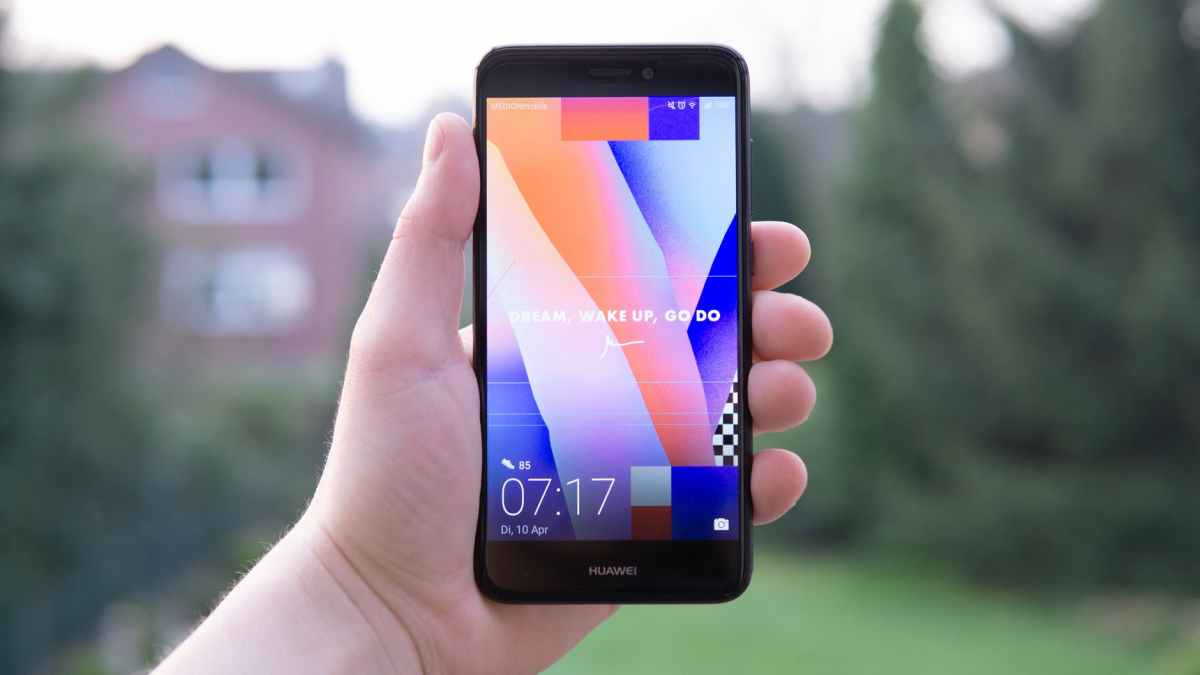
Once the Huawei Mate 30 was released in Qatar, Sara Nasser rushed to reserve and get her own. Upon its arrival, she realized there was no Google Play, and she could not download the apps she wanted. What she found instead, was the AppGallery, a Huawei replacement that downloads all the apps, except for the newest update of Snapchat and the Commercial Bank.
“I was not aware that Google Play is not available, and when I contacted the store they told me it was because of some ban that the United States imposed on China,” Nasser said.
What is the US-China Trade War?
In 2018, US President Donald Trump began imposing tarrifs and trade barriers on China. The US accused China of “unfair trading practices,” and “stealing intellectual property, but it wants Beijing to make changes to its economic policies, which it says unfairly favour domestic companies through subsidies,” according to BBC. US imports from China saw an increase of tarrifs, and Huawei was banned from the US.
Huawei being banned was partially caused by the trade war, and partially due to it being considered a “national threat” to the United States. Allegations made by the US government involved “bank and wire fraud, conspiracy to defraud the US, and stealing tade secrets,” according to Vox. Although the ban is relatively new, US suspicion of Huawei dated back to 2011, as investigations were made to see the connection between the company and the Chinese government.
The ban had a major effect on the tech company as it was not expected. Al Jazeera reported that Huawei CEO Ren Zhengfei said “We cannot get components supply, cannot participate in many international organisations, cannot work closely with many universities, cannot use anything with US components…”
Although the ban affected Huawei in many countries, Huawei in Qatar was not affected.
How is the US-China Trade War affecting Huawei in Qatar?
Many people in Qatar are still buying Huawei phones, regardless of the ban, and have not lost trust in the company. Sara Hamdi, sales person at Huawei Qatar, says the ban did not negatively affect sales. Instead, people were determined to get their hands on the new Mate 30 and started reserving it online.
“The company was concerned about the phone being released without Google, and if people would be accepting of it. Turns out, people were accepting it because they released a new app store called AppGallery,” Hamdi said.
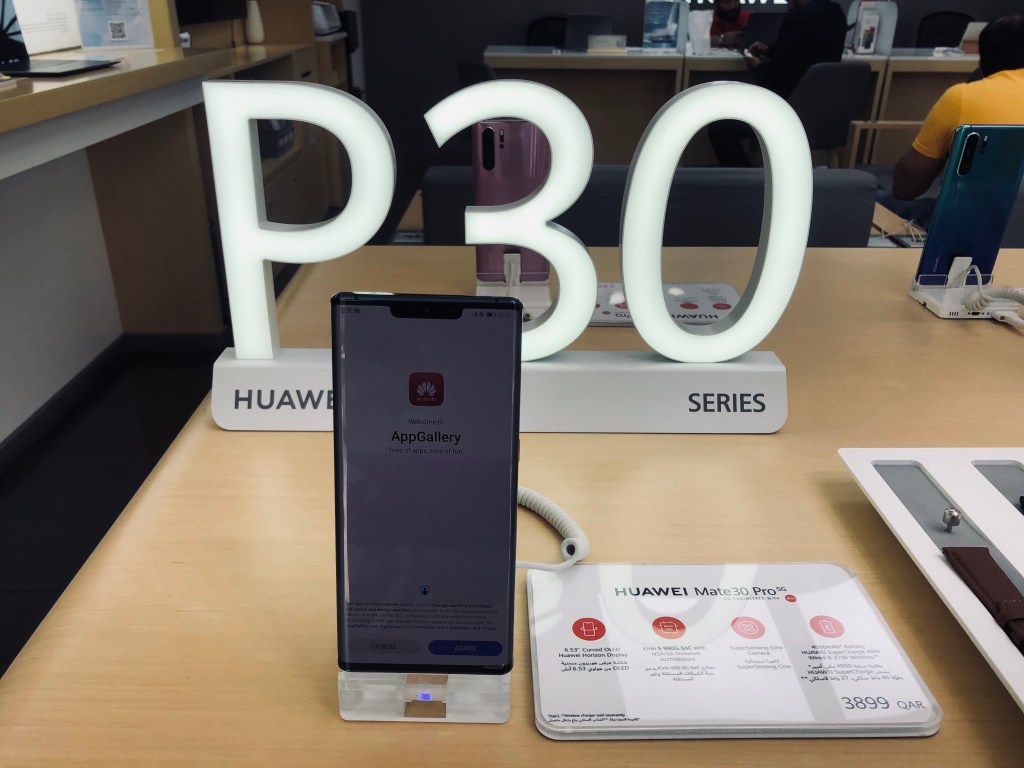
Huawei has been working on being independent from foreign companies and has been working on it since 2012, Hamdi explained. AppGallery allowed users to sign up and download all the apps they want, including all social media apps. However, one setback was that, currently, users cannot use the latest version of Snapchat and Qatar Commercial Bank app. In order to use Snapchat, users must download an older version of it, Hamdi clarified. (This did not sound right, why is the latest version of the app not available, is it because it’s a first copy of the app?). When asked if Huawei used a first copy of the apps, Hamdi denied and said Huawei has been working closely with Snapchat.
Another reason why sales in Qatar were not affected by the ban, was because many people limited their usage of Huawei to photographing. After interviewing many users in Qatar, it has become clear that Huawei is used as a second phone, one solely for its Leica camera feature. Amna Abdullah, a Huawei Mate 30 user, is an example of that.
“If we are speaking about daily usage of the phone, then I never use it except for taking photos. It has a really good camera which surpasses any other camera in any smartphone, but the quality of social media apps is disappointing. Like, I would never use the snapchat camera on this phone to take a photo because it is unclear,” Abdullah said.
Are people in Qatar aware of the ban?
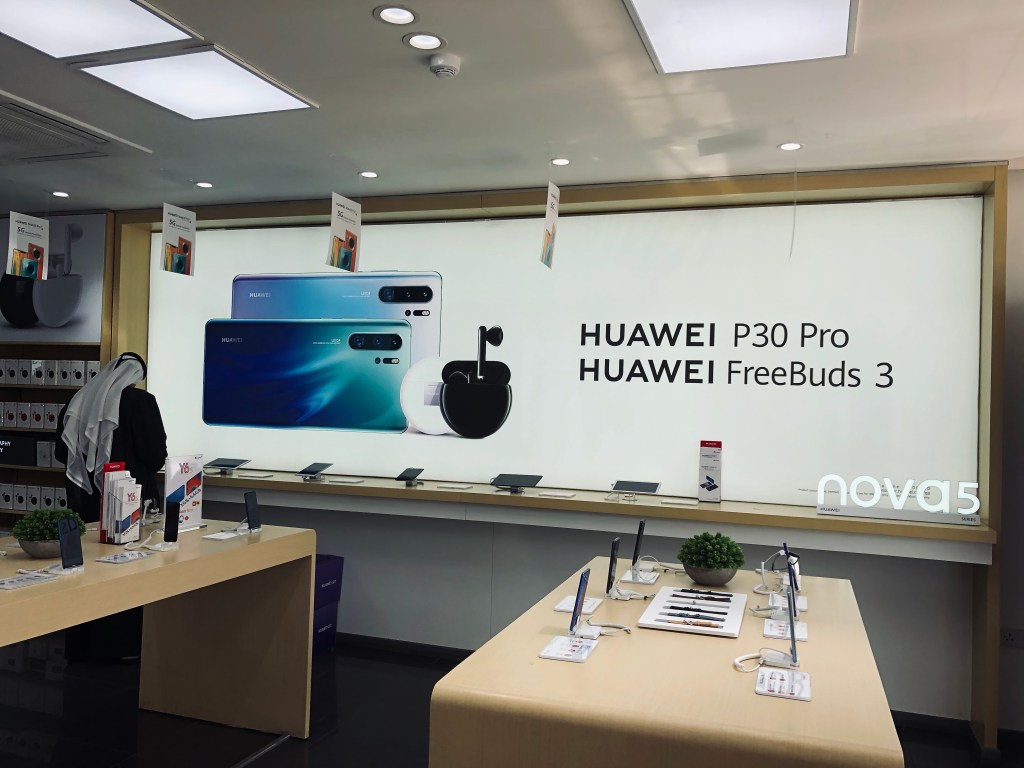
Many people in Qatar are not aware of the ban, and google trends search shows that. For example, the timeline shows that there were 93 searches of ‘Huawei’ between April 7-12, 2019 in Qatar, which was a few days before the release of the P30 elite. Moreover, there was a decrease in searches on May 2018. This is significant because on May, 2, 2018 the US Pentagon banned the sales of Huawei products. In addition to that, most of the search topics revolved around different models of the phone.
On another hand, between May 19-25, 2019 there was an increase in searches. This could have been due to the Google ban that was issued during that time, however upon searching, it has become clear that it could be for another reason. As also, during that time Huawei launched three new phones, Honor 20, Honor 20 Lite and Honor 20 Pro, according to Qatari news The Peninsula. Huawei’s sales not being affected in Qatar and many people’s unawareness on the ban could be due to extensive advertising by Huawei done in the region.
Huawei Arabia’s efforts in advertising through Social Media Influencers
Huawei Arabia has gone on a mission to recruit Arab social media influencers, and have them join the team. Well-known names in the region have all appeared on HuaweiArabia’s Instagram account.
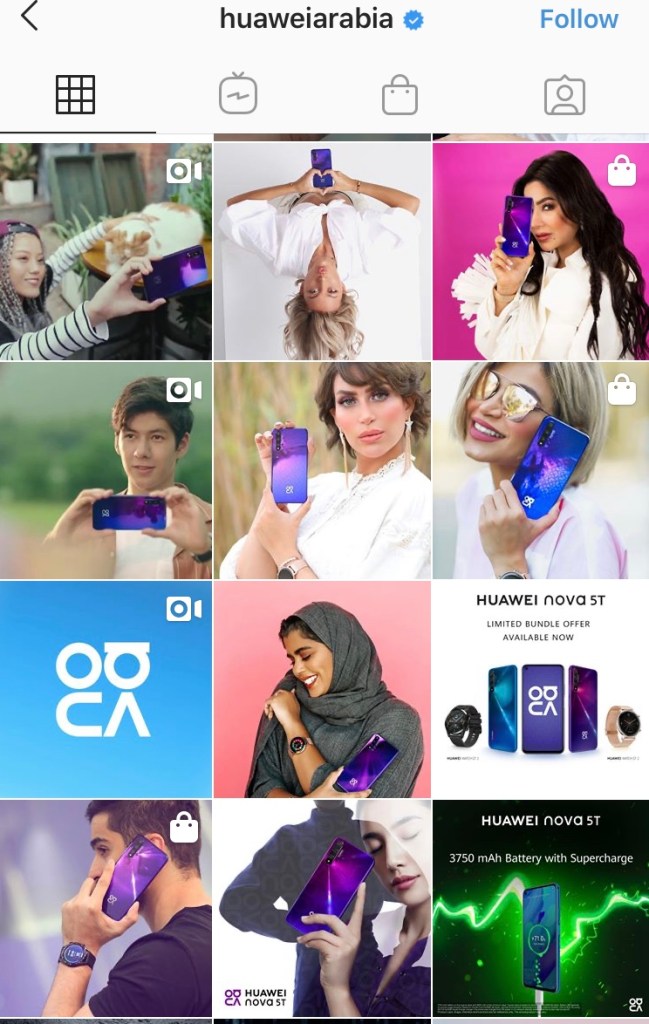
Majority of the video advertisements emphasized on the camera quality in Huawei phones and the ‘excellent’ snapchat quality.
This creates a false sense of hope, and disappointment in users when they, like Amna Abdullah, find out the quality of Snapchat on Huawei. Nevertheless, the extensive advertising has benefitted Huawei as it continues to boom in sales in Qatar.



 talkk.tech.blog