
Categories
-

Urgent Update: You are in a relationship with your news provider

It inevitable to avoid relationship with news providers, they know a lot. 

Audience analytics is changing the news construction process, 

Newsrooms in Qatar prefer journalistic integrity than catering to audience preferences in short run, 

Have you ever thought how the number of retweets on a news story, time spent on a news website and number of clicks impacts the editorial decision making in a newsroom? There are literally people glued to a big screen in the newsroom who document the number of impressions, views and likes on the posted content. Their job is to evaluate the data and formulate a report on the most read topics. In technologically advanced newsrooms like Aljazeera, the list of most viewed or circulated content is automatically generated. 

This continuous monitoring of the content allows the editors to record the preferences of the audiences and adapt in real time. Alongside, the digital department, consisting of people with specialization in social media communication, recommends journalists to cherry pick words for headlines and advise them on ways to optimize their productions on news aggregating websites such as Google News. 

Knowing someone to the core can be meaningful in a romantic relationship but raises certain moral questions when news providers view audience as disaggregated units to maintain traffic. To what extent can you know the audience? Can news organizations sacrifice journalistic integrity to accommodate consumer preferences? 

AJ+ use of metrics 

Haris Alisic, head of development and engagement at AJ+, communicated that AJ+ uses analytics tools such as CrowdTangle, Tubular, Social Bakers and Tablleau but does not compromise the organization’s journalistic integrity. Tools like Crowd Tangle allow news outlets to compare the longevity of content on up to five platforms simultaneously. “AJ+ remains to be audience centric in the sense that it serves audiences’ interest and not satisfy their sense of sensationalism,” Alisic said. 

However, AJ+ is state sponsored and run by Al Jazeera Media Network. Since AJ+ does not actively seek audience satisfaction to generate advertisement, it gives AJ+ liberty to interact with the audiences the way it deems appropriate. “We’re the only news organization that entire countries are trying to shut down,” Alisic added. “We don’t care for the satisfaction” 

Use of web and social media analytics can be better understood in environment where news organizations are continuously competing for audience. One such news media is Gulf Times. Gulf Times uses platform embed analytics for social media platform but relies on more sophisticated tools for website such as Alexa and Comscore. Jossy Abraham, head of digital at Gulf Times, told TechTallk that they are at the infant stage of digital integration in their newsrooms. Most important, Abaraham mentioned that they don’t target any specific group of audiences but analyze data on more holistic scale such as Gender ratio. 

Gulf Times use of metrics 

Abraham added that Gulf Times is not willing to compromise content for audience satisfaction but sometimes they add more interesting topics wider the audience base. Asa publication, we have our own guidelines for the content we create, but sometimes we have to go beyond certain traditional content and add new topics to acquire and engage new audiences,” he said. 

 I love Qatar was also reached a number of times to probe them about the use of metrics in their editorial process but they didn’t reply. 

It seems like that newsrooms in Qatar are gradually incorporating newsroom metrics and are not willing to overstep conventions of journalism to bucket some additional financial incentives. 

In many countries, unlike Qatar, where media is pivoted on algorithms and data, it is inevitable to avoid a relationship with news providers. They will know what they want to because some argue that it is the only sustainable method in modern journalism. 
Categories
-

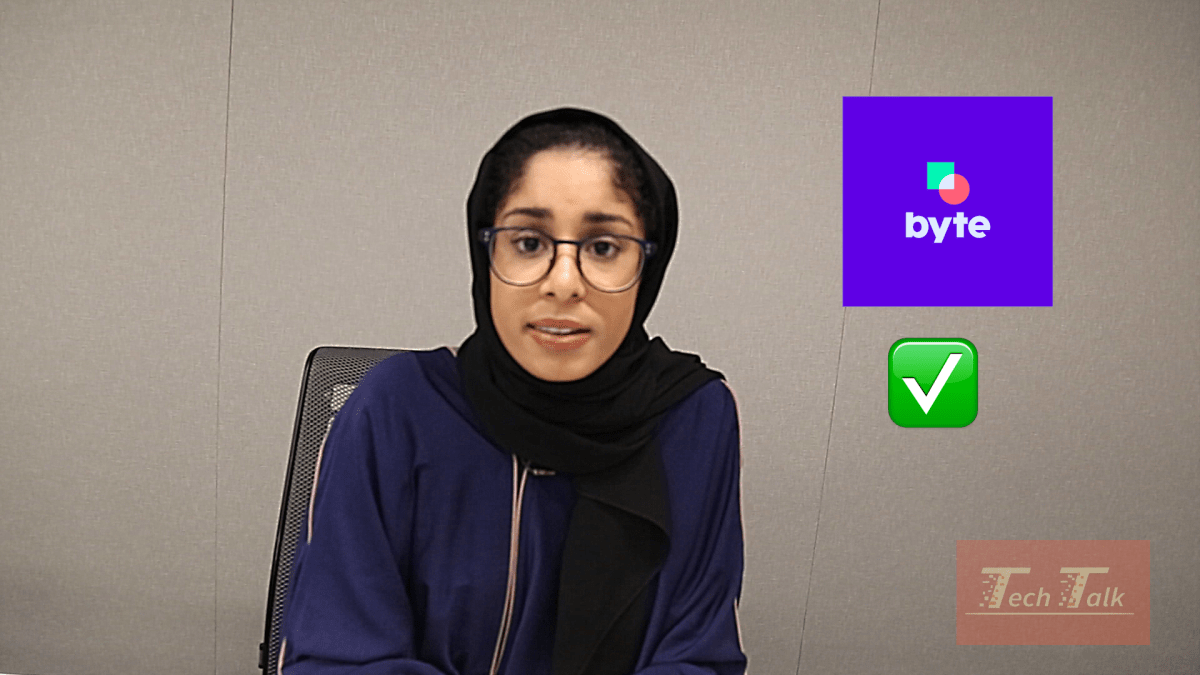
Damn Vine, Back at it Again with the Byte App

Reporter Maryam Al-Badr takes a look at Vine’s new revamped app, Byte and examines how this app will compete with the ever-popular TikTok app.

For an app that recently launched, Byte has already over one million downloads on the app and google store, which is higher than the initial Vine launch, according to Sensor Tower.

But, will Vine’s comeback be able to compete in the ever-changing social media platform and audience’s expectations?

Categories
-

This Device Could Change the Future for Solar Panels in the Middle East

Dust can cause up to 60% less energy production from solar panels in the desert. The NOMADD is a new innovative device that can change this.

In an effort to reduce their carbon footprints, countries in the Middle East such as Saudi Arabia are increasingly looking at solar energy. 

However, the big challenge to using solar panels in the desert is – you guessed it – dust. 

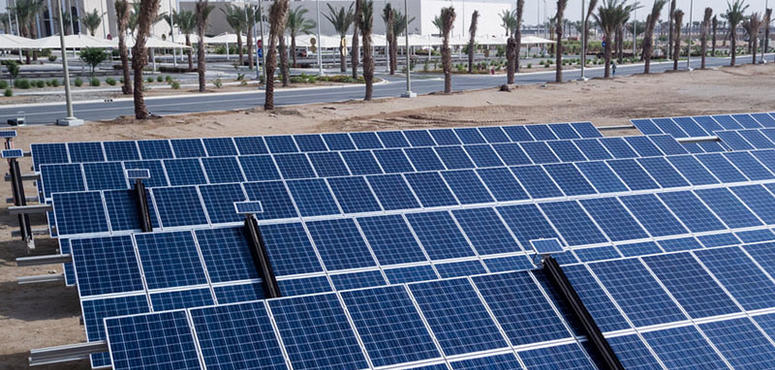
The accumulation of dust on solar panels has made it challenging for the development of a thriving solar industry in the desert. 

Georg Eitelhuber however, is an Australian-born mechanical engineer who is changing the game for solar energy in the Middle East. 

A few years ago, Eitelhuber began developing a system to keep solar panels clean in the desert – a device called the NOMADD. 

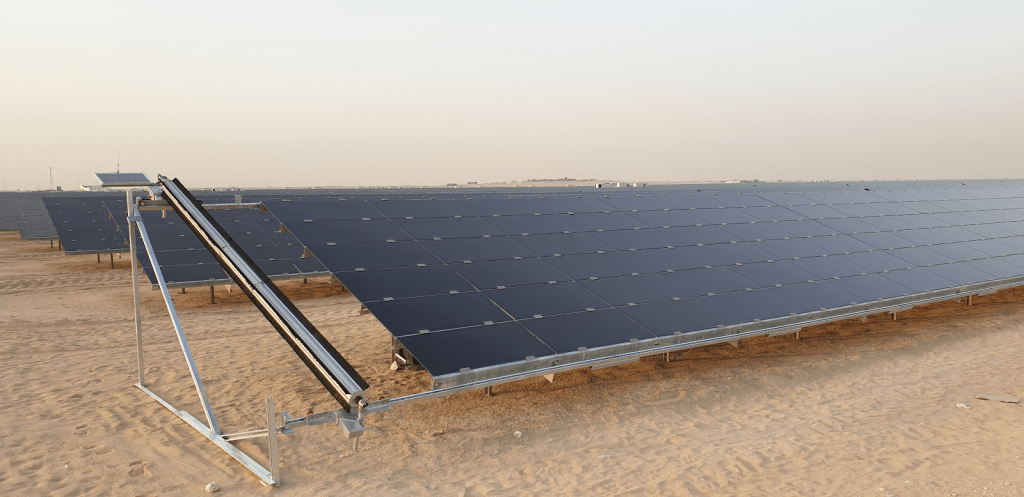
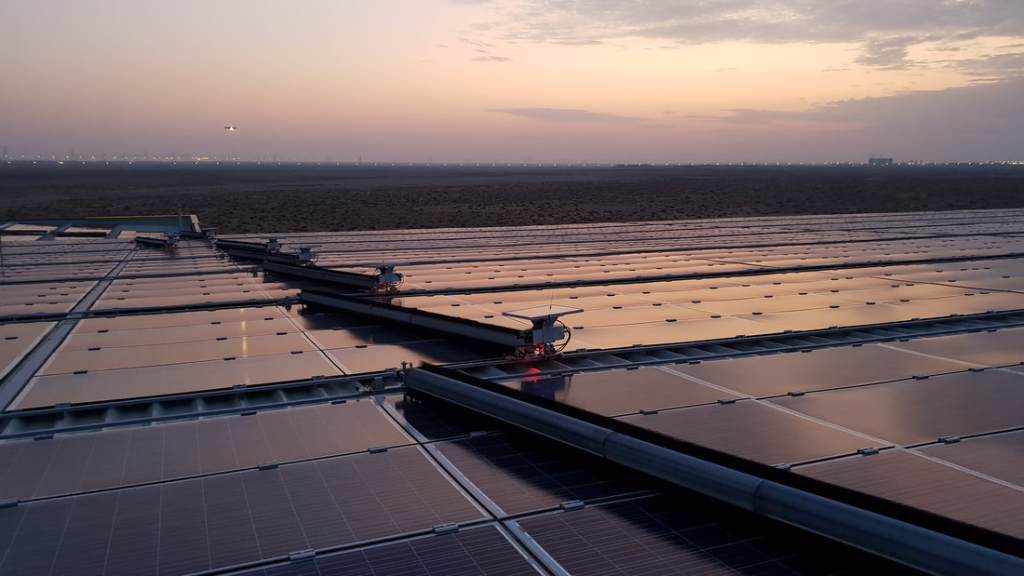
Eitelhuber is the founder and chief technology officer of NOMADD, a fully autonomous water-less robotic cleaning device that latches onto solar panels, removing dust. 

The device is waterless, meaning it can operate in remote conditions in water scarce environments and still clean dust off of solar panels. 

Eitelhuber believes that the Middle East is in an incredible position to take advantage of solar energy “because you’re getting more solar energy than many places in the rest of the world,” said Eitelhuber. 

However, dust storms and sandstorms can quickly decrease the amount of energy that solar panels can produce, and therefore demotivate people from using them. 

“Desert winds pick up the dust and push it on to the solar panels, all day, every day. Sometimes you can have dust storms which put so much dust on the solar panel surface, you can lose 60% of your output in a single day, said Eitelhuber.”

Eitelhuber realized that dust was a major issue for solar panels in Saudi Arabia. Solar panels are often cleaned manually, using a substantial amount of time, labor, energy, and water. 

“Cleaning solar panels is no fun at the best of times, but if you’re standing outside in 50 degrees of heat pushing a broom up and down using water that’s been desalinated with the electricity that you’re producing, it’s a no win situation,” said Eitelhuber. 

The device Eitelhuber has created is fully automated and does not require supervision while it is operating. 

“The NOMADD is designed to automatically and fully self contain and move from one end of the panel and back again, and fully clean without water, and then recharge using a minute fraction of the energy being produced by the solar panels,” said Eitelhuber. 

Eitelhuber moved to Saudi Arabia in 2009 to become a physics teacher at King Abdullah University of Science and Technology, however It wasn’t until 2010, when Eitelhuber realized the need for a device that cleans and removes dust from solar panels when he learned how solar panels were being cleaned. 

He started the project years ago, but the device has now come a long way winning several awards including the 2015 Forbes Award for Middle East Entrepreneurs Shaping Saudi Arabia’s future. 

“I started years ago using lego and rolled up pieces of paper to prototype the NOMADD device, said Eitelhuber.”

Now, the NOMADD has come to fruition and a single device can be mounted on a row of solar panels up to 200 meters long and 3 meters wide. 

“It uses a unique brush application mechanism which essentially persuades the dust to leave the panels with a minimum amount of interaction with the brush. Each NOMADD is capable of cleaning approximately 100 kilowatts of panels,” said Eitelhuber. 

Although life in Saudi Arabia has long been defined by the oil industry, the country has now begun to look at what it has an abundance of: sunlight.

Eitelhuber has realized the problem that dust could have on the future solar industry in the region. 

Despite the Middle East having an abundance of sunlight, it is products like the NOMADD that could allow the possibility for a successful solar industry in the future. 

Watch this video to see the NOMADD device in action.

Categories
Innovation

Drones are taking over the world. Here’s what they can do.

Drones are becoming increasingly common. Soon they’ll be all around us. In Qatar, Dr. Hamind Menouar and his team at Qatar Mobility Innovations Center are developing Artificial Intelligence that is empowering a new generation of drones. Here’s what they’re up to.

Categories
-

Your Face Is No Longer Yours, It Belongs To The Database

  • Facial recognition technology has been on the rise due to security and marketing demands.
  • The technology stores your “face print” and you have no control over that.
  • Is a bit more convenience worth undermining our intimate information?

First things first: No, I’m not typing this on a burner laptop inside an underground dungeon while wearing a tinfoil hat. But hear me out. It could be wise not to bombard our social media accounts with pictures of our daily activities, especially ones with our faces in them, because guess what: the government and the big corporations are keeping an eye on us…

It’s likely that in the past couple of weeks you might’ve come across the latest tech controversy that disrupted Silicon Valley and Washington D.C. alike. I’m talking about the facial recognition technology startup, Clearview AI, and the uncovering of its enormous database that contains more than three billion pictures scraped from all over the internet, according to its CEO, Hoan Ton-That.

Here’s the gist of the controversy: Clearview AI claims its purpose is to help law enforcement identify unknown faces by matching these faces with their personal online images using the help of their facial recognition software, which feeds into their absurdly huge database. Major red flag alert! The startup claims that there are approximately 1,000 agencies across the United States and Canada that buy or request the scraped information Clearview AI collects, sometimes without any official approval from their respective cities or states, and that there is practically nothing to be done about their practices because no one can control what they do with the collected data.

Another major red flag alert!

This controversy is undoubtedly disturbing, but Clearview AI isn’t the only platform utilizing facial recognition technology for ominous purposes. So, in order to better understand the situation, we must first go through a facial recognition technology 101 crash course.

Essentially, facial recognition system is a technology capable of identifying a person from a digital source, whether from images or videos. The technology is able to detect and analyze the facial features of an individual (e.g. the distance between both eyes, the width of the nose, etc.) creating a “facial print” that could then be matched with images and videos online to identify that exact individual. Primitive facial recognition technologies create face prints through cameras’ 2D scanning, while more advanced ones, like Apple’s Face ID, use tens of thousands of infrared dots, or 3D scanning through invisible light, to create more accurate face prints.

Facial Recognition
The detailed facial features are detected and analyzed to create a “facial print”

The revolutionary technology is considered to be the most natural of all biometric measurements, compared to measurements such as finger prints and iris recognition. And for that, it’s being gradually integrated into airports to be used for boarding passengers, phones for security and encryption purposes , and in China, authorities are determined to make everything, from boarding an airplane to ordering a KFC bucket, based on facial recognition.

            And that’s another major red flag!

“It’s an issue of how much privacy are we going to sacrifice in the name of a bit more convenience,” said Dr. Anto Mohsin, assistant professor in science and technology studies at Northwestern University in Qatar, “I don’t mind spending one more second typing my password on my phone if it means my face isn’t stored in a database somewhere.”

The technology sounds very convenient, but also clearly invasive. Imagine that at the peak of the use of facial recognition technology, your face is constantly being scanned wherever you go; the bank, the mall, the grocery store, etc. And this isn’t like having your face on CCTVs, because they don’t create and store personal face prints that arguably violate a very personal detail about you which is your very own face.

A Canadian grocery store chain is planning to deploy SnapPay, a facial recognition payment software

Take it one step further and imagine that you are participating in a protest or a public demonstration, and your face is being detected and stored by parties you are unaware of. Such an eerie thought is enough to deter you from practicing your right to express yourself, and that could ultimately undermine the essence of any democratic society.

“I don’t want the government to know, or have it stored in a database that I went at this time to this place,” said Anthony Wallace, network engineer a computing security analyst at Northwestern University in Qatar, “I don’t have anything to hide, but that’s the argument you hear when it comes to a multitude of security related technologies.”

Here is the thing, deploying such penetrative surveillance technologies at that micro level, specifically facial recognition technology, obstructs our ability to stay anonymous. It becomes that you practically can’t do anything without someone, somewhere, harvesting your personal information. And while that might be less concerning under friendly governments, it becomes alarming under authoritarian governments, according to Wallace.

Take China for example. We talked about how the autocratic republic aims to integrate facial recognition technology into practically everything in the country, but considering their authoritarian reality, disturbing intentions and activities cannot be dismissed. For instance, China is already using the technology to ID and publicly shame jaywalkers by posting their personal information on public screens. And on a more sinister note, the technology is being used to track and control the Uyghurs, a largely Muslim minority in the Xinjiang autonomous region, in the first known example of a government intentionally using A.I. for racial profiling.

Facial recognition cameras and a screen are installed at an intersection in Xiangyang, Hubei province, to shame jaywalkers. [Photo/VCG]

But at least governments can be held responsible for their actions, at least to some extent. Private companies on the other hand, are practically free as a bird. Companies like Google and Facebook are two of the world’s leading investors in facial recognition technology, but Facebook, for instance, is one of its most recognized abusers. Less than a month ago, Facebook agreed to a $550 million settlement following a class action suit that claimed that Facebook’s photo-tagging feature failed to comply to Illinois’ 2008 Biometric Information Privacy Act which states that permission is required before collecting biometric data.

However, as Hoan Ton-That said, once a company collects the data, anything that follows becomes trivial. Paying a fine, or discontinuing a software, does not insure that the already collected data is going to be deleted and not used for other purposes. Then again, how can we blame these companies for abusing our personal information if we actively feed them such information knowing that they profit astronomic figures from selling them to advertisers and other third parties. Not only that, but let me ask you a pretty embarrassing questions: have you ever read any of the fine prints of these companies’ terms and conditions before cluelessly agreeing to them?

Here is just a final example of how creepy – possibly sinister – facial recognition A.I. could be employed:

“They say that the road to hell is paved with good intentions,” said Wallace, “and we can end up going down these bad paths with really great intentions if we don’t understand the implications that we have for the future.”

Categories
-

Carriage Vs. Rafeeq: The Ultimate Decision

Categories
-

Ongoing battle: Huawei vs. US … but does it affect Qatar?

Once the Huawei Mate 30 was released in Qatar, Sara Nasser rushed to reserve and get her own. Upon its arrival, she realized there was no Google Play, and she could not download the apps she wanted. What she found instead, was the AppGallery, a Huawei replacement that downloads all the apps, except for the newest update of Snapchat and the Commercial Bank.

“I was not aware that Google Play is not available, and when I contacted the store they told me it was because of some ban that the United States imposed on China,” Nasser said.

What is the US-China Trade War?

In 2018, US President Donald Trump began imposing tarrifs and trade barriers on China. The US accused China of “unfair trading practices,” and “stealing intellectual property, but it wants Beijing to make changes to its economic policies, which it says unfairly favour domestic companies through subsidies,” according to BBC. US imports from China saw an increase of tarrifs, and Huawei was banned from the US.

Huawei being banned was partially caused by the trade war, and partially due to it being considered a “national threat” to the United States. Allegations made by the US government involved “bank and wire fraud, conspiracy to defraud the US, and stealing tade secrets,” according to Vox. Although the ban is relatively new, US suspicion of Huawei dated back to 2011, as investigations were made to see the connection between the company and the Chinese government.

The ban had a major effect on the tech company as it was not expected. Al Jazeera reported that Huawei CEO Ren Zhengfei said “We cannot get components supply, cannot participate in many international organisations, cannot work closely with many universities, cannot use anything with US components…”

Although the ban affected Huawei in many countries, Huawei in Qatar was not affected.

How is the US-China Trade War affecting Huawei in Qatar?

Many people in Qatar are still buying Huawei phones, regardless of the ban, and have not lost trust in the company. Sara Hamdi, sales person at Huawei Qatar, says the ban did not negatively affect sales. Instead, people were determined to get their hands on the new Mate 30 and started reserving it online.

“The company was concerned about the phone being released without Google, and if people would be accepting of it. Turns out, people were accepting it because they released a new app store called AppGallery,” Hamdi said.

The AppGallery on a P30 phone in Qatar.

Huawei has been working on being independent from foreign companies and has been working on it since 2012, Hamdi explained. AppGallery allowed users to sign up and download all the apps they want, including all social media apps. However, one setback was that, currently, users cannot use the latest version of Snapchat and Qatar Commercial Bank app. In order to use Snapchat, users must download an older version of it, Hamdi clarified. (This did not sound right, why is the latest version of the app not available, is it because it’s a first copy of the app?). When asked if Huawei used a first copy of the apps, Hamdi denied and said Huawei has been working closely with Snapchat.

Another reason why sales in Qatar were not affected by the ban, was because many people limited their usage of Huawei to photographing. After interviewing many users in Qatar, it has become clear that Huawei is used as a second phone, one solely for its Leica camera feature. Amna Abdullah, a Huawei Mate 30 user, is an example of that.

“If we are speaking about daily usage of the phone, then I never use it except for taking photos. It has a really good camera which surpasses any other camera in any smartphone, but the quality of social media apps is disappointing. Like, I would never use the snapchat camera on this phone to take a photo because it is unclear,” Abdullah said.

Are people in Qatar aware of the ban?

Photograph of a Qatari man in a Huawei shop.

Many people in Qatar are not aware of the ban, and google trends search shows that. For example, the timeline shows that there were 93 searches of ‘Huawei’ between April 7-12, 2019 in Qatar, which was a few days before the release of the P30 elite. Moreover, there was a decrease in searches on May 2018. This is significant because on May, 2, 2018 the US Pentagon banned the sales of Huawei products. In addition to that, most of the search topics revolved around different models of the phone.

On another hand, between May 19-25, 2019 there was an increase in searches. This could have been due to the Google ban that was issued during that time, however upon searching, it has become clear that it could be for another reason. As also, during that time Huawei launched three new phones, Honor 20, Honor 20 Lite and Honor 20 Pro, according to Qatari news The Peninsula. Huawei’s sales not being affected in Qatar and many people’s unawareness on the ban could be due to extensive advertising by Huawei done in the region.

Huawei Arabia’s efforts in advertising through Social Media Influencers

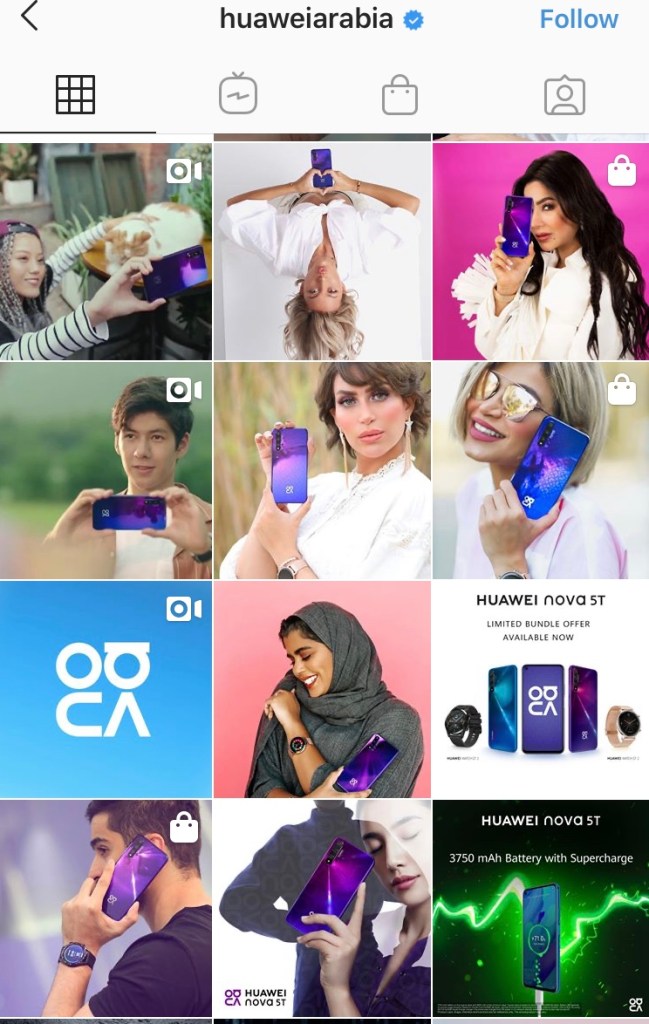
Huawei Arabia has gone on a mission to recruit Arab social media influencers, and have them join the team. Well-known names in the region have all appeared on HuaweiArabia’s Instagram account.

A screenshot of Huawei Arabia’s instagram page showing Saudi influencers Model Roz and Lujain Omran, Kuwaiti influencers Nuha Nabil, Dr Kholoud and her husband Amen, and Emarati influencer Taim Al Falasi.

Majority of the video advertisements emphasized on the camera quality in Huawei phones and the ‘excellent’ snapchat quality.

This creates a false sense of hope, and disappointment in users when they, like Amna Abdullah, find out the quality of Snapchat on Huawei. Nevertheless, the extensive advertising has benefitted Huawei as it continues to boom in sales in Qatar.

Categories
-

Apps are Boring now, We Need Something Bigger!

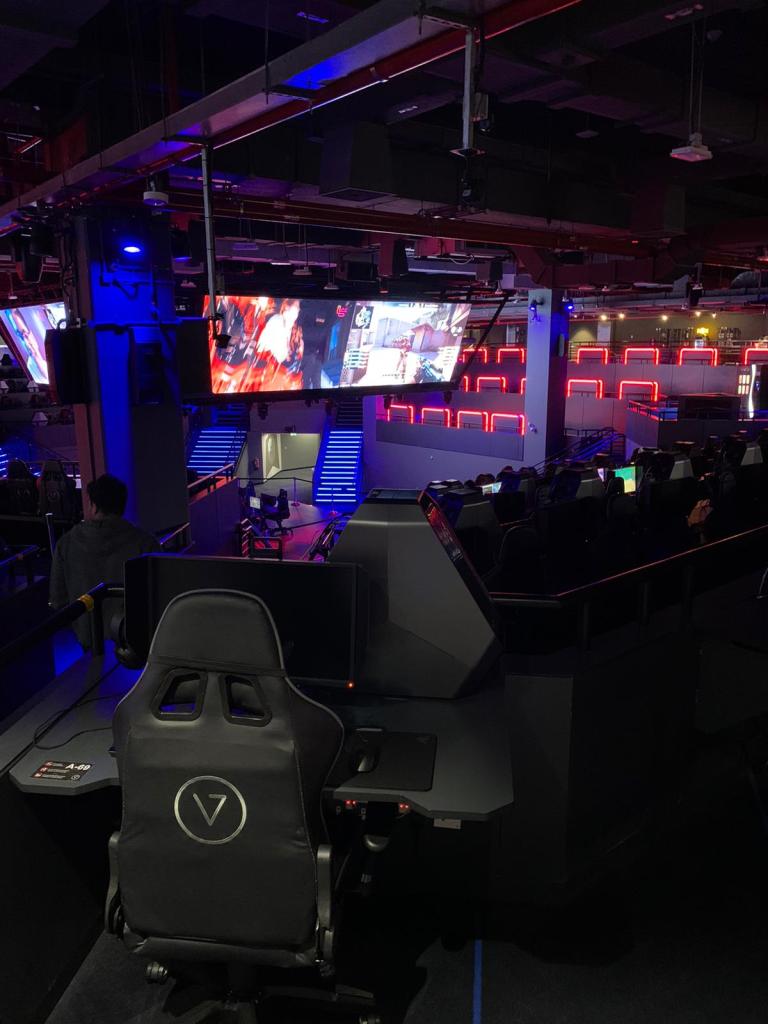
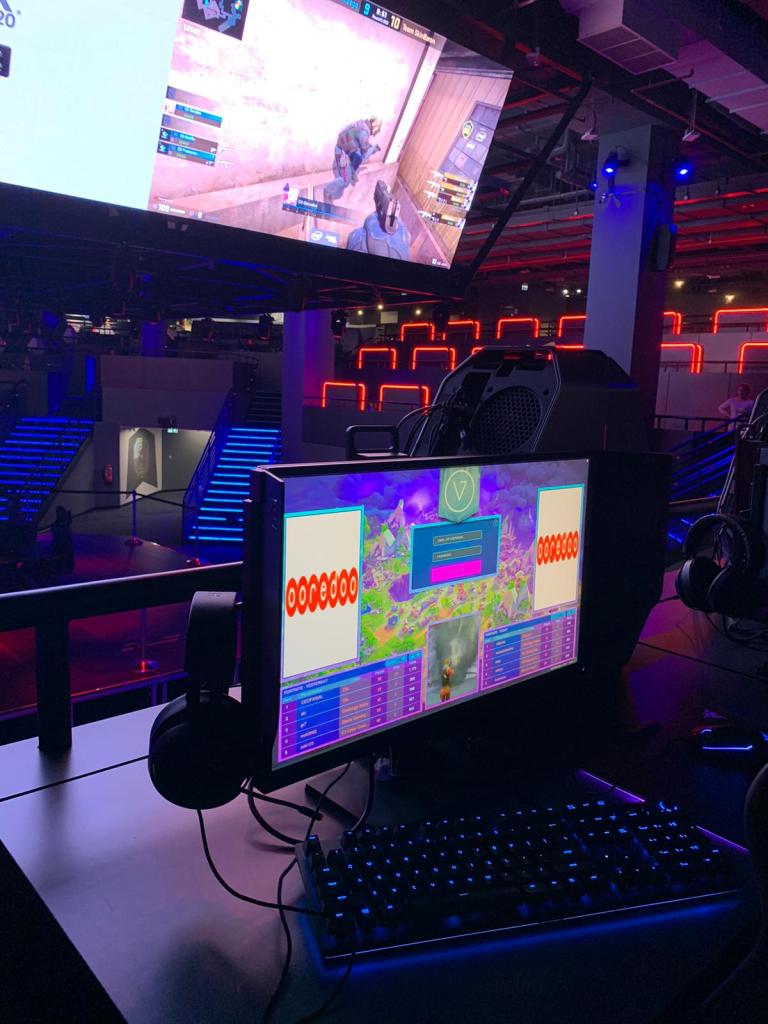
Gaming has undoubtedly started to become popular worldwide. The global aspect of gaming meant that more and more people could show their expertise while having fun. Gaming tournaments have become one of the highest paying in the world, which confirms that gaming has taken over. In 2019, “Bugha” at the age of 16, won 3 million dollars only from one competition. You get it now? Gaming is big. However, we are not here to talk about Esports, that’s for another time. This article is about gaming in Qatar, not necessarily competitive gaming but the fascination with games in general. When Virtuocity opened at Doha Festival City, young boys and girl flocked the place playing some of the most popular games at the moment like Fortnite, Counter-Strike: Global Offensive, Overwatch, Dota 2 and League of Legends. 

A closer look at Virtuocity, the area is filled with PCs with ready to go gaming softwares.

So, if all these games have dominated the market, is there any room for local games to thrive in a highly competitive market?

To clarify, I am not talking about the games you play competitively in tournaments and such; I am talking about regular games that you play on your phone when you are trying to avoid saying hi to someone or when you are bored in class.

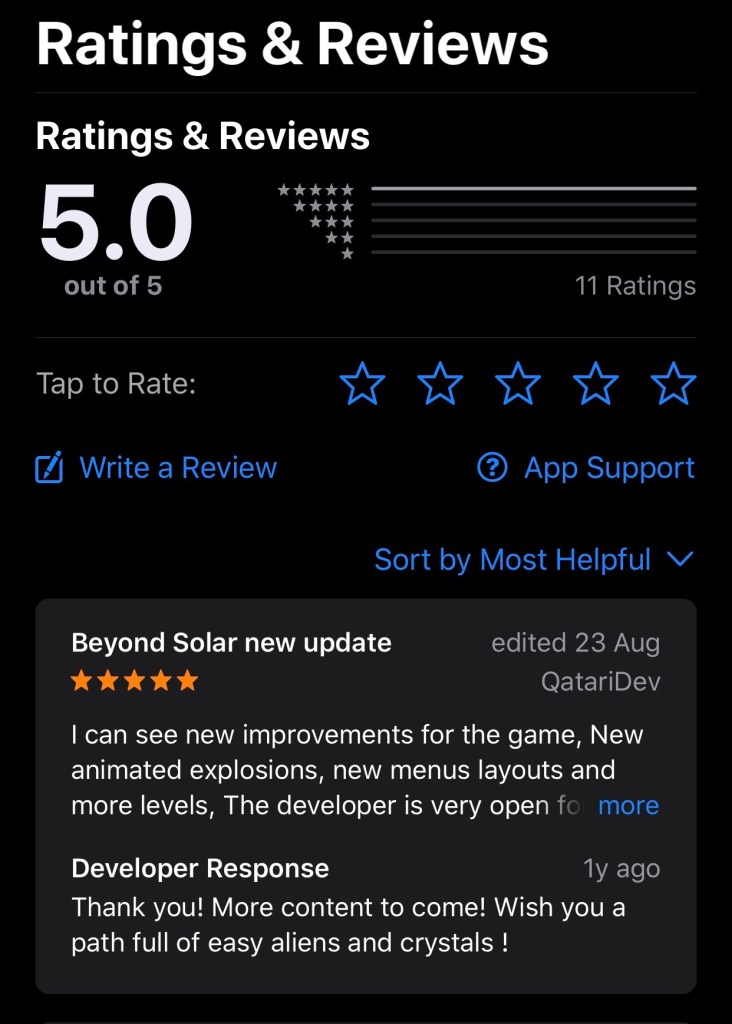
 Several games have popped up on the App Store or Google Play that are made by Qatari developers. Games like Beyond Solar, Jumpo and Deadly Trap are all made by indie game developers where most of the downloads are coming from Qatar. Despite the number of downloads being demanded, but why are the developers not leading the gaming market in Qatar, considering how popular it is here? For Beyond Solar, for example, there are several reviews, more than 50 to be specific and almost all were five stars. Users were praising the smooth software and according to Gary_Cally_pro, “ridiculously good graphics”. So why are the ratings and reviews relevant and why do you readers care. Well, they are related because, for relatively “smaller” game, the reviews are exceptional. Even though we do not know if all the reports are accurate, since almost all had five stars, we technically cannot accurately know how well the game is doing. The smaller and recently developed games in Qatar do not compete with the ones abroad like the United States because of the relatively lower market here. 

Even though Beyond Solar is a Qatari made game, it had more than 70+ ratings in the United States App Store and only about 11 for the one in the Qatari store. The numbers are relatively low throughout both countries but it also raises the question of why is the game more popular abroad? If developers here want to make a name for themselves or try to make it in this competitive field, their competition is with games abroad and not ones locally made, this allows them to branch out some more and not limit themselves to a specific group.

Screenshot of ratings and reviews for Beyond Solar in the Qatari App Store.
Screenshot of ratings and reviews for Beyond Solar in the U.S. App Store.

So, what next? 

“I wouldn’t mind playing a game that is made by a Qatari developer, but the thing is, I only like competitive games and not apps,” said Sultan Al-Awajan who is part of the clan CyRx. Here is the thing, yes, it is good that people here are creating their own games. Yes, they are starting out small by creating applications. How about in the near future, we see a game made by a Qatari developer that could be played online and competitively. These competitive games are undoubtedly popular, we have streamers and gamers supporting them as well. What we are missing is for that to be here, we have the resources and we have the people, we just need the game developed. 

Sultan Al-Awajan, logging in to his usual account to practice for his upcoming tournament.

I am sounding hopeful because Qatar is in fact starting out small with the applications but in order to become popular, a competitive game would not hurt.

Categories
-

Can Memes Relieve the Struggles of Depression? Explained

TechTalk explains what are memes, what is depression, where do the two meet, and whether memes can relieve the daily struggles of people diagnosed with depression.

Categories
-

Mission objective: Exploring seas with teams of autonomous robots

  1. Research is being conducted to come up with algorithms and Artificial Intelligence (AI) techniques for a heterogeneous fleet of vehicles in aquatic environments.
  2. These new advancements will allow the robots cooperatively to coordinate what to do and minimize the risks in order to effectively learn to do a spatial process.
  3. Some people might be worried because robots and automation might take people’s jobs. However, you don’t need to worry about that because it is most likely that the robots will turn out to be a perfect colleague of a human.

With Artificial Intelligence (AI) and robot technologies, there’s widespread expectation that Qatar’s national priorities such as energy and environment can be achieved.

Gianni Di Caro, an associate professor at Carnegie Mellon University in Qatar, analyzes interaction and coordination issues in heterogeneous teams of autonomous robots.

            Gianni Di Caro, an associate professor at Carnegie Mellon University in Qatar, studies methodologies for letting a heterogeneous fleet of vehicles acting in full autonomy when executing a mission in aquatic environments for a project, “Teams of Aquatic / Aerial Robots for Marine Environmental Monitoring (TARMEM)”. As an expert who has been researching to create mixed teams of humans and multi-robots, Di Caro works to create mixed teams of humans.

What does it mean? He wants to make a team that both humans and robots can interact and cooperate together in the context of mission execution, such as search and rescue operations.

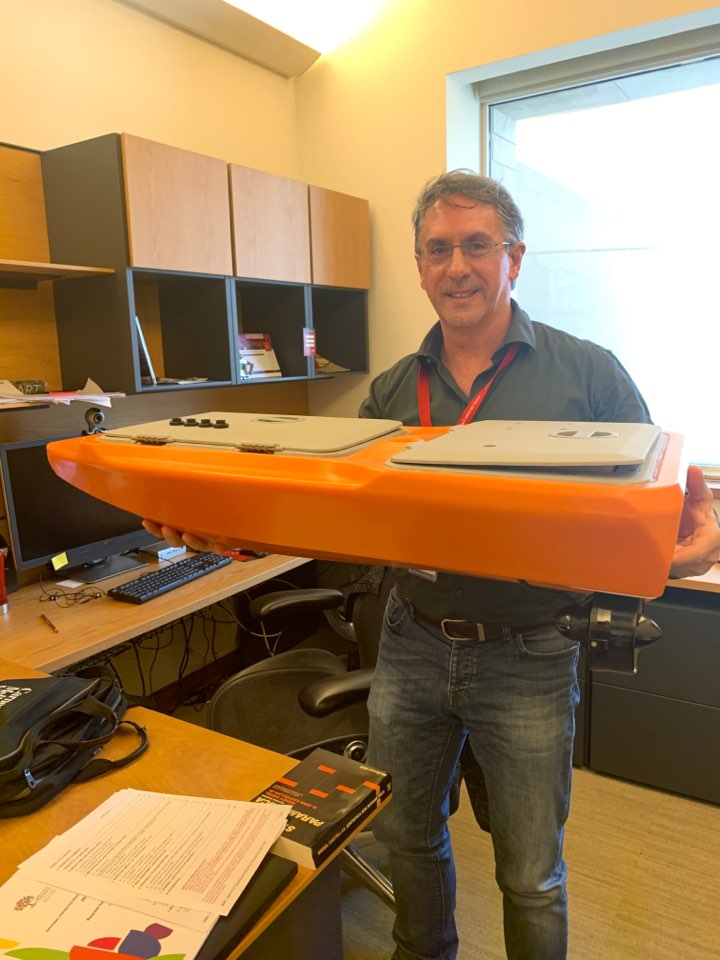
So in this research, he seeks algorithms for navigation and joint network & mission aware dynamic planning. In order to demonstrate these algorithms, an aquatic robot called “Lutra Prop” will be used. If he successfully finishes the research, these technological advancements will be tremendous for unmanned water-surface robots, considering the abilities of currently operating ones.

Lutra Prop is an aquatic robot that Di Caro is using to demonstrate his findings.
Credit: Platypus LLC

To be specific, current aquatic robots are only able to perform a task lasting a maximum of two days and they require human intervention. However, with the algorithms Di Caro is working on, the weaknesses will be translated into positives. The period of operation will be longer than before since Unmanned Aerial Vehicles (UAV) will be carried by aquatic robots, where UAVs can be recharged and be operational again. Moreover, robots will no longer require manual intervention. The robots will be able to cooperate with other fellow robots in a group, just like humans in a team are assisting each other. They will share information to coordinate and cooperate in common mission execution, obtaining effective synergies even in harsh aquatic environments. This project will not only increase the capabilities of aquatic robots but also allow humans to have more complete and exact data.          

Other than overcoming the limitations of current robots, the possibilities of this unmanned robots are striking. It can be further used in other fields as well, like marine border security and oil and gas industry in Qatar. However, Di Caro explains that there are still issues that the project has to solve.

“One of the restrictions we have is getting authorizations from many levels,” Di Caro said, “I understand this but I realized that things are more complicated than I expected.”  

As Di Caro described, there are still legal issues that the project has to go through. It is true that the there is no guarantee that it will be successful, but it can be a game-changer that can shift power not only in the ocean exploration industry, but also in other industries such as the security and oil industry in Qatar. Also, it is possible to expect a better environment where robots and humans cooperate and work in harmony for a common mission, even in dangerous situations.

All Di Caro’s research, including this one, will increase the productivity of human labors, like factory workers became more productive in 18th century. However, some people might be worried because automation can take people’s jobs, like many people had lost their job in 18th century as well.

It is true that automation and robots will continue to grow in use and it is hard to keep proper numbers for robots and humans at the same time. However, as it can be seen in this particular case, the advantages of using robots are enormous. Just like Di Caro studies, robots and AI will eventually create harmonious environments where they can assist and aid humans. Robots might turn out to be a perfect colleague of a human and the use of AI and robots will give people the opportunity to do their jobs more easily, rather than entirely replacing them.

Design a site like this with WordPress.com
Get started