Categories
-

Can you buy illegal products in Qatar through the Deep Web?

  • The government going after dark websites is not the best solution to eliminate buying illicit materials online
  • The dark web provides an open environment for buying and selling illicit drugs
  • The use of Tor Browser is not as easy as many people may think

The Tor browser or Deep Web is a clandestine web that gives access to vendors and buyers to trade illicit materials online without having to make physical contact.  While it eliminates direct and physical contact and provides security protection between buyers and sellers of illicit materials, it is not easy to access this website. It requires technical-know-how to access it.

Here are six things I learned from a talk on Deep Web held at Carnegie Mellon University by Prof. Nicolas Christin on Jan. 19, 2020.


  1. Online is the new black market

“A deep dive in the deep web” became prominent in the early 2000s. Previously, if you wanted to buy illicit materials, you usually go through a friend who knew a friend, however, that has changed with the coming into being of online buying and selling, said Nicolas Christin a lecturer at Carnegie Mellon University. On the issues that influence his decision to explore the dark web was based on a purely emotional statement. “The world is coming to an end because people are selling drugs online, and I’m a scientist. I don’t like to be presented with emotional content,” he said. 

  1. The government should chase the seller, not the product 

The original strategy for law enforcement officers was to try to take down marketplaces but that has changed. “It does not work because a marketplace is a natural Web site and a database that’s very easy for a technically inclined person to set that up in a couple of hours,” he added. Instead what is most effective in combating these illegal online selling, is to go after vendors, “it’s a lot harder to replace if you are a big drug kingpin who has access to lots of physical products and you end up in prison, it’s going to take time for somebody else to replace,” Christin said.

  1. What students currently know about the Tor browser 

Before the presentation, myself and many students, were not knowledgeable about the dark web. “I don’t even know how to access these services and this guy scroll the whole web looking for this Web site makes it very interesting, so, it was interesting to see a breakdown of some of the dark Web sites,” said Muhammad Nurul Haque a senior at CMU-Q. In an attempt to learn about the dark web, I download the Tor Browser with the help of VPN. First, you need to quit all your internet apps and type “tor browser”. Once you instal tor browser, cover your laptop’s camera for security reason. What I learned, there are many stages and some of them require payment to get access. The more you delve into the dark web, the more complicated it becomes. 

  1. The same economic rule governs both legal and illicit materials in an online platform

Christin said, criminologists and economists have argued for years, the economic rules that apply for selling legal products are the same rule that governs the sales of cannabis and heroin in dark websites. However, what is fascinating to him scientists have a large copy of data that they can work with. “If you want to research in Criminology, if you want to figure out how much drugs are being sold, for instance, in the city of Pittsburgh today, it’s very hard to do because this is a completely hidden commerce, despite being a dark web, it’s completely in the open,” he added.  

  1. The best way to protect yourself is to learn as much as you can 

As final advice to students Christin said, in an online adversarial environment, the use of most technologies is not something sinister. But you can also use it to “get all of those trackers, all of those tracking technologies off your back” when you’re browsing online so that the technology is working reasonably well for you instead of working against you, Christin added.  

  1. Can we buy illegal products in Qatar? 

       The talk did not discuss cases related to Qatar but you can do your own research as I did, though you should be cautious.

Categories
-

Tech Savvy workouts: the future or a cash grab

  • The increase in the number of sport facilities in Qatar has driven them to do anything and everything to stand out.
  • Integrating technology in working out has become attractive to consumers who would pay extra just to feel more engaged.
  • But does technology really contribute to a healthier lifestyle, or is just integrated for marketing purposes?

Remember that time as a kid when you would spend your lazy Saturdays on your consoles and tablets, scrolling through an endless list of games and apps, only for your mother to tell you off for spending too much time on them instead of going out and doing some physical activities. Well, mom, what if we told you that now, even during physical activities, people are still hooked on their gadgets thanks to the spike in technology-oriented sports facilities and fitness studios.

Here in Qatar, and frankly all around the world, gyms and fitness studios are opening at exponential rates. CrossFit studios, high-intensity interval training (HIIT) gyms, Pilates classes, etc. are spreading like wildfire across the relatively small country. Of course, the national attention and emphasis given to sports cannot be removed from the context of Qatar’s 2030 Vision, as well as the fact that in less than three years, Qatar will be hosting one of the grandest sporting events in the world; the 2022 FIFA World Cup.

For most of those new gyms, however, the issue is not to simply celebrate a fancy grand opening and then have all your customers bail on you after their free trails end, but rather it’s to stand out enough that you offer an experience that transcends mere physical exercise. No longer is going to the gym and just working out satisfactory for customers, instead, they expect to be entertained and engaged as if they were signed up to an amusement park and not a gym, and that’s when technology kicks in.

Many of the newly opened gyms in Qatar, such as Ox Fitness Lab, Encore, and Australian fitness brand, F45, have attracted attention to themselves by presenting themselves as the alternative and modernized way of working out. Such gyms are mobile-app based, and not only for the purposes of confirming bookings, completing payments, browsing for merchandise, etc., but even also for providing entire fitness and diet programs for the sake of the consumers’ convenience.

Also, these studios engage their customers in competitions and prizes that are based on their physical performance measured by gadgets like Fitbits and Apple Watches. For instance, each customer’s gadget would measure the number of calories they burned during the workout, and then the studio would record these numbers and give away prizes, such as meal plans and bonus classes, to those with the highest number at the end of the competition’s cycle

Customers signing up for F45’s 8 Week Diet Challenge

“It’s a mentality of connectiveness,” said Renato Marcus, senior trainer at F45’s Education City branch, “The apps and the other technologies help people book classes together, compete together. It’s like our own inclusive sports family.”

In fact, the case of Education City’s F45 studio is particularly interesting because within Education City, there are numerous sports facilities provided for students that are free of charge, yet many students are switching allegiances to F45, despite its pricy rates. It is true that the studio provides significant discounts for students, but the discounted prices are still hundreds and thousands of riyals more expensive than what is literally free.

But to assume that technology on its own is a sufficient driving force to get people to opt for more expensive gyms rather than traditional gyms that are free of charge – I repeat: FREE OF CHARGE – is somewhat of a stretch.

“It’s like the best of both worlds,” said Ali Al-Thani, an Education City student who switched from the free gyms to F45, “you get the physical exercise needed but also you feel excited when you work out.”

What the integration of technology in sports facilities does is that it amps up the engagement level of those exercising and makes them always alert and active during their workouts, which ultimately has health benefits. If customers knew that there was a pot of gold made of bonus classes and merchandise at the end of the rainbow that is exercising, they would most likely step up their game in order to claim those prizes, and that undoubtedly is a health benefit regardless of winning the prizes or not. And adding to the health benefits technology contributes to, the screens in these gyms that display the proper form of a specific exercises help prevent those exercising from sustaining injuries caused improper exercise form.

The integration of technology in sports was an eventual step in the current digital age. We are so reliant on technology in our everyday lives, whether for texting friends, ordering groceries, figuring out whether your boyfriend is great or just a racoon (actual BuzzFeed quiz…). And so, to see technology takeover its antithesis, which is physical exercise, is almost ironic, but it was pretty much inevitable.

“The digitalization of sports is almost a reflection of our media consumption,” said Róisín O’Shea, head of business development at StubHub’s UK office, “Sports facilities are trying to attract you through keeping you in your comfort zone.”

Not only that, but considering the significant global spike in health awareness, it has become ‘trendy’ to be active, which means eating healthier, exercising on regular basis, making sure to tell all your friends who aren’t exercising that they’re lifestyles are fundamentally wrong, etc. and gyms and fitness studios or quick to pick up on that trend and practically milk the cow of innovation and marketing to stand out to consumers.

Categories
-

Does Robotics Help Qatar Progress?

This news package explores the robotics field in Qatar, looking at its impact and significance. The piece addresses, what is the importance of implementing robotics into education, discussing ethical implications, and raising the question of whether robotics are helping Qatar progress or not.

Categories
-

Ssshhh “It’s classified”… the shared information secrecy in educational institutions

Let me first give you some context on how a “simple” story quickly became not so “simple”.

Qatar’s Education City is home to the world’s best universities; Northwestern, Cornell, Georgetown, the best of the best and with that comes world-class resources. From entire newsrooms dedicated to students majoring in journalism to $80,000 equipment for communication majors, the abundance of support seems to be endless. As an international student, I was astounded by the level of high tech services provided from not just the universities, but also by the student housing dormitories on campus. Education City’s dorms shout and scream luxurious living.

Northwestern’s Newsroom
This is probably costs around couple thousand dollars…

Let me give you a quick overview of how lavish residential students have it at the dorms. Picture 32-inch television screens scattered across each hallway as if they were stickers and there are a lot of halls, like a lot. Then picture, that after walking through the halls you get to your room which has it’s very own touch screen tablet, and yes, every room has a tablet attached to it. But the fun doesn’t stop there; inside each room is set with another sleek 32-inch television screen and surrounded by accessories to help better your stay.

TV’s like this are everywhere on each floor in all buildings

This TV isn’t even connected to anything…
Each room comes with a touch screen… there’s a lot of rooms by the way so thats expensive

After the honeymoon phases passed, I was intrigued as a student on why is there so much high tech utilities, is it actually needed? Now don’t get me wrong, I love having the cool gadgets as much as the next guy, but I was never using it. Actually, nobody was using it at ALL. That’s what I found insane. Students at EC are immersed by the most desirable devices but are they being utilized or are they sitting down collecting dust because nobody needs them. The bigger question was, does Education City have a problem with having too much material and not enough desire to make use of it? The short question was, is there a practice in today’s digital era to discarded unwanted electronic devices and reuse, resale, recycle what goes disregarded or is money being thrown at something that no one seems to care for? You may ask, why do I care? We can skip over the moral obligation conversation for now and the ethical reasons on why in the current world today; we need to conserve the devices we used and how the world is literally dying in front of our eyes because we have an abundance of electronics that harm the environment. But I also cared because I’m paying for it. My high rise tuition that seems never to stop growing is going toward budgets like this, and we should be concerned as community members.

So as a noble concerned student, I went to complain. And see if there is a process of being efficient and “green” with this unneeded materialistic technology. And I got all the answers I needed, and everyone was so helpful and supportive. Education City is going green with everything, everything is perfect, and there is no suspicious activity going on at all 🙂

Unfourtnely, if that were true, I wouldn’t be here right now writing this piece. It turned out it was the complete opposite. No one wants to talk, like indeed no one. I thought it would be simple, ask a few questions to the IT department. Ask some questions to the housing department. I also had some connections in some of these places, so it came to my surprise when i received comments saying that this is a sensitive topic and there is a process on having this information out.

Bro what?

It didn’t make sense; what information about this topic is so secret that permission has to be granted from the higher-ups. Not only am I a student and I should not have to ask to be given this information from my very own university and the place I live and sleep in, but there’s a suppression of information going on, and it’s not right. If you think I’m exaggerating, these were the questions I tried to ask and ask yourself, is there anything sensitive about what I’m asking.

Question 1) There is an abundance of high tech at NU-Q, what are some of the pro’s and cons of the resources? 

Question 2) How does facilities ensure that all utilities are being used here efficiently and effectively?

Question 3) How does NU-Q limit itself from having too much materials to having only the right amount for its students and staff? 

Question 4) Laptops, tablets, when they are broken, does NU-Q attempt to fix and put it back to service? Or does it become recycled? 

Question 5) Since the beginning has NU-Q, what has NU-Q’s motto been to technology? Is it having the best and most efficient products or is it something else? 

These are the answers I got back from one of the sources after a couple of negotiations and a reminder that I am just a student, the rest haven’t replied and probably won’t 😦

Answer to question 1) “When at its best, NU-Q technology enhances the learning experience for students and leads to more efficient business processes for employees”

Answer to question 2) “This may be a better question for our Facilities department, but I can speak to a few details under IT’s purview. Classroom and digital signage systems operate with automated timers to conserve energy outside fo business hours. From a Facilities perspective many of the buildings lighting systems detect heat and movement to determine whether lights should be turned off in a given room.”

Answer to question 3) “Institutional technology equipment policy and budget constraints govern our acquisition of assets.”

Answer to question 4) “In general, if a repair is economical, we repair. A repair is economical if it costs less to repair than to replace with a new asset”

Answer to question 5) “When you say motto, I interpret that as what are the guiding principles that influence our technology decisions. One such principle is that when NU-Q identifies a need for a new service, we explore whether we can meet that need by leveraging an existing service offered from Evanston first, the cloud marketplace second, and only if we cannot fill a need from Evanston or the cloud do we acquire and deploy a new service locally. We follow this model to promote alignment with Evanston where possible and to reduce our ongoing support and operating expenses”

Now I could have probably asked better questions, but I was hoping these questions would be an introduction to the answers I would get. But what I really found out was there is a common code of conduct when you go asking about something that nobody seems to want to admit it. There could be nothing suspicious going on at all, but I wouldn’t know because of the limit of access to information I have as not only a student, but a concerned member of the community. Who knows, maybe I asked on a bad week. What’s important is that information regarding a common understanding should be public and not hidden especially at education institutions that believe students should have equal opportunity to access of information to anything they desire especially when that information concerns them.

Categories
-

Think you’re old enough to handle bullies? Think again.

Cyberbullying

Fear of missing out is one main reason why young technology users stay online longer than they need to, which puts them at risk of getting cyberbullied. Students in Education City are not an exception.

When naming the dangers of technology for kids and teenagers, cyberbullying is high on the list. However, young adults are just at risk of encountering cyber bullies and may even struggle to deal with it appropriately. 

Students’ experiences

One such person is Hadeel Al-Kohaji. A 20-year-old student at Virginia Commonwealth University. Cyberbullying is something that Al-Kohaji encounters quite frequently on social media. 

According to Al-Kohaji, it tends to be anonymous and mostly via comments from complete strangers on social media. She would comment on posts “like any person would” and sometimes someone would not approve of her opinion and therefore would attack her with hurtful comments rather than offer constructive criticism or just let her express her own opinion.

“There was actually a time where I ended up arguing with an atheist who’s advocating for the abolition of all religions and refused to listen to perspectives of practicing people,” she said. “That person has since ended up blocking me and several others but that’s mainly out of her own ignorance and refusal to understand different perspectives.”

On some days it is pretty draining for Al-Kohaji. “More than anyone would think,” she said. Especially since it is the only impression of her that they got. “I end up overthinking about it for ages until I faze it out with coping mechanisms.”

While she does do her best to ignore cyber bullies, she lets it slip on certain days, well aware that she would be taking the bully’s bait. “On those days I tend to feel more drained than I usually do so I end up withdrawing and taking a day to myself,” she admitted.

A few years ago, a female student* from Education City learned a valuable lesson from a painful cyberbullying experience. This student walked in on her friend when she was video messaging a strange girl from the U.K. and decided to join her. “You can tell that this girl is the type of person who stays on the computer all day,” she said.

According to the student, her friend casually chatted to the stranger, but what came next shocked her. 

“She is ugly with a capital U,” the stranger said, referring to the student. 

 “It was the first time anyone had ever called me that. I was so shocked and it genuinely hurt me,” she said. This made the student question whether it was actually true.

How they deal with it

Al-Kohaji typically tries not to engage and directly blocks any cyber bullies, especially when the response aggravates her. Still, there are times when Al-Kohaji would cave and try to defend herself from them. “It happens in spurs though so it can go from zero to 100 real quick,” she remarked.

Al-Kohaji mostly deals with her cyberbullying experiences alone. However, there have been times where she sought help from friends when it felt too much to bear alone. “I think it’s vital to reach out to friends about something like this, especially if it happens to someone on a daily basis,” she said.

The female student has since then realized that bullies exist everywhere. “Bullying comes in many forms,” she said.  “It doesn’t just come on the internet. It doesn’t just come on the playground. It can come from your friends. It can come from your family. It can come from anywhere and you don’t even realize it.”    

Advice from a life coach

Being a constant technology user distracts students from the real world says life coach Shaikha Fahad Mohammed. It may potentially cause psychological trauma, she said. However, there are ways to reduce such risks. According to Shaikha, a student must be willing to limit their screen time and use only one way to communicate online. “Most of the time, people online interact without a purpose and that is a problem,” she remarked. 

Cyberbullying is ultimately the result of too much screen time, which has become the primary reason why students procrastinate important tasks, Shaikha said.

*This source requested to remain anonymous. 

Arab Innovation Academy: Does it work?

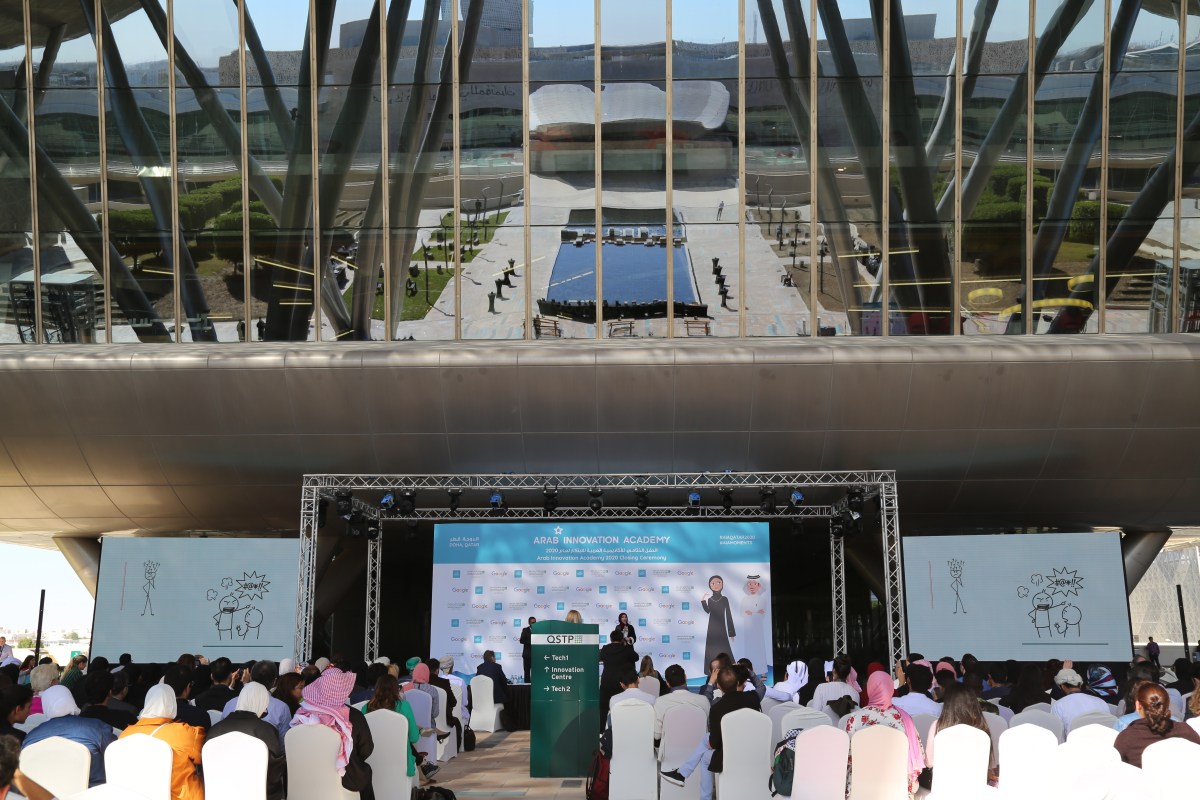
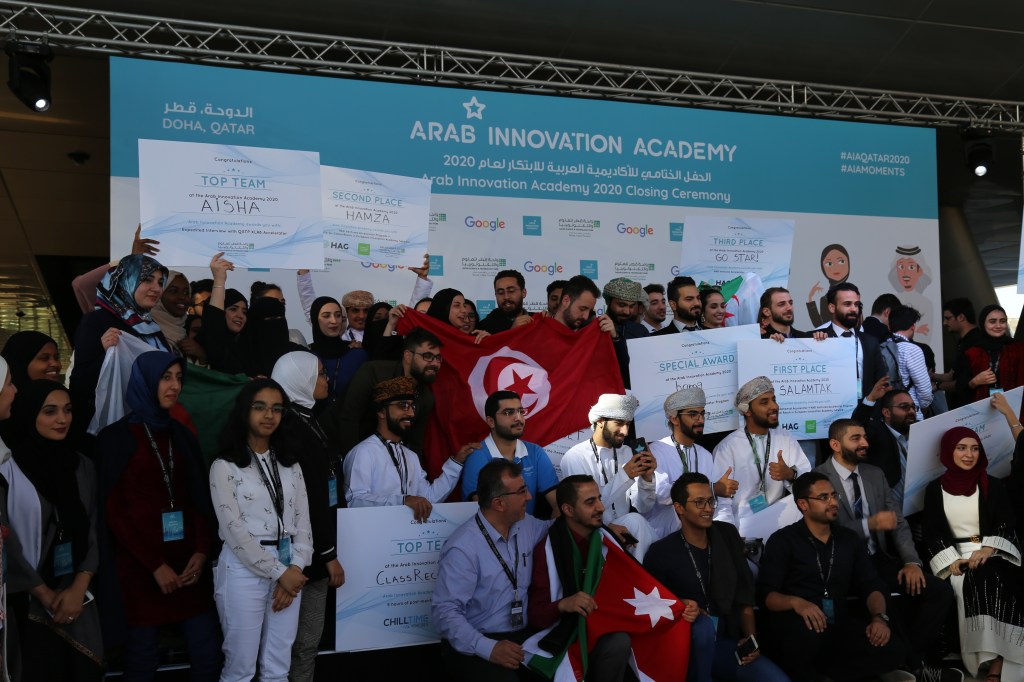
Samah Saad, an Algerian university student, just won first place at the latest version of the Arab Innovation Academy (AIA). Her excitement can be heard through her screams as she, along with her group, runs up to the stage to collect their prize, which was access to accelerators and an article written about them. Their start-up, Salamtak, is an online management system to monitor vital data of patients facing chronic diseases.

“The sweat, the tears, the tiredness, the extra work hours, all the effort we put through has paid off. We won. Salamtak was born in AIA, and we plan to raise it out there in the market. Launch it and let it impact the most of it,” Saad said.

The question is: Will Salamtak reach the market now that AIA has come to an end?

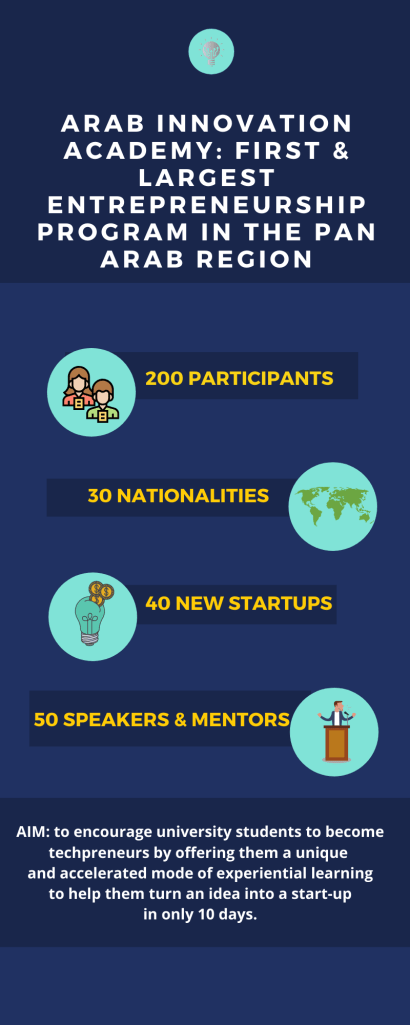
The Arab Innovation Academy, a collaboration between Qatar Science and Technology Park (QSTP) and the European Innovation Academy (EIA), is a 10-day program that helps students from the Arab region to turn their idea into a start-up. This accelerated learning program helps get them into the mindset of becoming entrepreneurs, according to Hayfa Abdulrahman, an Innovation Director at QSTP.

“It (AIA) equips them with the right mindset, tools, and connections to establish their own startups instead of waiting for opportunities to be employed,” Abdulrahman said.

However, how efficient is AIA at helping students launch their startup? According to previous winners of the program, it has become a struggle to launch their products into the market due to a lack of funding.

Sinan Al Obaidi won first place at the first version of the Arab Innovation Academy in 2018. Although he had an “eye opening experience” and had the opportunity to develop and pitch his idea, Al Obaidi did not get a fund which delayed him from successfully starting it.

“I wished that it qualified us to get a product development fund from QSTP to further develop the product rather than going to seek funding from private investors,” Al Obaidi said.

Since the program does not provide funding, many participants leave with only the experience and skills they gained from it. Although this is beneficial, and helps these students with future endeavors, it does not achieve what is aims to do. The importance of having such program, according to Abdulrahman, is to “enable youth in the region to actively contribute to economic development through technology, innovation and entrepreneurship.” Thus, how important is it if it does not successfully achieve the contribution of participants due to having no money?

Chaimae El Mahdaoui, a Moroccan student, is another example of that. Despite winning first place in AIA 2019, and being in contact with both participants and mentors, she still could not launch her app.

“I am currently developing the offline version of Salamat-e as I don’t have enough funds to develop the app but still the app is just a tool and the project is more than that,” El Mahdaoui said. 

Participants at AIA 2020

On the last day of the 10-day program, participants have a chance to pitch a final pitch to investors and present the fund they would need to launch the startup. This allows the participants to experience real-life fund seeking. However, participants do not seek funding and find it hard to get any funding after the program ends. Therefore, the program should consider a fund for the winning team, to allow them to launch and witness their project come to life after working hard on it for days. As the Arab Innovation Academy clearly puts in effort to bring in mentors and speakers from around the world, it should keep in mind its aim, which is to allow youth to actively contribute in economic development.

Categories
-

Earn million dollars ($) and more without a college degree.

Just be careful of fake news on your way through. 

By: Muhammad Sikandar Ali Chaudary

. Get rich by building an audience

. Media users receive news from influencer journalists

. Verify news from influencer journalists

Post memes, record pranks, produce TikTok videos or be a fashionista on any social media platform to get followed by hundreds of thousands of people. No college degree or national identity card is required to be an influencer and make enormous amount of money. This has not only democratized entertainment production and distribution but also news. 

Do users receive news from influencers? 

A seven-nation survey conducted by Northwestern University in Qatar in collaboration with Harrison polls revealed that 81 percent of the respondents in Qatar get news and information from social media influencers. Additionally, 27 percent of the participants agreed that they get news and information from social media influencers at least once a day.  This places Qatar just behind Saudi Arabia in the MENA region, where 92 percent of the participants generally receive news from social media influencers and 32 percent agreed that they get news via social media celebrities at least once a day. It is followed by UAE (78 percent), Jordan (57 percent), Lebanon and Tunisia (52 percent) and Egypt (42 perecnt). 

Is every influencer trained to deliver news? 

This raises certain ethical questions. Is your friend next door with 1000 followers on Instagram authorized enough to deliver news?  The other day an influencer was doing a live session on Instagram about climate change being a hoax. No one could stop tick tock celebrities to purport that God has plagued Chinese with coronavirus because they were torturing Uighur Muslims.

How considerate are social media influencers to verify information before communicating it to the public? What are the levels of fact checking and are they aware of journalistic standards of objectivity, neutrality, fairness etc.?

 You might as well come across hyped up or one-sided news on topic ranging from politics to entertainment news. Do we need a regulatory framework? 

What can Qatar do amid social media chaos? 

Most countries, including Qatar, haven’t implemented a regulatory framework for influencer journalists yet. However, Emir Tamim Bin Hamad Al Thani added a new law, Article 136 bis, in the Qatar Penal Code that deemed the publication of fake news illegal among other things. Right groups, including Amnesty International, has labelled the recent fake news law as repressive. The law stipulates that “anyone who broadcasts, publishes, or republishes false or biased rumors, statements, or news, or inflammatory propaganda, domestically or abroad, with the intent to harm national interests, stir up public opinion, or infringe on the social system or the public system of the state” would be imprisoned for five years and levied fines up to $25, 000. 

 Here, the most important question is to ask ourselves whether we should wait for the government authorities to formulate new laws for the virtual world as a deterrent measure or take the responsibility ourselves to double check the information we are receiving? 

The most recommended solutions

Christine Heenan, who served in the White House as senior policy analyst and speechwriter in the Clinton administration, advised students during a talk at Northwestern University in Qatar that real responsibility lies with the general users to double check the information. “The iPhone has completely changed the world,” she said. “It is responsibility of the user to ensure the credibility of the information.”

Academics also believe that media user’s digital literacy and ability to detect deception is more important than any external regulations. According to Venus Jin, Professor in Residence at Northwestern University in Qatar with a specialization in influencer marketing, fake news generators (sources) will lose their credibility and eventually will not survive the marketbecause the truthfulness of news is a vital indicator for its sustainability. “Objective truthfulness of the contents is an important mediator in determining the effects of online news on media users’ perception of source credibility, trust, and behavioral intention to share the news”, she said. 

The bottom up approach of empowering media user with the skillset to differentiate between real and fake news is mandatory to eliminate the latter. However, the question is who will take this responsibility? 

Categories
-

Tech reminders Vs. Traditional Planners

When we want to set our reminders we either choose to set them on our phones or have it written down on a planner.As busy students, it’s really important for us to find the perfect method. Sadly, the “perfect method” is nonexistent.In the current world of technology we assume most students rely on digital reminders and this survey proved it . 

It is a rush everyday to get our work done on time, we wake up early for assignments and stay up late to complete them. We scribble notes into out planner to the smallest detail to not forget our work and tick what assignments we completed as we go. Another would type up their assignments and set up alarms to remind them, and wait for each alarm to go off. Assignments are done, then comes the rush of another day of work. 

The traditional method of planning has worked for many years but being in the era of technology the  traditional methods are being challenged.

The emergence and growth of the technology-dependent generation have led to a change in different aspects of life. Life has changed from the way business is conducted in the global market,to  how information is passed and the way people interact. The issue of planning has not been an exemption to changes in technology. the current use of technological gadgets such as smartphones and tablets have changed the way planning is done. Most people have moved from paper planning to digital planning.

 Paper planning is a form of planning whereby an individual writes down the things that should be done and the time that they should be done. Digital planning is a planning method whereby people set reminders in their technological gadgets to remind them of different occurrences in their busy schedules. 

The theory of extended mind comes to light in this digital era. The“extended mind”is the idea that our minds go way beyond our “skull and skin”. It is how our minds are getting tuned and integrated into external elements that “include smartphones, tablets and at least some instances of wearable computing, but, in the end, less attention-grabbing items such as notebooks (the old-fashioned kind), tally sticks and abacuses would, under the right circumstances, do just as well.”(Wheeler 2018).

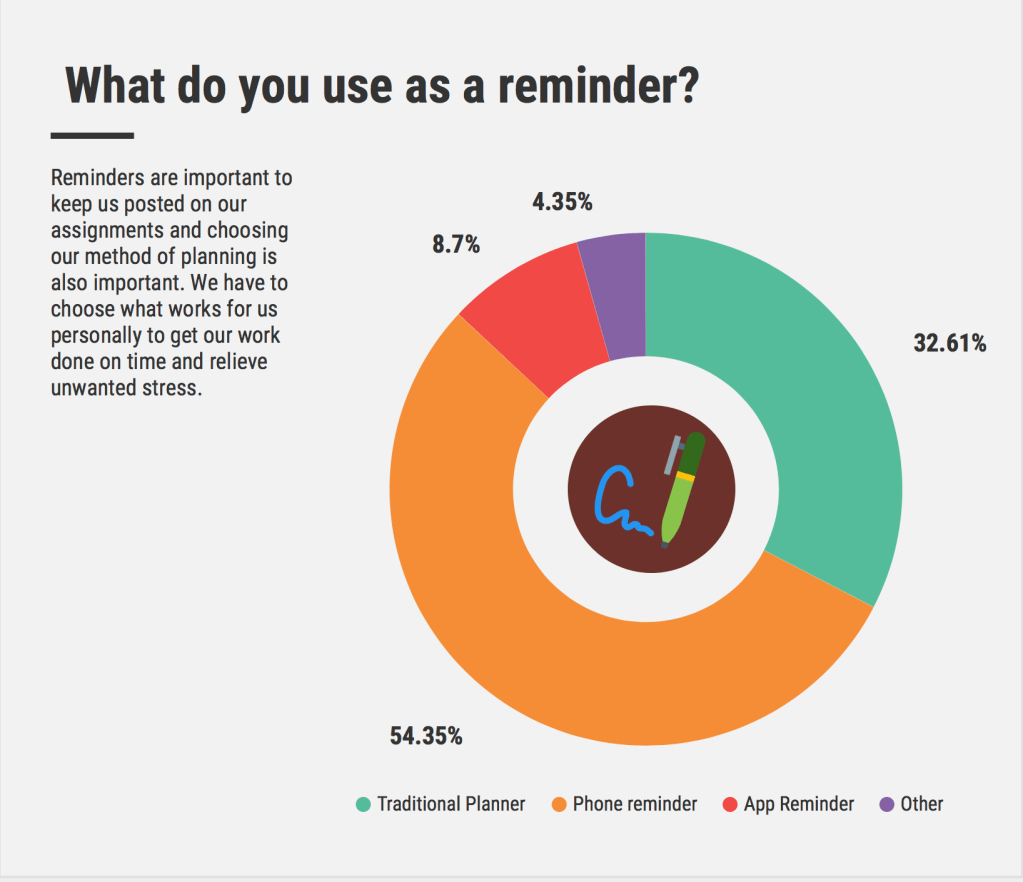
An online survey by SurveyMonkey was conducted to test the theory of Traditional Planners Vs. Tech Reminders in Education City for students. The students had to answer three questions: what university they are attending, what reminder method they use and why they choose this method. 

A total of 46 students answered this survey and phone reminders was favored with 54% percent, traditional planner 33%, app reminders 9% and 4 % classified under “other” where one said brain and the other said both traditional and phone reminders.

Students have commented about how phone reminders are much more useful because it sends notifications that keeps reminding them rather than planners where you have to physically open the book. Additionally, students have explained that it is also very convenient as their phones are always with them, so they are bound to see the notifications even if the phone was on silent and there is no extra weight with having to carry a planner all day but the other 33% don’t agree. They believe it is easier to remember when you have already noted what needs to be done and some of them like the satisfaction of having to tick the box in the planner when they are complete.

There have been arguments stating that paper planning is a better method compared to digital planning. A research article by Michael Wheeler argues that paper planning is a better method and one of the reasons for these arguments is the fact that paper planning is less distracting. When a person is writing down their schedule on paper, they tend to concentrate on the plan. Michael Wheeler also argues that paper planning is better as people tend to go through the plan during the day.In the case of digital planning, technical gadgets have different applications that have numerous notifications. With the notifications, a person may tend to ignore some of them and maybe pass a planned activity for the day. The gadgets also have social platforms that may act as a distraction in the planning process.

Scholars have managed to prove that the writing of things helps a person remember the things written down. There is also a brain cell that is stimulated by writing that ensures that the brain increases its focus on the planned activity. Lakisha Simmons in her journal article “There’s an app for that: The impact of reminder apps on student learning and anxiety” affirms that physical activity is beneficial in the triggering of the brain to turn the maximum focus on the issue at hand. In such an instance, the brain will work to ensure that it remembers about the planned activity. In the case of digital planning, the planning process involves typing. Typing is associated with the arrangement of letters by the pressing of the keys. That means that the activity uses muscle memory rather than brain power. That could be the reason why a person can type without looking at the screen of the gadget.

Another study conducted for students about the impact of reminder apps on students by Lakisha, S., Amy, C., Colin, C. and Chris, S. (2018) have concluded that, “reminder apps can improve a student’s feelings of organization and time management in a course, and this increase in executive functioning can improve attitudinal and educational outcomes.” Lakisha (2018). Which supports my findings of the online survey conducted for students in Education City.

There is no “correct” method for planning. But we have to find what best suits us as students. We have to find which method will help us complete our assignments on time or even better earlier. Which method reminds us of our assignments in advance either by a notification or by pulling out our planners. We all always have our phones on us so phone reminders are convenient but you might just like the thrill of having to write them down and drawing ticks as you go. 

References

Lakisha, S., Amy, C., Colin, C. and Chris, S. (2018). There’s an app for that: The Impact of        reminder apps on student learning and anxiety. Journal of education for Business, Vol.         93, No. 5 185-195.

Wheeler, M. (2005). Reconstructing the Cognitive World: The Next Step. Cambridge, Mass.:        MIT Press

Wheeler, M. The reappearing tool: transparency, smart technology, and the extended mind. AI & Soc 34, 857–866 (2019). https://doi.org/10.1007/s00146-018-0824-x

Wheeler, M. (2018). Talking about more than Heads: the Embodied, Embedded and Extended Creative Mind.

https://www.surveymonkey.com/r/ZY8HHB5

Categories
-

TechTalk Investigates: Swipe Right Safety

Editor-in-Chief Farah AlSharif goes undercover on Tinder to discover how men treat women on dating apps in Qatar and to put the theories of Technologically Facilitated Sexual Violence to the test.

Categories
-

Does Qatar Foundation Actually Care About Saving the Turtles?

  • Excessive plastic usage is so harmful to our environment that we need to take initiative now!
  • Since Qatar Foundation is responsible for teaching the youth, it is important for them to raise awareness of the issue.
  • Torba Framers Market is one of many initiatives that Qatar Foundation has to help promote sustainability and less plastic waste.
  • Individuals are also responsible in being mindful of their plastic consumption and to look for alternatives to decrease their plastic usage.

As we all know, excessive plastic consumption is a big deal! With increase in population, our demand for plastic has increased tremendously. We all know why we need it, it is cheap, versatile and resourceful. How do we know when it is necessary to look for alternatives?

We know the dangers in the future, we know the extent of damage of our actions but barely anyone is taking initiative. Marine life is drowning in plastic waste and the least we could do is attempt to care. 

Hygienic products being sold in reusable packaging which fits Torba’s guidelines. 

This is how Qatar Foundation comes into the picture. We’ve all probably seen the trash cans scattered around Education City that cater to different items of trash. Almost all of the universities on campus have them, dividing the garbage into metal, paper, glass, general and most importantly, plastic. This initiative helps students, faculty and staff to sort out their garbage and this also plays a big role in Qatar’s National Vision 2030. The development plan aims to transform Qatar into an advanced society capable of achieving sustainable development. One goal of this plan is to achieve an environmentally aware population. 

Divided trash cans scattered around every campus in Education City.

“It is so important for the younger generation to care about what they are doing before it is too late,” said Juhaina Al-Lanjawi, a youth ambassador in the Arab Youth Climate Movement in Qatar. “I think it is Qatar Foundation’s duty as a school to teach the students about how important plastic waste is and what we can do to minimize it as much as possible,” said Al-Lanjawi. 

Fridge at Farmers Market showcasing local foods and condiments in glass jars.

Qatar Foundation hosts a market every Saturday from November to April called Torba Farmers Market. Here, their aim is to promote healthy living and sustainability. Vendors sell local produce, cold-pressed juices and “everything-free” food like dairy-free, gluten-free and nut-free. All these promotional efforts come in short; however, if they sell their product with plastic, right? It would be ironic to encourage healthy living and a happy life if you are intentionally making no efforts to help mother nature. I spoke to one of the food vendor’s owners and she gave me some insight about the application process, “they ask you questions about the degree in which packaging is environmentally friendly? Or they have you explain how you will serve your product to reduce all waste including plastic,” said Fatima Ibrahim, owner of 3nb Leaves. 

“I have noticed that most of the items sold contain little to no plastic packaging,” said Noof Al-Naama, a regular customer at Torba. Even though some plastic is still used, their attempts to limit it as much as they could still help people be mindful and shows that we could still go on with our day to day lives while using as little plastic as we could, said Al-Naama. Even after Torba’s efforts to cut down on unnecessary plastic usage, some slip ups still happen like serving plastic straws with iced coffee. If it is so easy to switch from a plastic cup to a paper one, switching to paper straws should not be that big of an issue as well. Considering most restaurants at Qatar Foundation ban the use of plastic straws, Torba should not be the exception. “I was kind of surprised by the straw because when most people think of the easiest utensil to switch to, it would be a straw,” said Al-Naama.

Noof Al-Naama, taking a picture of her coffee.
Noof Al-Naama, seen enjoying her cup of coffee where Torba missed the simple step of providing the customer with a paper straw. 

As a student, you can take matters into your own hands because every little change is still change, even the baby steps matter. Anto Mohsin, a professor at Northwestern University in Qatar has taught in some of his classes about the issue of plastic. He said that some of his students have comprehended the seriousness of plastic waste and have switched their regular water bottles to reusable ones. Another initiative includes using reusable plastic bags and food containers. Even though they are still plastic, they are more durable and will last longer, said professor Mohsin. 

Produce being sold in baskets and jam in glass jars, ironically, a plastic lid is placed on the table.

We know the extent that plastic plays in the current situation of our environment. What we can do as a society is to be mindful of our waste and try and do our best to be as resourceful as possible because if that does not work, we do not have a planet B. 

Design a site like this with WordPress.com
Get started