Categories
-

Earn million dollars ($) and more without a college degree.

Just be careful of fake news on your way through. 

By: Muhammad Sikandar Ali Chaudary

. Get rich by building an audience

. Media users receive news from influencer journalists

. Verify news from influencer journalists

Post memes, record pranks, produce TikTok videos or be a fashionista on any social media platform to get followed by hundreds of thousands of people. No college degree or national identity card is required to be an influencer and make enormous amount of money. This has not only democratized entertainment production and distribution but also news. 

Do users receive news from influencers? 

A seven-nation survey conducted by Northwestern University in Qatar in collaboration with Harrison polls revealed that 81 percent of the respondents in Qatar get news and information from social media influencers. Additionally, 27 percent of the participants agreed that they get news and information from social media influencers at least once a day.  This places Qatar just behind Saudi Arabia in the MENA region, where 92 percent of the participants generally receive news from social media influencers and 32 percent agreed that they get news via social media celebrities at least once a day. It is followed by UAE (78 percent), Jordan (57 percent), Lebanon and Tunisia (52 percent) and Egypt (42 perecnt). 

Is every influencer trained to deliver news? 

This raises certain ethical questions. Is your friend next door with 1000 followers on Instagram authorized enough to deliver news?  The other day an influencer was doing a live session on Instagram about climate change being a hoax. No one could stop tick tock celebrities to purport that God has plagued Chinese with coronavirus because they were torturing Uighur Muslims.

How considerate are social media influencers to verify information before communicating it to the public? What are the levels of fact checking and are they aware of journalistic standards of objectivity, neutrality, fairness etc.?

 You might as well come across hyped up or one-sided news on topic ranging from politics to entertainment news. Do we need a regulatory framework? 

What can Qatar do amid social media chaos? 

Most countries, including Qatar, haven’t implemented a regulatory framework for influencer journalists yet. However, Emir Tamim Bin Hamad Al Thani added a new law, Article 136 bis, in the Qatar Penal Code that deemed the publication of fake news illegal among other things. Right groups, including Amnesty International, has labelled the recent fake news law as repressive. The law stipulates that “anyone who broadcasts, publishes, or republishes false or biased rumors, statements, or news, or inflammatory propaganda, domestically or abroad, with the intent to harm national interests, stir up public opinion, or infringe on the social system or the public system of the state” would be imprisoned for five years and levied fines up to $25, 000. 

 Here, the most important question is to ask ourselves whether we should wait for the government authorities to formulate new laws for the virtual world as a deterrent measure or take the responsibility ourselves to double check the information we are receiving? 

The most recommended solutions

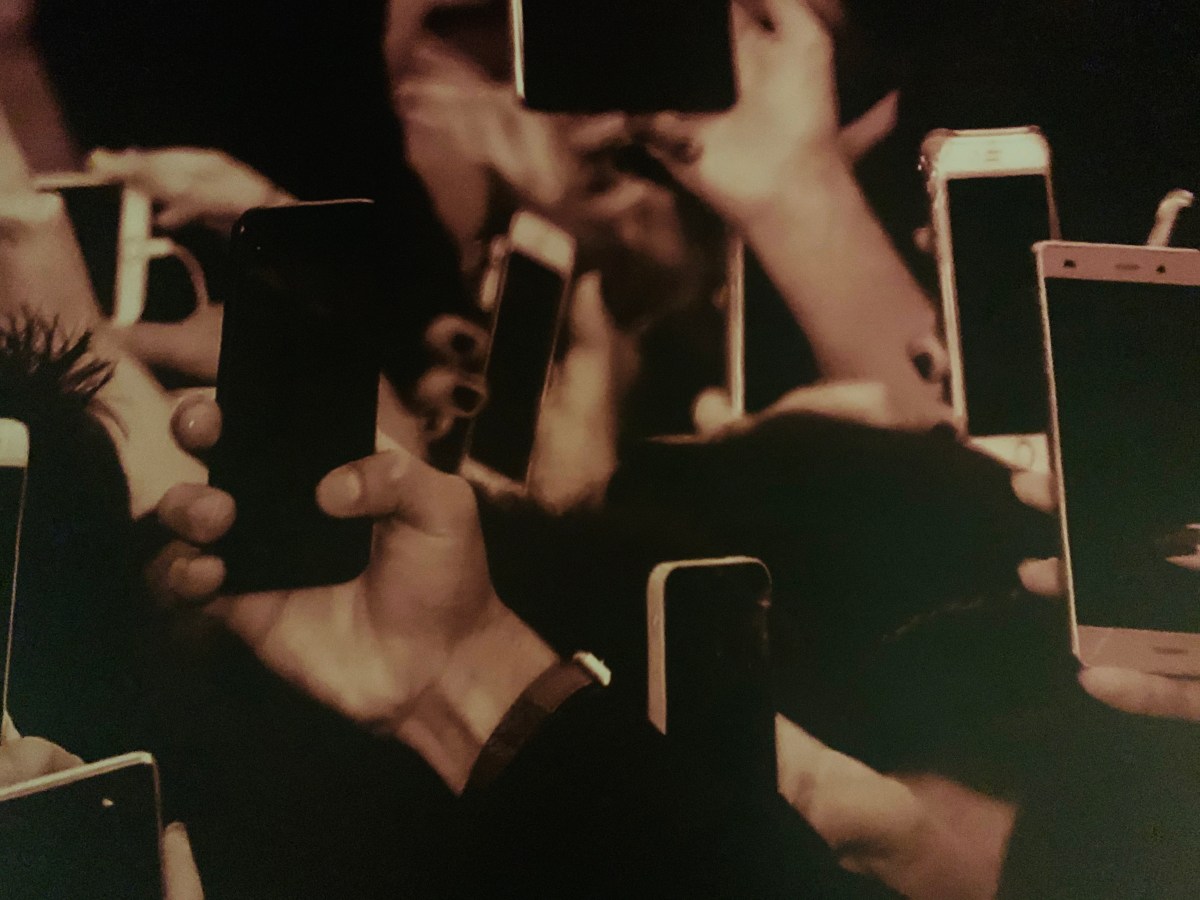
Christine Heenan, who served in the White House as senior policy analyst and speechwriter in the Clinton administration, advised students during a talk at Northwestern University in Qatar that real responsibility lies with the general users to double check the information. “The iPhone has completely changed the world,” she said. “It is responsibility of the user to ensure the credibility of the information.”

Academics also believe that media user’s digital literacy and ability to detect deception is more important than any external regulations. According to Venus Jin, Professor in Residence at Northwestern University in Qatar with a specialization in influencer marketing, fake news generators (sources) will lose their credibility and eventually will not survive the marketbecause the truthfulness of news is a vital indicator for its sustainability. “Objective truthfulness of the contents is an important mediator in determining the effects of online news on media users’ perception of source credibility, trust, and behavioral intention to share the news”, she said. 

The bottom up approach of empowering media user with the skillset to differentiate between real and fake news is mandatory to eliminate the latter. However, the question is who will take this responsibility? 
Categories
-

Tech reminders Vs. Traditional Planners

When we want to set our reminders we either choose to set them on our phones or have it written down on a planner.As busy students, it’s really important for us to find the perfect method. Sadly, the “perfect method” is nonexistent.In the current world of technology we assume most students rely on digital reminders and this survey proved it . 

It is a rush everyday to get our work done on time, we wake up early for assignments and stay up late to complete them. We scribble notes into out planner to the smallest detail to not forget our work and tick what assignments we completed as we go. Another would type up their assignments and set up alarms to remind them, and wait for each alarm to go off. Assignments are done, then comes the rush of another day of work. 

The traditional method of planning has worked for many years but being in the era of technology the  traditional methods are being challenged.

The emergence and growth of the technology-dependent generation have led to a change in different aspects of life. Life has changed from the way business is conducted in the global market,to  how information is passed and the way people interact. The issue of planning has not been an exemption to changes in technology. the current use of technological gadgets such as smartphones and tablets have changed the way planning is done. Most people have moved from paper planning to digital planning.

 Paper planning is a form of planning whereby an individual writes down the things that should be done and the time that they should be done. Digital planning is a planning method whereby people set reminders in their technological gadgets to remind them of different occurrences in their busy schedules. 

The theory of extended mind comes to light in this digital era. The“extended mind”is the idea that our minds go way beyond our “skull and skin”. It is how our minds are getting tuned and integrated into external elements that “include smartphones, tablets and at least some instances of wearable computing, but, in the end, less attention-grabbing items such as notebooks (the old-fashioned kind), tally sticks and abacuses would, under the right circumstances, do just as well.”(Wheeler 2018).

An online survey by SurveyMonkey was conducted to test the theory of Traditional Planners Vs. Tech Reminders in Education City for students. The students had to answer three questions: what university they are attending, what reminder method they use and why they choose this method. 

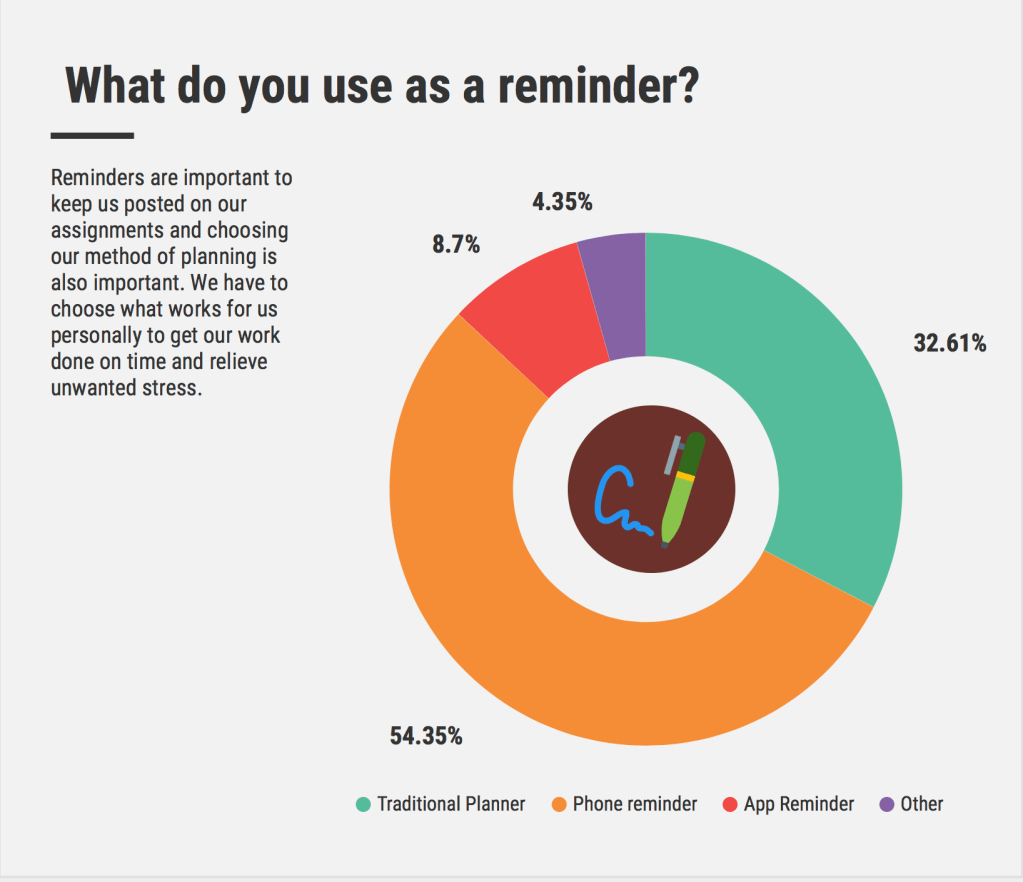
A total of 46 students answered this survey and phone reminders was favored with 54% percent, traditional planner 33%, app reminders 9% and 4 % classified under “other” where one said brain and the other said both traditional and phone reminders.

Students have commented about how phone reminders are much more useful because it sends notifications that keeps reminding them rather than planners where you have to physically open the book. Additionally, students have explained that it is also very convenient as their phones are always with them, so they are bound to see the notifications even if the phone was on silent and there is no extra weight with having to carry a planner all day but the other 33% don’t agree. They believe it is easier to remember when you have already noted what needs to be done and some of them like the satisfaction of having to tick the box in the planner when they are complete.

There have been arguments stating that paper planning is a better method compared to digital planning. A research article by Michael Wheeler argues that paper planning is a better method and one of the reasons for these arguments is the fact that paper planning is less distracting. When a person is writing down their schedule on paper, they tend to concentrate on the plan. Michael Wheeler also argues that paper planning is better as people tend to go through the plan during the day.In the case of digital planning, technical gadgets have different applications that have numerous notifications. With the notifications, a person may tend to ignore some of them and maybe pass a planned activity for the day. The gadgets also have social platforms that may act as a distraction in the planning process.

Scholars have managed to prove that the writing of things helps a person remember the things written down. There is also a brain cell that is stimulated by writing that ensures that the brain increases its focus on the planned activity. Lakisha Simmons in her journal article “There’s an app for that: The impact of reminder apps on student learning and anxiety” affirms that physical activity is beneficial in the triggering of the brain to turn the maximum focus on the issue at hand. In such an instance, the brain will work to ensure that it remembers about the planned activity. In the case of digital planning, the planning process involves typing. Typing is associated with the arrangement of letters by the pressing of the keys. That means that the activity uses muscle memory rather than brain power. That could be the reason why a person can type without looking at the screen of the gadget.

Another study conducted for students about the impact of reminder apps on students by Lakisha, S., Amy, C., Colin, C. and Chris, S. (2018) have concluded that, “reminder apps can improve a student’s feelings of organization and time management in a course, and this increase in executive functioning can improve attitudinal and educational outcomes.” Lakisha (2018). Which supports my findings of the online survey conducted for students in Education City.

There is no “correct” method for planning. But we have to find what best suits us as students. We have to find which method will help us complete our assignments on time or even better earlier. Which method reminds us of our assignments in advance either by a notification or by pulling out our planners. We all always have our phones on us so phone reminders are convenient but you might just like the thrill of having to write them down and drawing ticks as you go. 

References

Lakisha, S., Amy, C., Colin, C. and Chris, S. (2018). There’s an app for that: The Impact of        reminder apps on student learning and anxiety. Journal of education for Business, Vol.         93, No. 5 185-195.

Wheeler, M. (2005). Reconstructing the Cognitive World: The Next Step. Cambridge, Mass.:        MIT Press

Wheeler, M. The reappearing tool: transparency, smart technology, and the extended mind. AI & Soc 34, 857–866 (2019). https://doi.org/10.1007/s00146-018-0824-x

Wheeler, M. (2018). Talking about more than Heads: the Embodied, Embedded and Extended Creative Mind.

https://www.surveymonkey.com/r/ZY8HHB5

Categories
-

TechTalk Investigates: Swipe Right Safety

Editor-in-Chief Farah AlSharif goes undercover on Tinder to discover how men treat women on dating apps in Qatar and to put the theories of Technologically Facilitated Sexual Violence to the test.

Categories
-

Does Qatar Foundation Actually Care About Saving the Turtles?

  • Excessive plastic usage is so harmful to our environment that we need to take initiative now!
  • Since Qatar Foundation is responsible for teaching the youth, it is important for them to raise awareness of the issue.
  • Torba Framers Market is one of many initiatives that Qatar Foundation has to help promote sustainability and less plastic waste.
  • Individuals are also responsible in being mindful of their plastic consumption and to look for alternatives to decrease their plastic usage.

As we all know, excessive plastic consumption is a big deal! With increase in population, our demand for plastic has increased tremendously. We all know why we need it, it is cheap, versatile and resourceful. How do we know when it is necessary to look for alternatives?

We know the dangers in the future, we know the extent of damage of our actions but barely anyone is taking initiative. Marine life is drowning in plastic waste and the least we could do is attempt to care. 

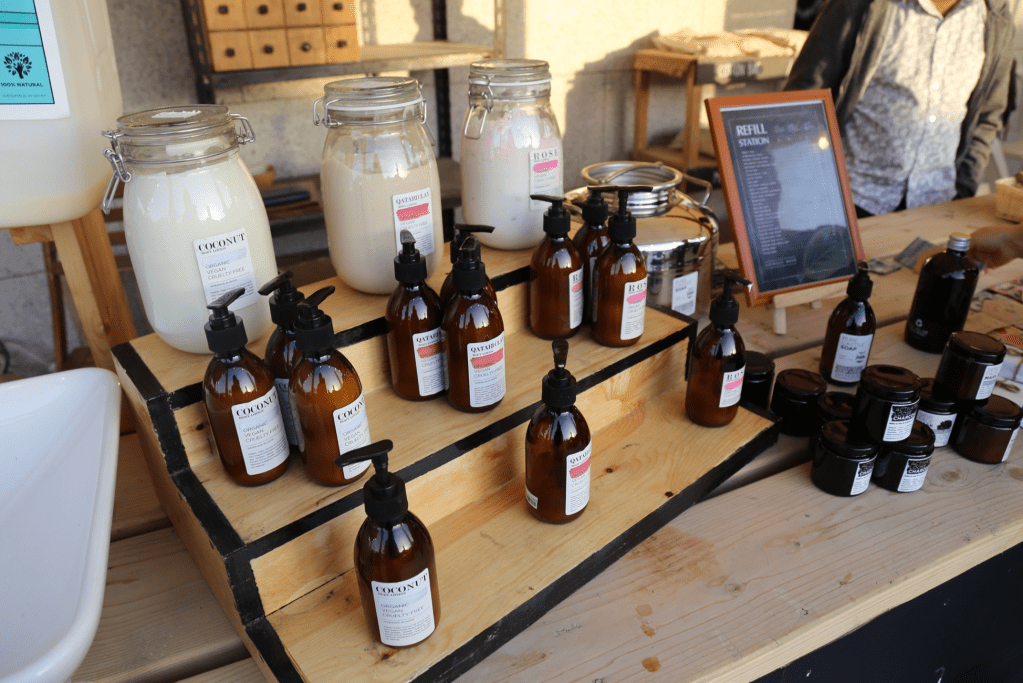
Hygienic products being sold in reusable packaging which fits Torba’s guidelines. 

This is how Qatar Foundation comes into the picture. We’ve all probably seen the trash cans scattered around Education City that cater to different items of trash. Almost all of the universities on campus have them, dividing the garbage into metal, paper, glass, general and most importantly, plastic. This initiative helps students, faculty and staff to sort out their garbage and this also plays a big role in Qatar’s National Vision 2030. The development plan aims to transform Qatar into an advanced society capable of achieving sustainable development. One goal of this plan is to achieve an environmentally aware population. 

Divided trash cans scattered around every campus in Education City.

“It is so important for the younger generation to care about what they are doing before it is too late,” said Juhaina Al-Lanjawi, a youth ambassador in the Arab Youth Climate Movement in Qatar. “I think it is Qatar Foundation’s duty as a school to teach the students about how important plastic waste is and what we can do to minimize it as much as possible,” said Al-Lanjawi. 

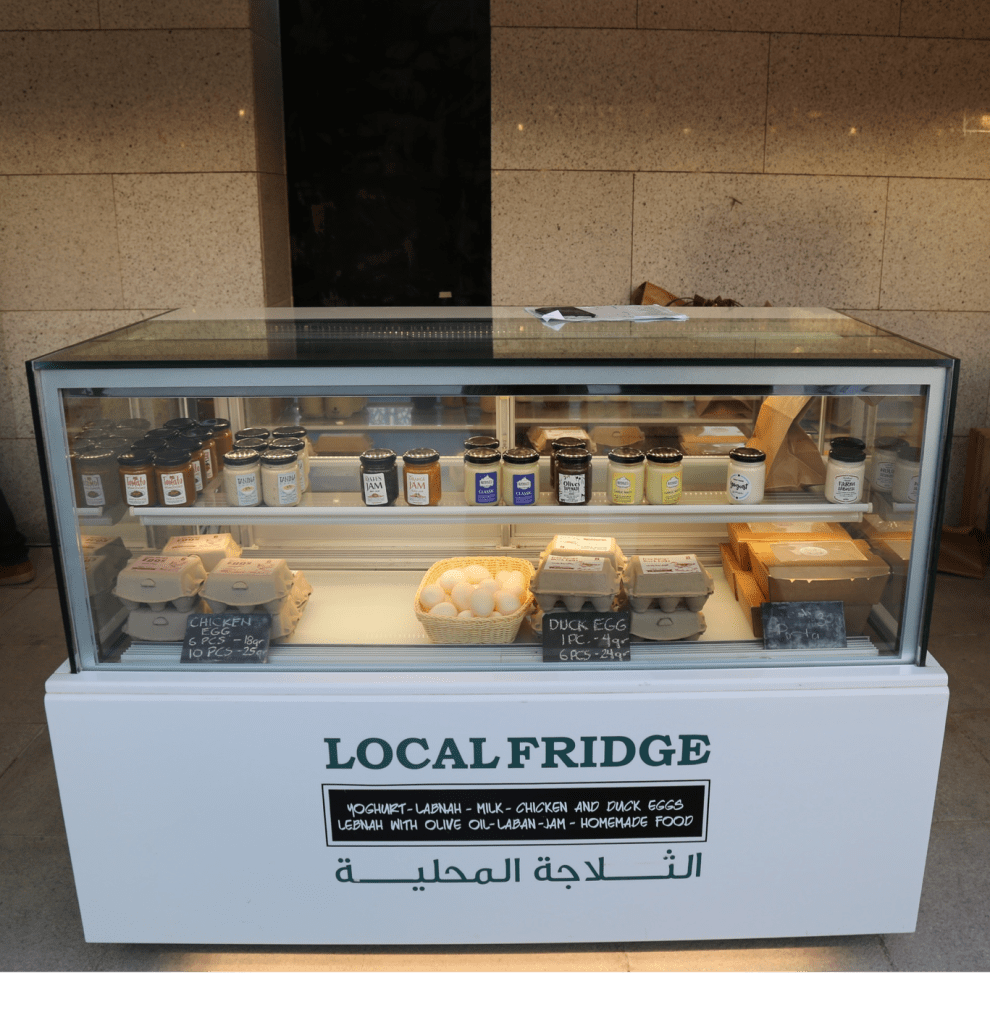
Fridge at Farmers Market showcasing local foods and condiments in glass jars.

Qatar Foundation hosts a market every Saturday from November to April called Torba Farmers Market. Here, their aim is to promote healthy living and sustainability. Vendors sell local produce, cold-pressed juices and “everything-free” food like dairy-free, gluten-free and nut-free. All these promotional efforts come in short; however, if they sell their product with plastic, right? It would be ironic to encourage healthy living and a happy life if you are intentionally making no efforts to help mother nature. I spoke to one of the food vendor’s owners and she gave me some insight about the application process, “they ask you questions about the degree in which packaging is environmentally friendly? Or they have you explain how you will serve your product to reduce all waste including plastic,” said Fatima Ibrahim, owner of 3nb Leaves. 

“I have noticed that most of the items sold contain little to no plastic packaging,” said Noof Al-Naama, a regular customer at Torba. Even though some plastic is still used, their attempts to limit it as much as they could still help people be mindful and shows that we could still go on with our day to day lives while using as little plastic as we could, said Al-Naama. Even after Torba’s efforts to cut down on unnecessary plastic usage, some slip ups still happen like serving plastic straws with iced coffee. If it is so easy to switch from a plastic cup to a paper one, switching to paper straws should not be that big of an issue as well. Considering most restaurants at Qatar Foundation ban the use of plastic straws, Torba should not be the exception. “I was kind of surprised by the straw because when most people think of the easiest utensil to switch to, it would be a straw,” said Al-Naama.

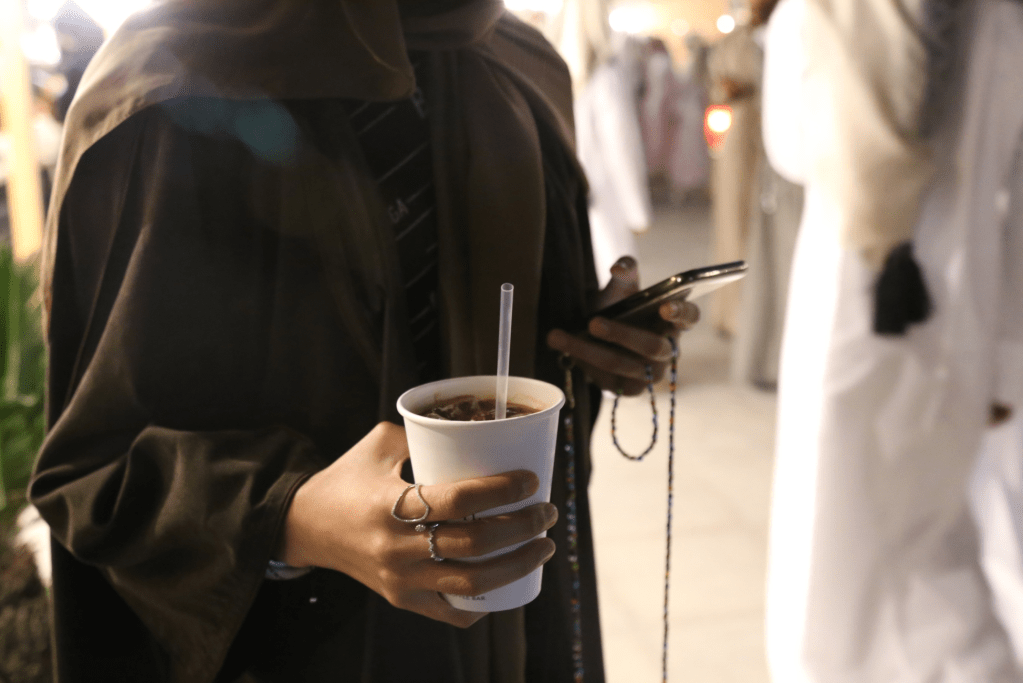
Noof Al-Naama, taking a picture of her coffee.
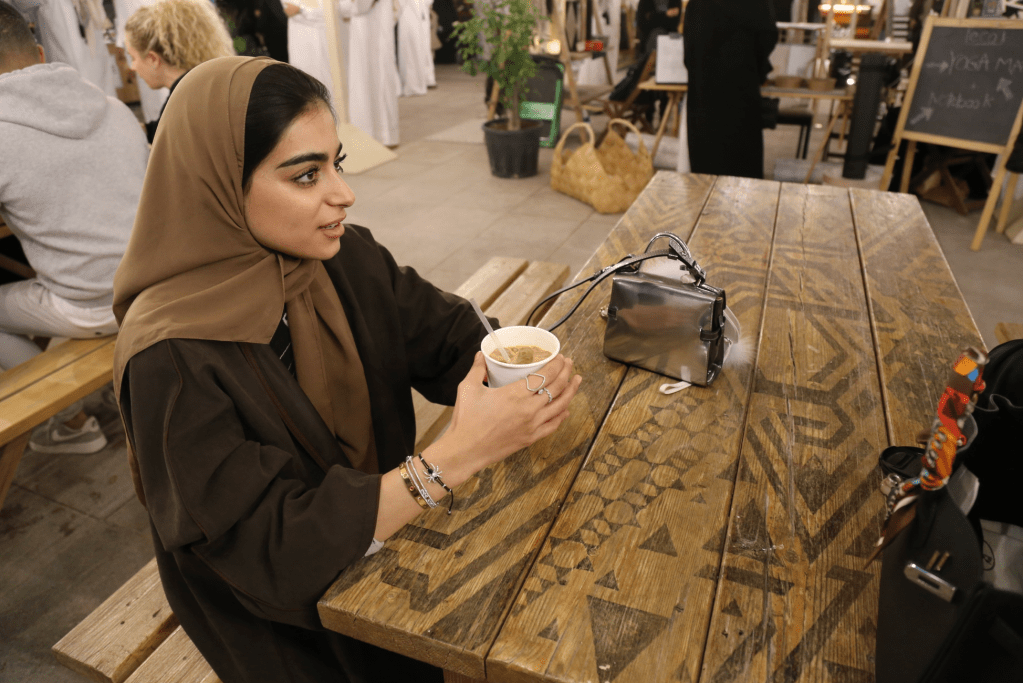
Noof Al-Naama, seen enjoying her cup of coffee where Torba missed the simple step of providing the customer with a paper straw. 

As a student, you can take matters into your own hands because every little change is still change, even the baby steps matter. Anto Mohsin, a professor at Northwestern University in Qatar has taught in some of his classes about the issue of plastic. He said that some of his students have comprehended the seriousness of plastic waste and have switched their regular water bottles to reusable ones. Another initiative includes using reusable plastic bags and food containers. Even though they are still plastic, they are more durable and will last longer, said professor Mohsin. 

Produce being sold in baskets and jam in glass jars, ironically, a plastic lid is placed on the table.

We know the extent that plastic plays in the current situation of our environment. What we can do as a society is to be mindful of our waste and try and do our best to be as resourceful as possible because if that does not work, we do not have a planet B. 

Categories
-

Digital Health Coach at Fingertips

Behind screens, AI and doctors work together to tailor your health plan. Sounds helpful. But some say it brings about alienation rather than motivation.

While technology has revolutionized people’s daily life experience in many sectors, it is also transforming the healthcare sector with the emergence of healthcare Apps. The fast-growing penetration of mobile phones facilitates mobile-based health technologies to become the primary battleground for investments and innovations. According to a report by Zion Market Research, the global mobile health (or ‘mHealth’) apps market was about $8 billion in 2018 and is expected to be $111.1 billion by 2025 (Zion Market Research, 2019). 

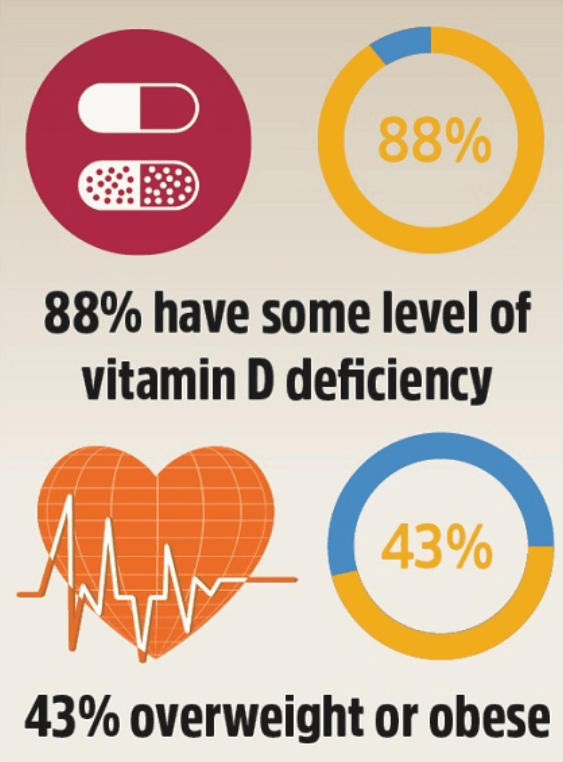
MHealth market also has a tremendous regional appeal. Nowadays, approximately 95 percent of Qatar people own a smartphone (Media Use in the Middle East, 2019), which means mobile is an ideal medium to provide health services for local people. Meanwhile, dietary problem is a severe headache to Qatar. About 43 percent of the population were found obese; 88 percent had Vitamin D deficiency, and 17 percent had diabetes (Qatar Biobank report 2018/19). 

Droobi Health, a digital therapeutic start-up under Qatar Science & Technology Park (QSTP), is one of the local pioneers in this market. Available on both IOS and Android, Droobi Health combines technologies from behavioral science, gamification, data analytics, artificial intelligence, and human coaching to help people build healthier habits. The digital health coach is designed as an app, aiming to reduce behavioral risk factors for developing chronic diseases.

“All these technologies serve one purpose…that is to tell the obese and diabetes people that they are not left alone,” said Majed Lababidi, the managing director and co-founder of Droobi Health. “Many of them have poor access to the healthcare system and do not know where to seek help,” he added. 

Droobi starts with capturing user behavioral data and incorporate the scientific research related to Qatar and the region. It then uses behavior science to design predictive analysis module. It also adopts AI and machine learning to analyze data and develop personalized interventions. The app also offers educational materials adapted to suit Arabic cultures and values.

Droobi Health now has seven hundred active users in Qatar. Although the company works closely with local health institutions such as Al Ahli Hospital, its revenue primarily comes from user subscriptions. Lababidi is confident that many more people will use and purchase Droobi Health subscriptions in the future. 

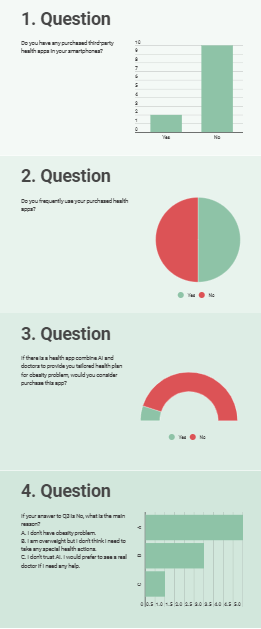
However, a survey shows that the Droobi app has some difficult conflicts to resolve. “It is good to have technologies tracking my health, but I prefer face-to-face consultation because I feel more engaged,” said Ghanim Nasser Al-Mohannadi, 22, a university student who is overweight. Al-Mohannadi is not an active user of Droobi Health app, but the reporter has shown and explained to him how it works. “I may not buy the package because all these functions look complicated,” Al-Mohannadi added.

Ahmed Hussein, 54, a patient who has diabetes, expressed similar concern. “Maybe I am old-school but I feel more motivated when I am supervised by doctors. An app being my supervisor is creepy,” said Hussein. 

While Droobi Health intends to remove the bridges between patients and professional consultants, its fine technologies create some alienations to some patients. The technical gap is one of the challenges it needs to overcome.  

Sources:

mHealth Apps Market by Type: Global Industry Perspective, Comprehensive Analysis, and Forecast, 2018—2025, Zion Market Research, 2019 

Qatar Biobank report 2018/19, Qatar Biobank, 2019

Media Use in the Middle East, Northwestern University in Qatar, 2019

Categories
-

When Worlds Collide: Tech Impact on Art

Recently technology started being integrated into the art industry. In this video, I experience an exhibition titled “Into the Light” that incorporates immersive audio technology, as well as augmented reality technology with art, to allow visitors to try something unique and creative. Throughout this video, I take you on a journey with me to understand the technology more, look at the exhibition and what I think about it, and decide whether it’s worth a visit! 

Categories
-

The slow adoption of technology in global football: an Education City perspective

A look at how technology in football has progressed since 2010. To learn more about the evolution of Goal Line Tech and VAR, click here.

With both Goal Line Tech and VAR only having emerged in the last decade, their implementation has been skewed to leagues that can afford and support them. But why does a collegiate league lack the systems, and how does that affect the game?

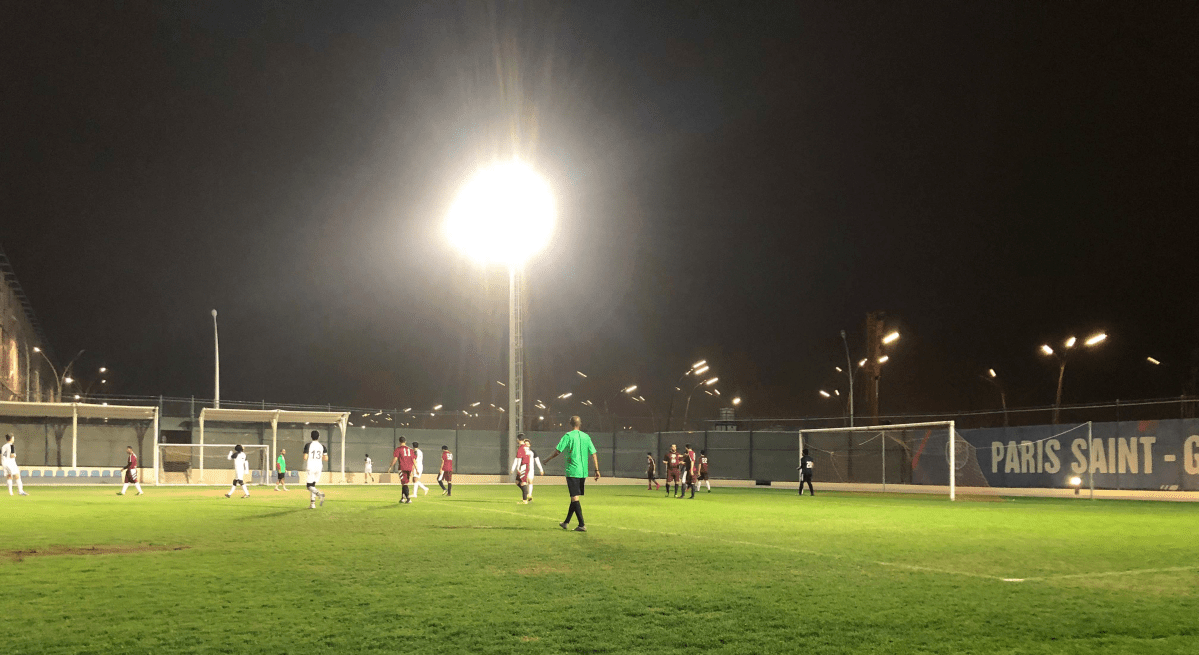
Listen, as Manan Bhavnani and Younis Al-Agha, captain of the Georgetown University in Qatar’s football team, talk about the absence of Goal Line Tech and VAR in the Education City University League. They also discuss challenges relating to the adoption of the technologies. This episode was recorded ahead of the Spring 2020 season, which kicked off on 30 January.

Categories
-

Pros and Cons of eBooks: Do you really need it? This will help you decide!

The old-fashioned hardcopy textbooks are preferred by Professor Khaled Al-Hroub, a political science professor at Northwestern University in Qatar, who thinks that it is easier to remain on track and be able to communicate thoroughly the ideas of the book by writing notes and highlighting points.   

eBooks are an online soft copy of a book that can be easily interacted with. These types of books allow highlighting and comments to be added onto the book as well as sometimes provide interactive tools to make education and the learning process faster and easier.

Hroub mentions that eBooks are found to be more convenient on the educational side since they are easy to email and order. He also says that the ordering and shipment process of eBooks are much easier and more convenient since no one has to deal with large number of packages and such. “There are so many pros to eBooks, one has to admit,” Al-Hroub added mentioning that a person could travel with a tablet where there can be an unlimited amount of eBooks which makes it more convenient in terms of accessing them all wherever one can be. However, he still prefers hardcopy books due to the process of one reading it and that it was scientifically proven that people can absorb information much faster and easier when in contact with a hardcopy of a book. 

He mentions that he does not have a concrete view, yet, this is just his personal taste. He adds saying, “most of the books I read, I generate some dialogue with them by writing notes on them and generating questions.”

Professor Khaled Al-Hroub also adds saying, “as a professor, ebooks are useful, useful to handle, useful to be emailed and dealt with,” which makes it more handy for students too yet it depends on the student and what their learning preferences are. In terms of technology, he agrees that this is such a useful and helpful innovation and technological development yet it does not always and necessarily add to the betterment of the educational nature in a classroom. However, professor Al-Hroub adds on saying, “from a pragmatic perspective as a professor, this would minimize the excuses of them not receiving the books yet, etc.”

A couple of students gave different aspects and perspectives on their idea of the pros and cons of eBooks. Many of them found it less practical because they find traditional hardcopy books to be easier to deal with when it comes to studying or revising because of the ‘dialogue’ that can occur with the traditional book, which professor Hroub prefers.

Even though universities implement eBooks, some universities do not like it. Dana Mahmoud, a senior student at Northwestern University in Qatar, says “I took a lot of classes where eBooks were available or were the only option to use but I struggled a lot when it came to studying for quizzes or exams.” Due to the dialogue that cannot occur with eBooks, Mahmoud justifies that this makes it difficult to absorb information in a fast way. Mahmoud adds, “I would have to take notes on my notebook and refer to the page which I took this information from which makes it much less convenient to me during exams because this wastes a lot of my time and energy, too.”

On the contrary, Dana Hassan who is a junior student at Northwestern University in Qatar says that she prefers eBooks because she would not have to carry heavy books all around the university which causes her severe back pain. Hassan says, “I am very thankful for the invention of eBooks because not only did it make it more convenient for me, but it also made me feel more organized where I can highlight and add notes in the same place which makes it more organizing.” 

Hassan thinks that forgetting books at home is a very often thing to happen yet when it comes to eBooks, it can be easily accessed on the laptop which is carried all around the university on a daily basis with her. “I would not have to carry books when I have a class that provides eBooks which I find more convenient. I think I easily learn from eBooks too because I sometimes find it more interactive than the usual traditional hardcopy books.”

Wijdan Al Khateeb, a senior student at Northwestern University in Qatar says that she did not experience any class that had a mandatory eBook which she finds saddening. “I wish I was able to experience eBooks and see how they work because I never took a class that actually has eBooks provided.” Although she did not experience this new trend yet she thinks it would be very interesting and easy to handle because “it is much easier to just carry a laptop than loads of books at one time,” Al Khateeb adds.

Categories
-

Don’t Blame Your Stomach, Blame Your Brain

  • Research finds that overeating is caused by brain connection, a hormone called MCH.
  • An increase in the MCH is responsible for impulsive behaviors such as gambling, addiction and overeating.
  • This new discovery hopes to contribute to therapy, as an alternative method to lose weight.

New Research

Fitbit? MyFitnessPal? These apps may no longer be necessary to fight obesity. New research finds an alternative method, therapy.

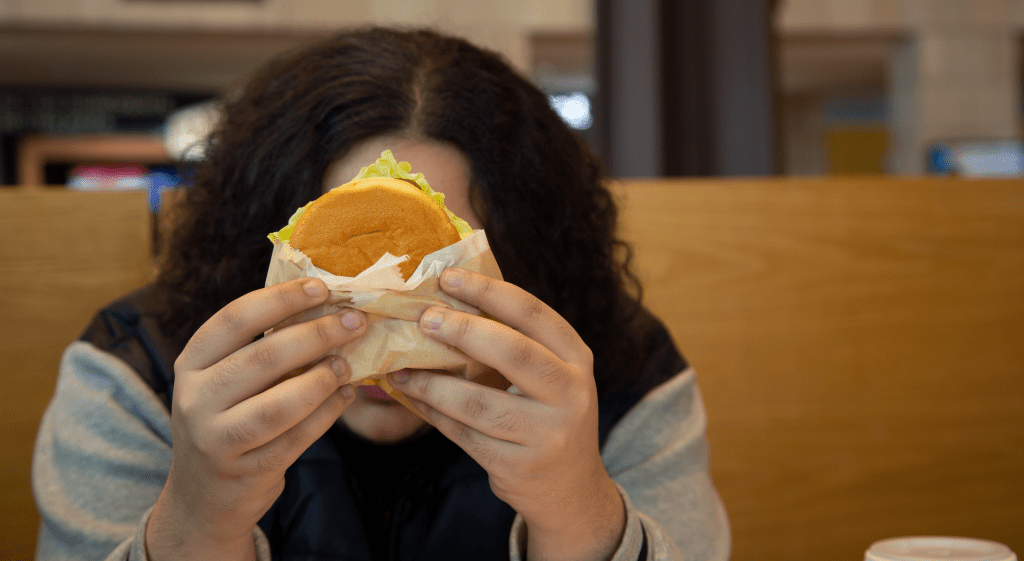
The research from the University of Georgia links overeating, formally known as binge eating disorder, to an increase in Melanin Concentrated Hormone (MCH) production in the brain. This hormone is responsible for impulsive behaviors, causing a lack of self-control when it comes to eating, leading to obesity.

Meaning that, if you find yourself finishing the popcorn before the movie starts do not blame hunger.

So, overeating is not a cheat meal that you decided that you can have once a week. Impulsivity is a decision that does not take into consideration the consequences of the action.

Even with the technology available at our fingertips, almost half of the Qatari population suffers from obesity, according to the latest Qatar Biobank annual report, a medical research facility based in Qatar Foundation that focuses on studying obesity, diabetes, and cancer. These obesity rates are not slowing down in Qatar or anywhere in the world, says Tamara Al-Abdi, an adjunct Psychology professor at Virginia Common Wealth University in Qatar, who also teaches Nutritional Science at Qatar University.

If left untreated, obesity can have long-term effects on people’s health putting people at a greater risk of developing heart diseases, type 2 diabetes and high blood pressure, according to Stanford Health care.

As none of these methods prove to be effective enough to solve the obesity epidemic, researchers turn to new approaches to tackle obesity, Al-Abdi adds.

That’s why, in the last two years, researchers focused on a psychological approach to treat obesity as a mental health issue, says Al-Abdi. The research published in the journal Nature Communications tested on lab rats that were trained to push the lever every 20 seconds to get food at the beginning. However, after increasing their MCH levels through injection, researchers found that rats grew impatient and started to push the lever several times, demanding food. Researchers hypothesize similar effects of impulsiveness in humans, which can explain overeating.

Though at its early stages, this knowledge in this research might contribute in the future to an alternative approach which is developing treatments such as therapy to control the hormone responsible for impulsivity, according to the study.

Using this would help therapists is to understand the emotions that trigger a person’s response to overeat and try to eliminate them and controlling their bad habits, says Al-Abdi.

Societal and Social Media Pressure on Body Image

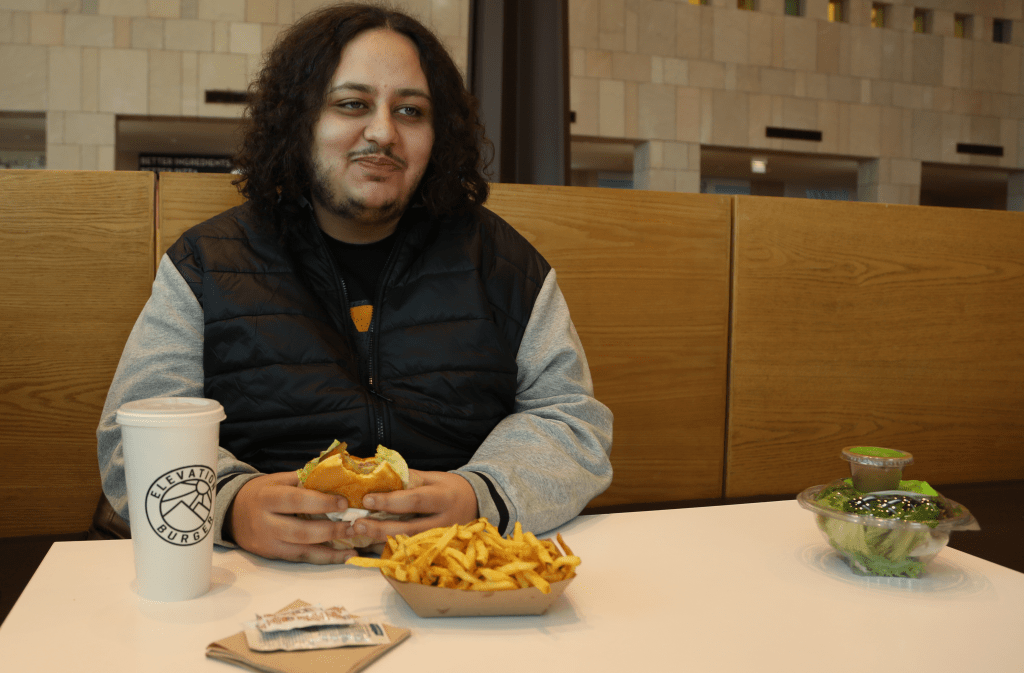
Emotional eating also plays a big role in Omar Fakharany’s struggle to lose weight.

Omar sitting at the Student Center in Qatar Foundation.

“When I am bored or feeling depressed, sometimes you just want something to make happy, by eating,” says the 21-year-old university student.

From the age of seven, Fakharany recalls always having an unhealthy relationship with his body image. In hopes of mending that relationship, he tried several methods of weight loss such as going on the keto diet, speaking to a nutritionist and exercising throughout his teen years but ultimately failed.

“Every time I felt like a method didn’t work, I changed. So, it was very inconsistent. When I felt demotivated I go back to my old habits”, says Fakharany.

Fakharany once considered getting a gastric bypass surgery but changed his mind after learning about the risks involved.

It is a monthly task for Fakharany to search for new ways to lose weight because of the pressure from society. “When you are obese, it affects your interactions with other people because they assume you are lazy,” he adds.

But, the pressure from society does not stop there, it extends onto social media. As Fakharany, scrolls through his Instagram feed, he finds himself surrounded by people taking pictures of their toned bodies.

One must remind themselves that social media does not reflect reality. “Social media is a world of perfection where people can edit their bodies and faces to look a certain way,” says Meerna Muhanna, a clinical dietitian. 

Marta, a personal coach, explains that social pressure encourages people to try unsustainable methods of losing weight. In other words, diets that work in the short term, but in the long term will make the body lose out on important nutrition.

Health Fad or Diet?

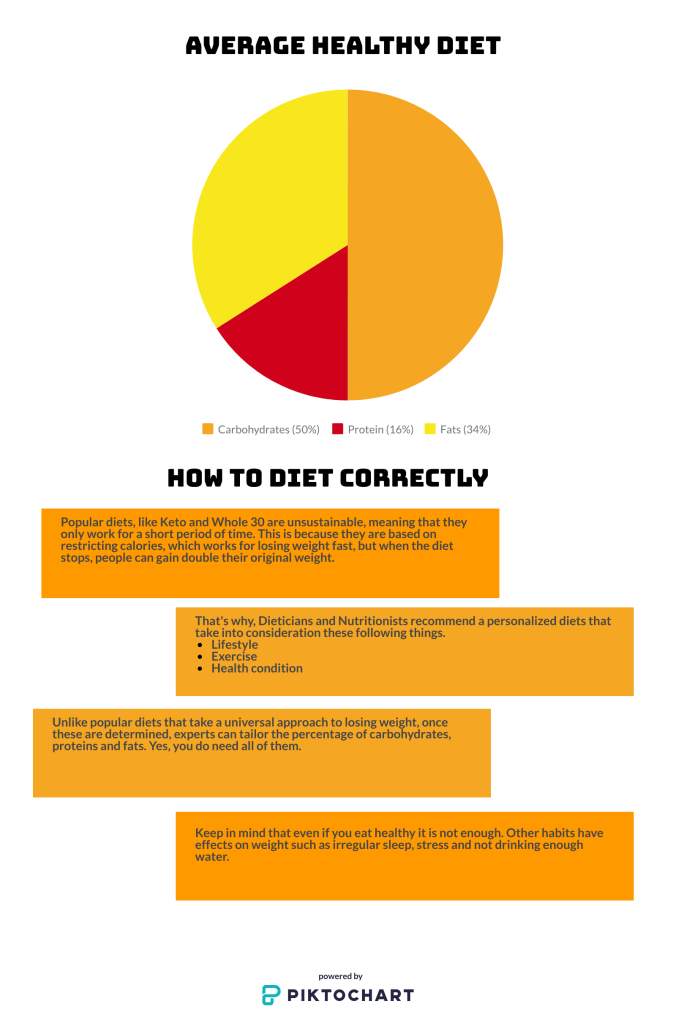
The methods that Fakharany tried such as the Keto Diet are called health fads. Their only purpose is to give you immediate results because they are based on restricting calories. The initial weight loss from these diets come from water weight instead of fats, says AlAbdi.

So, it is important to keep in mind that no healthy diet will let you lose one kilogram per week. Instead, a healthy diet should include the correct balance of carbohydrates, proteins, and fats. Although it will be a slower process, it will ensure that the body has the right nutrients for long-term effects, says Muhanna.

Categories
-

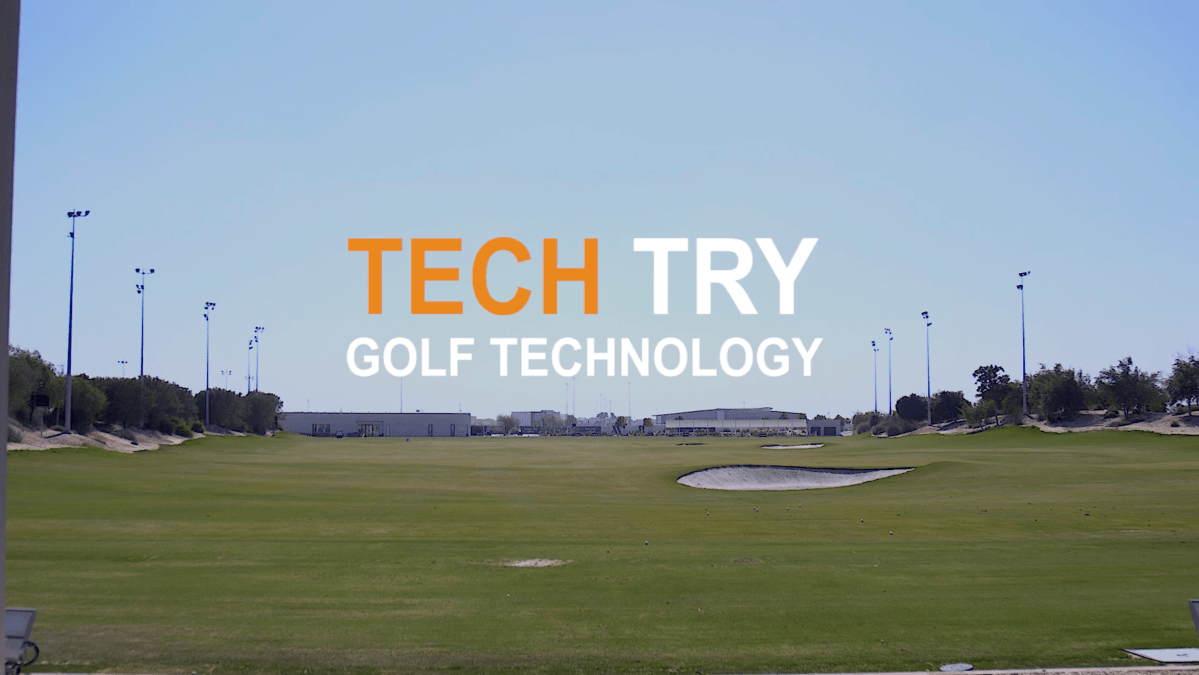
Tech Try: Adding A New Dimension to Classic Sports

Year by year, new technologies are entering our lives in groundbreaking ways. In this video, I take you along with me to experience how technology is being incorporated into a classic sport like golf. Throughout this video, I discover that these technologies work best for individuals who are well versed in the sport; regardless it was fun getting my hands on a few expensive clubs!

Design a site like this with WordPress.com
Get started