
Categories
-

Apps are Boring now, We Need Something Bigger!

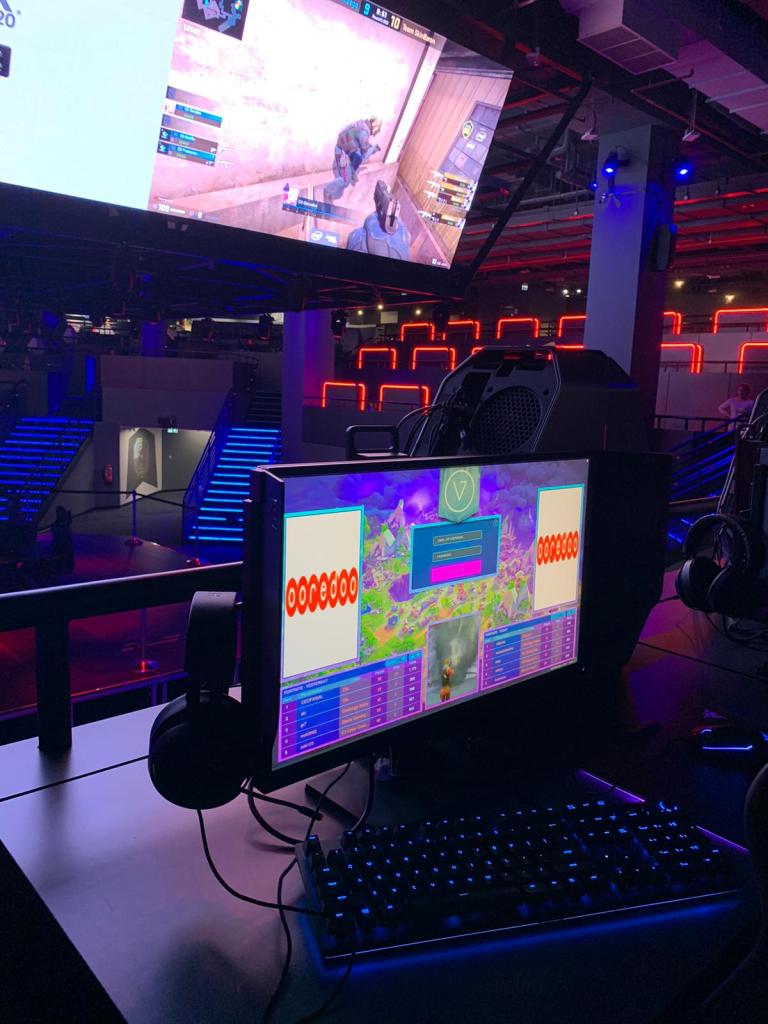
Gaming has undoubtedly started to become popular worldwide. The global aspect of gaming meant that more and more people could show their expertise while having fun. Gaming tournaments have become one of the highest paying in the world, which confirms that gaming has taken over. In 2019, “Bugha” at the age of 16, won 3 million dollars only from one competition. You get it now? Gaming is big. However, we are not here to talk about Esports, that’s for another time. This article is about gaming in Qatar, not necessarily competitive gaming but the fascination with games in general. When Virtuocity opened at Doha Festival City, young boys and girl flocked the place playing some of the most popular games at the moment like Fortnite, Counter-Strike: Global Offensive, Overwatch, Dota 2 and League of Legends. 

A closer look at Virtuocity, the area is filled with PCs with ready to go gaming softwares.

So, if all these games have dominated the market, is there any room for local games to thrive in a highly competitive market?

To clarify, I am not talking about the games you play competitively in tournaments and such; I am talking about regular games that you play on your phone when you are trying to avoid saying hi to someone or when you are bored in class.

 Several games have popped up on the App Store or Google Play that are made by Qatari developers. Games like Beyond Solar, Jumpo and Deadly Trap are all made by indie game developers where most of the downloads are coming from Qatar. Despite the number of downloads being demanded, but why are the developers not leading the gaming market in Qatar, considering how popular it is here? For Beyond Solar, for example, there are several reviews, more than 50 to be specific and almost all were five stars. Users were praising the smooth software and according to Gary_Cally_pro, “ridiculously good graphics”. So why are the ratings and reviews relevant and why do you readers care. Well, they are related because, for relatively “smaller” game, the reviews are exceptional. Even though we do not know if all the reports are accurate, since almost all had five stars, we technically cannot accurately know how well the game is doing. The smaller and recently developed games in Qatar do not compete with the ones abroad like the United States because of the relatively lower market here. 

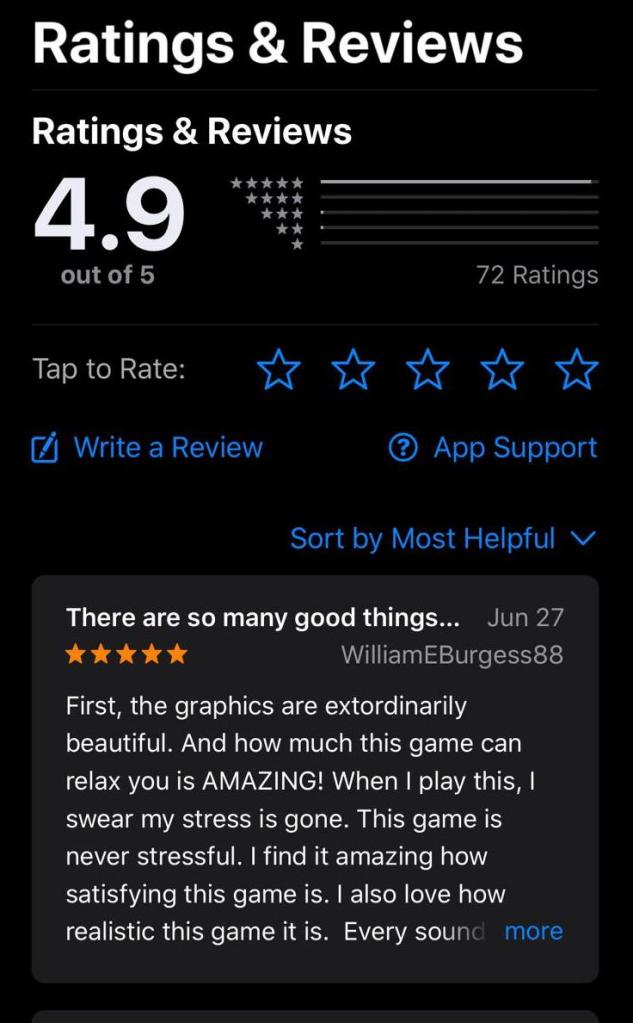
Even though Beyond Solar is a Qatari made game, it had more than 70+ ratings in the United States App Store and only about 11 for the one in the Qatari store. The numbers are relatively low throughout both countries but it also raises the question of why is the game more popular abroad? If developers here want to make a name for themselves or try to make it in this competitive field, their competition is with games abroad and not ones locally made, this allows them to branch out some more and not limit themselves to a specific group.
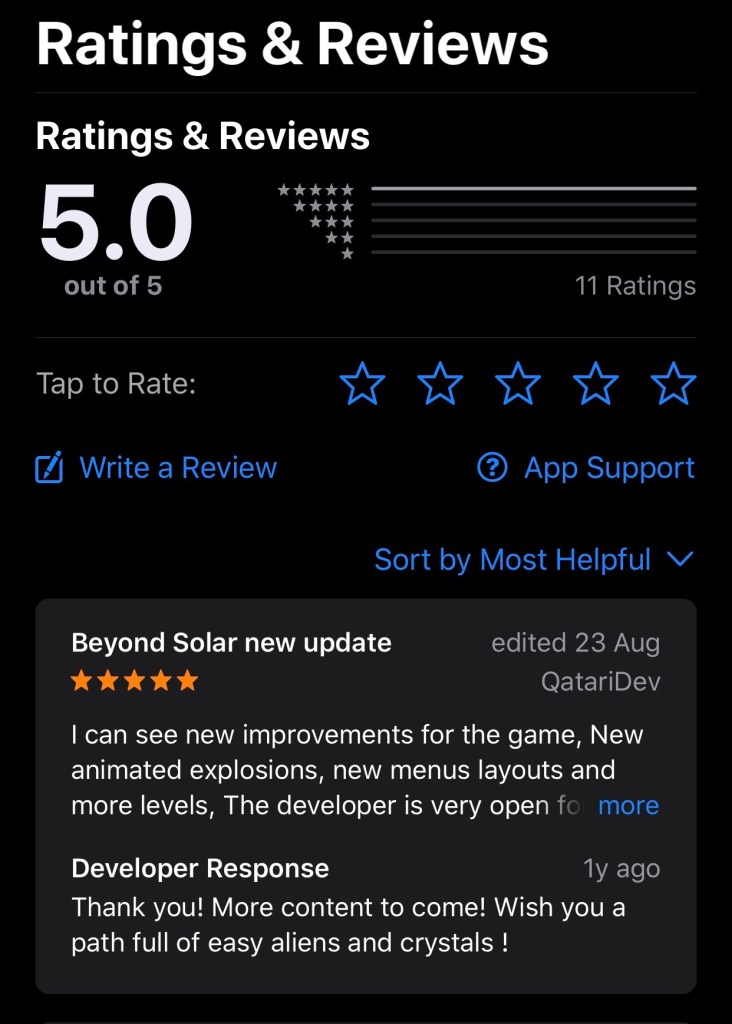
Screenshot of ratings and reviews for Beyond Solar in the Qatari App Store.
Screenshot of ratings and reviews for Beyond Solar in the U.S. App Store.

So, what next? 

“I wouldn’t mind playing a game that is made by a Qatari developer, but the thing is, I only like competitive games and not apps,” said Sultan Al-Awajan who is part of the clan CyRx. Here is the thing, yes, it is good that people here are creating their own games. Yes, they are starting out small by creating applications. How about in the near future, we see a game made by a Qatari developer that could be played online and competitively. These competitive games are undoubtedly popular, we have streamers and gamers supporting them as well. What we are missing is for that to be here, we have the resources and we have the people, we just need the game developed. 
Sultan Al-Awajan, logging in to his usual account to practice for his upcoming tournament.

I am sounding hopeful because Qatar is in fact starting out small with the applications but in order to become popular, a competitive game would not hurt.

Categories
-

Qatar’s Voice Over Internet Ban (VoIP)… Does it make any sense?

The following statements are a clarification of the legal position from the Supreme Council for Information and Communications Technology regarding Qatar’s VoIP ban

“VoIP is a technology for the delivery of voice services using existing internet infrastructure and services. There are no laws or rules that prohibit the use of such technology within the State of Qatar” (Ministry of Transport and Communication Online Website).

“The Telecommunications Law 34 of 2006 does, however, make it illegal for any person to provide telecommunications services to the public for a direct or indirect fee without a license issued by ictQATAR for that purpose” (Ministry of Transport and Communication Online Website).

Currently, the only two entities licensed by ictQATAR to provide such voice services to the public in Qatar are Qatar Telecom (QTel) Q.S.C. and Vodafone Qatar Q.S.C” (Ministry of Transport and Communication Online Website ).

Okay, so what does this mean in English?

Well, let’s first let make sure you understand what the Voice Over Internet Ban (VoIP) is. Since the 2017 blockade, Qatar has prevented residents living in Qatar to use voice apps such as Viber, Whatsapp Calling, FaceTime, Skype and Duo.

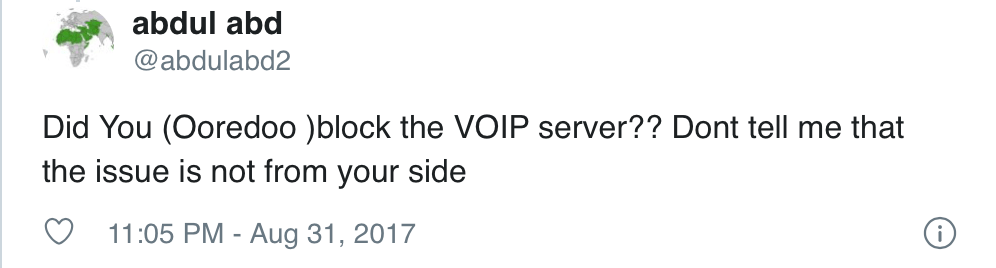
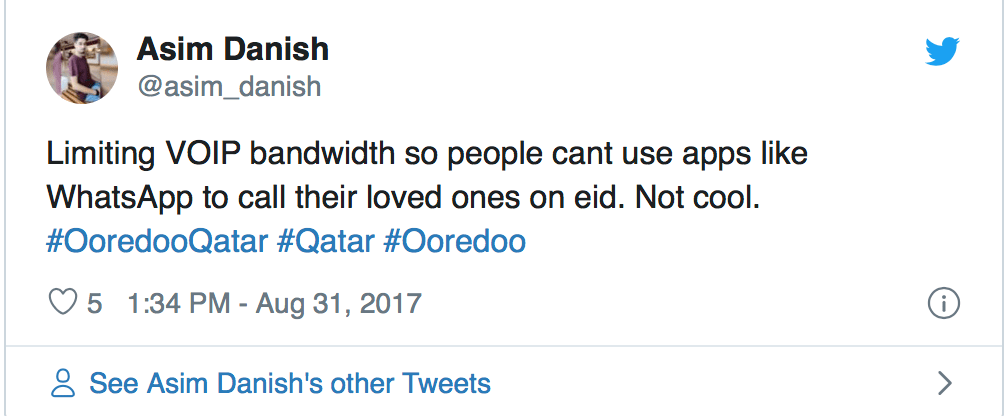
At the very start of the ban, many residents pointed blame at the country’s only two internet service providers, Ooredoo and Vodafone.

Ooredoo’s response?

Later, there was a another statement from the service company. “Quality assurance for calling using these apps is out of Ooredoo’s control. However, we can guarantee that the issues are not from Ooredoo Super net. Eid Mubarak” (Ooredoo Qatar).

Microsoft’s Skype did comment on it’s FAQ website about the ban and told it’s users, “It  has been brought to our attention that our website and services have been blocked by the ISPs in the United Arab Emirates and Qatar. That means you won’t be able to use Skype in the United Arab Emirates or Qatar. Unfortunately, there is very little Skype can do about this situation. The best course of action would be for you to speak to your ISP and ask why they are blocking Skype and request that they unblock our site and services” (Microsoft).

So what does this all mean? Well, Qatar’s government is banning VoIP apps like Skype and FaceTime because these companies techinically don’t have the licenses to operate in the country. To say if they need to, is another question for another journalist. However, Qatar’s government legally allows residents to use these apps through VPN.

So what’s the point of the ban? I don’t even know to be honest.

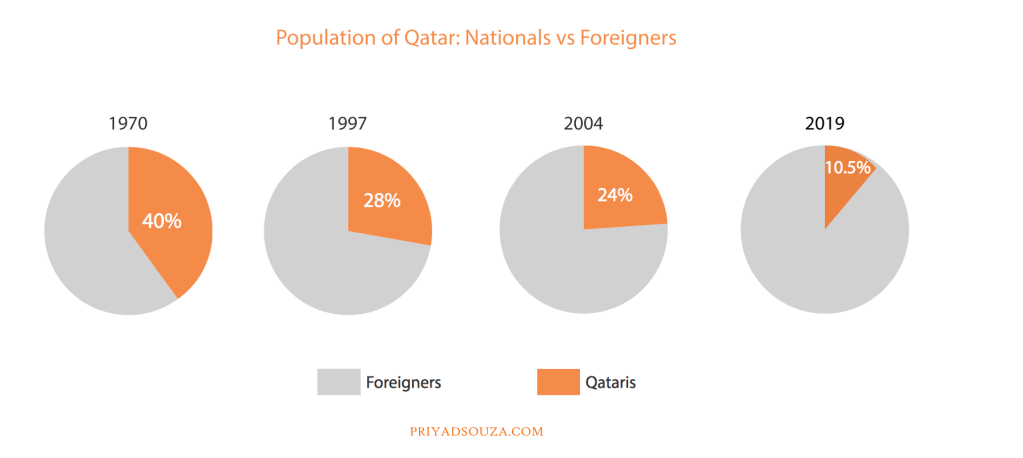
According to priyadsouza, the population of Qatar stands at 2.6 million people ). The country is growing at a rapid growth. However out of those 2.8 million people, only 330,000 are Qatari. (priyadsouza)

And the numbers are only growing for foreigners in the country…

As the country develops economically, so will the demographics and Qatar being a temporary home for many foreigners including myself, apps like FaceTime, WhatsApp and Skype are essential for our stay. The conversation that is needed for the ministry is one that matters for now and in the future of Qatari Residents. With permission to use VPN, what is the point of banning these apps when they’re doing a service for everyone living here. Qatar is currently in a diplomatic blockade, where locals cannot visit there loved ones next door, so the significance of this discussion is important not just for the expats living here. As the 2022 World Cup draws near, I do believe the Qatari government will make the right changes to have the individuals that are living or coming to visit the country, live more comfortably.

Design a site like this with WordPress.com
Get started