

Let me first give you some context on how a “simple” story quickly became not so “simple”.
Qatar’s Education City is home to the world’s best universities; Northwestern, Cornell, Georgetown, the best of the best and with that comes world-class resources. From entire newsrooms dedicated to students majoring in journalism to $80,000 equipment for communication majors, the abundance of support seems to be endless. As an international student, I was astounded by the level of high tech services provided from not just the universities, but also by the student housing dormitories on campus. Education City’s dorms shout and scream luxurious living.


Let me give you a quick overview of how lavish residential students have it at the dorms. Picture 32-inch television screens scattered across each hallway as if they were stickers and there are a lot of halls, like a lot. Then picture, that after walking through the halls you get to your room which has it’s very own touch screen tablet, and yes, every room has a tablet attached to it. But the fun doesn’t stop there; inside each room is set with another sleek 32-inch television screen and surrounded by accessories to help better your stay.

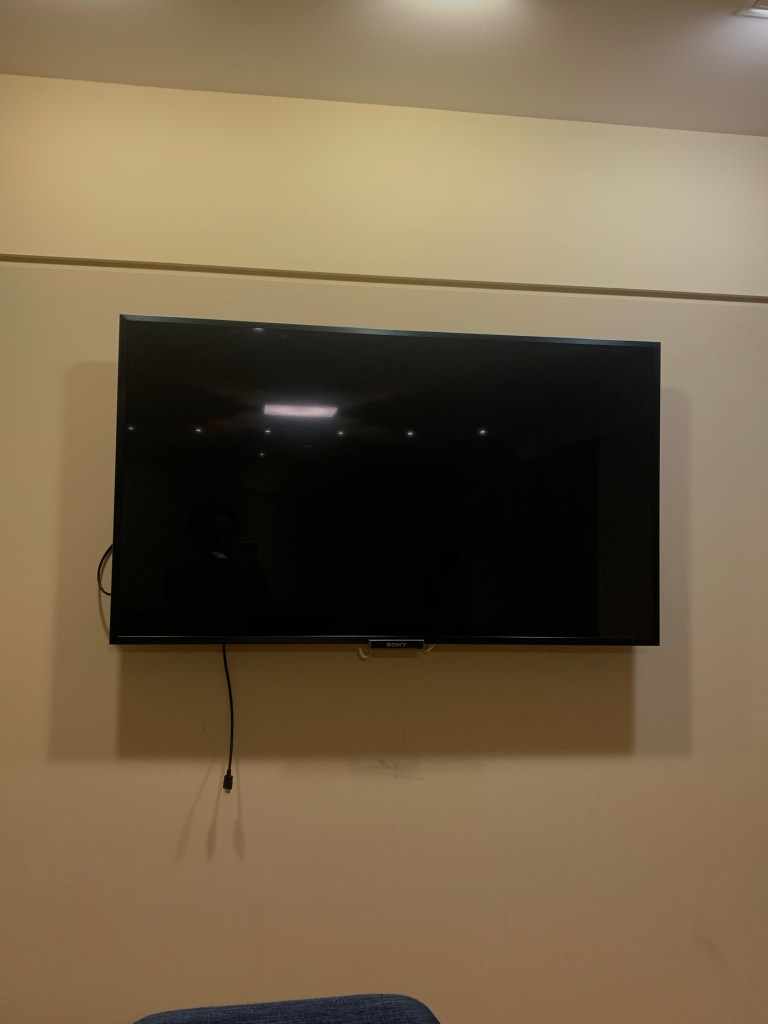


After the honeymoon phases passed, I was intrigued as a student on why is there so much high tech utilities, is it actually needed? Now don’t get me wrong, I love having the cool gadgets as much as the next guy, but I was never using it. Actually, nobody was using it at ALL. That’s what I found insane. Students at EC are immersed by the most desirable devices but are they being utilized or are they sitting down collecting dust because nobody needs them. The bigger question was, does Education City have a problem with having too much material and not enough desire to make use of it? The short question was, is there a practice in today’s digital era to discarded unwanted electronic devices and reuse, resale, recycle what goes disregarded or is money being thrown at something that no one seems to care for? You may ask, why do I care? We can skip over the moral obligation conversation for now and the ethical reasons on why in the current world today; we need to conserve the devices we used and how the world is literally dying in front of our eyes because we have an abundance of electronics that harm the environment. But I also cared because I’m paying for it. My high rise tuition that seems never to stop growing is going toward budgets like this, and we should be concerned as community members.
So as a noble concerned student, I went to complain. And see if there is a process of being efficient and “green” with this unneeded materialistic technology. And I got all the answers I needed, and everyone was so helpful and supportive. Education City is going green with everything, everything is perfect, and there is no suspicious activity going on at all 🙂
Unfourtnely, if that were true, I wouldn’t be here right now writing this piece. It turned out it was the complete opposite. No one wants to talk, like indeed no one. I thought it would be simple, ask a few questions to the IT department. Ask some questions to the housing department. I also had some connections in some of these places, so it came to my surprise when i received comments saying that this is a sensitive topic and there is a process on having this information out.
Bro what?
It didn’t make sense; what information about this topic is so secret that permission has to be granted from the higher-ups. Not only am I a student and I should not have to ask to be given this information from my very own university and the place I live and sleep in, but there’s a suppression of information going on, and it’s not right. If you think I’m exaggerating, these were the questions I tried to ask and ask yourself, is there anything sensitive about what I’m asking.
Question 1) There is an abundance of high tech at NU-Q, what are some of the pro’s and cons of the resources?
Question 2) How does facilities ensure that all utilities are being used here efficiently and effectively?
Question 3) How does NU-Q limit itself from having too much materials to having only the right amount for its students and staff?
Question 4) Laptops, tablets, when they are broken, does NU-Q attempt to fix and put it back to service? Or does it become recycled?
Question 5) Since the beginning has NU-Q, what has NU-Q’s motto been to technology? Is it having the best and most efficient products or is it something else?
These are the answers I got back from one of the sources after a couple of negotiations and a reminder that I am just a student, the rest haven’t replied and probably won’t 😦
Answer to question 1) “When at its best, NU-Q technology enhances the learning experience for students and leads to more efficient business processes for employees”
Answer to question 2) “This may be a better question for our Facilities department, but I can speak to a few details under IT’s purview. Classroom and digital signage systems operate with automated timers to conserve energy outside fo business hours. From a Facilities perspective many of the buildings lighting systems detect heat and movement to determine whether lights should be turned off in a given room.”
Answer to question 3) “Institutional technology equipment policy and budget constraints govern our acquisition of assets.”
Answer to question 4) “In general, if a repair is economical, we repair. A repair is economical if it costs less to repair than to replace with a new asset”
Answer to question 5) “When you say motto, I interpret that as what are the guiding principles that influence our technology decisions. One such principle is that when NU-Q identifies a need for a new service, we explore whether we can meet that need by leveraging an existing service offered from Evanston first, the cloud marketplace second, and only if we cannot fill a need from Evanston or the cloud do we acquire and deploy a new service locally. We follow this model to promote alignment with Evanston where possible and to reduce our ongoing support and operating expenses”
Now I could have probably asked better questions, but I was hoping these questions would be an introduction to the answers I would get. But what I really found out was there is a common code of conduct when you go asking about something that nobody seems to want to admit it. There could be nothing suspicious going on at all, but I wouldn’t know because of the limit of access to information I have as not only a student, but a concerned member of the community. Who knows, maybe I asked on a bad week. What’s important is that information regarding a common understanding should be public and not hidden especially at education institutions that believe students should have equal opportunity to access of information to anything they desire especially when that information concerns them.
 talkk.tech.blog