
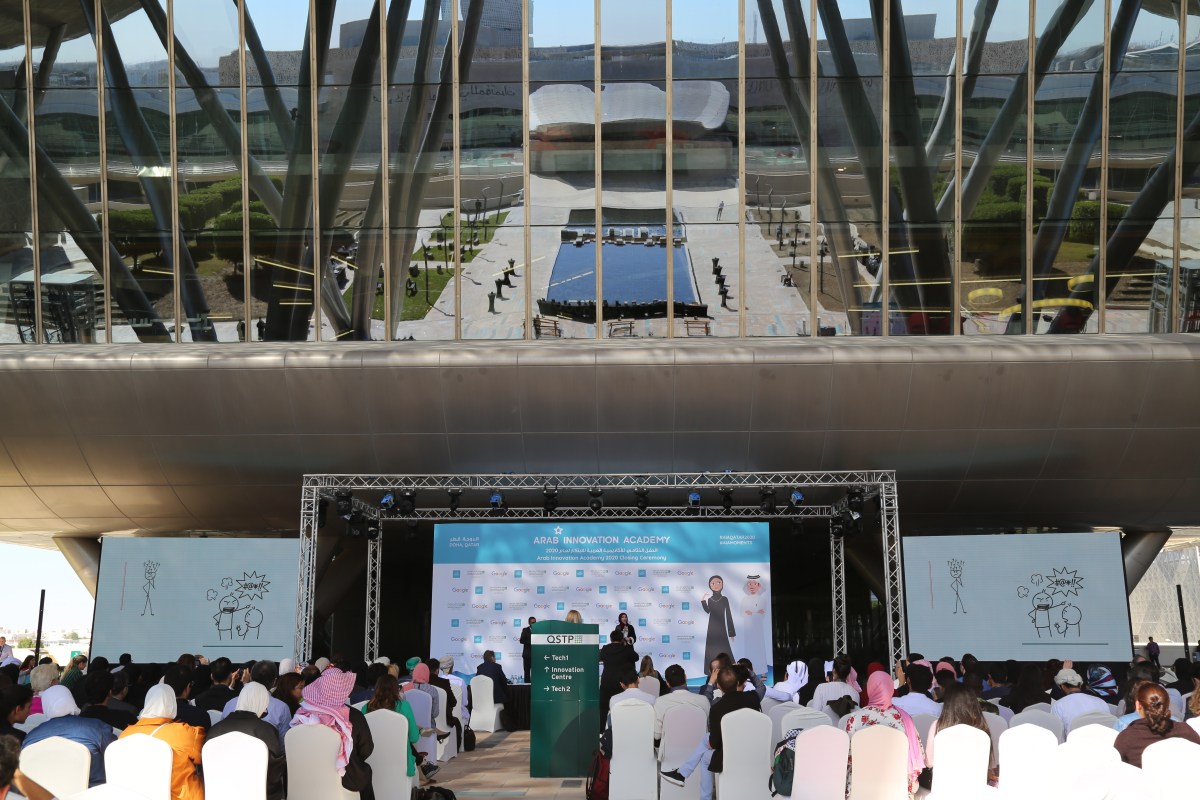
Arab Innovation Academy: Does it work?

Samah Saad, an Algerian university student, just won first place at the latest version of the Arab Innovation Academy (AIA). Her excitement can be heard through her screams as she, along with her group, runs up to the stage to collect their prize, which was access to accelerators and an article written about them. Their start-up, Salamtak, is an online management system to monitor vital data of patients facing chronic diseases.
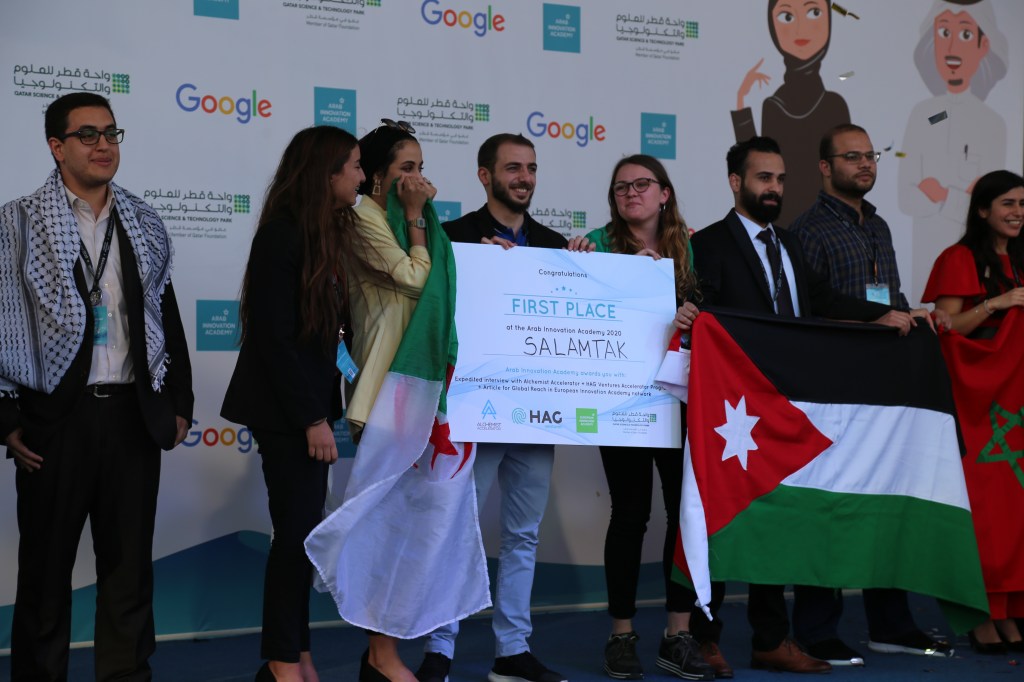
“The sweat, the tears, the tiredness, the extra work hours, all the effort we put through has paid off. We won. Salamtak was born in AIA, and we plan to raise it out there in the market. Launch it and let it impact the most of it,” Saad said.

The question is: Will Salamtak reach the market now that AIA has come to an end?

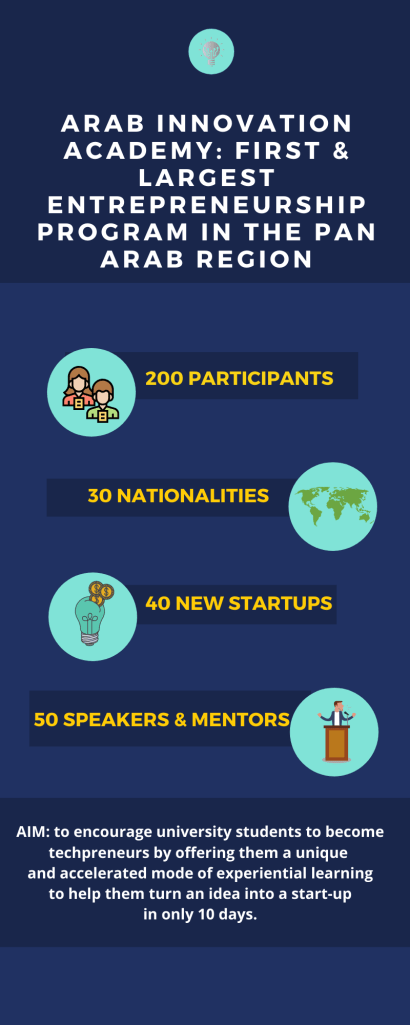
The Arab Innovation Academy, a collaboration between Qatar Science and Technology Park (QSTP) and the European Innovation Academy (EIA), is a 10-day program that helps students from the Arab region to turn their idea into a start-up. This accelerated learning program helps get them into the mindset of becoming entrepreneurs, according to Hayfa Abdulrahman, an Innovation Director at QSTP.

“It (AIA) equips them with the right mindset, tools, and connections to establish their own startups instead of waiting for opportunities to be employed,” Abdulrahman said.
However, how efficient is AIA at helping students launch their startup? According to previous winners of the program, it has become a struggle to launch their products into the market due to a lack of funding.

Sinan Al Obaidi won first place at the first version of the Arab Innovation Academy in 2018. Although he had an “eye opening experience” and had the opportunity to develop and pitch his idea, Al Obaidi did not get a fund which delayed him from successfully starting it.

“I wished that it qualified us to get a product development fund from QSTP to further develop the product rather than going to seek funding from private investors,” Al Obaidi said.

Since the program does not provide funding, many participants leave with only the experience and skills they gained from it. Although this is beneficial, and helps these students with future endeavors, it does not achieve what is aims to do. The importance of having such program, according to Abdulrahman, is to “enable youth in the region to actively contribute to economic development through technology, innovation and entrepreneurship.” Thus, how important is it if it does not successfully achieve the contribution of participants due to having no money?

Chaimae El Mahdaoui, a Moroccan student, is another example of that. Despite winning first place in AIA 2019, and being in contact with both participants and mentors, she still could not launch her app.

“I am currently developing the offline version of Salamat-e as I don’t have enough funds to develop the app but still the app is just a tool and the project is more than that,” El Mahdaoui said. 
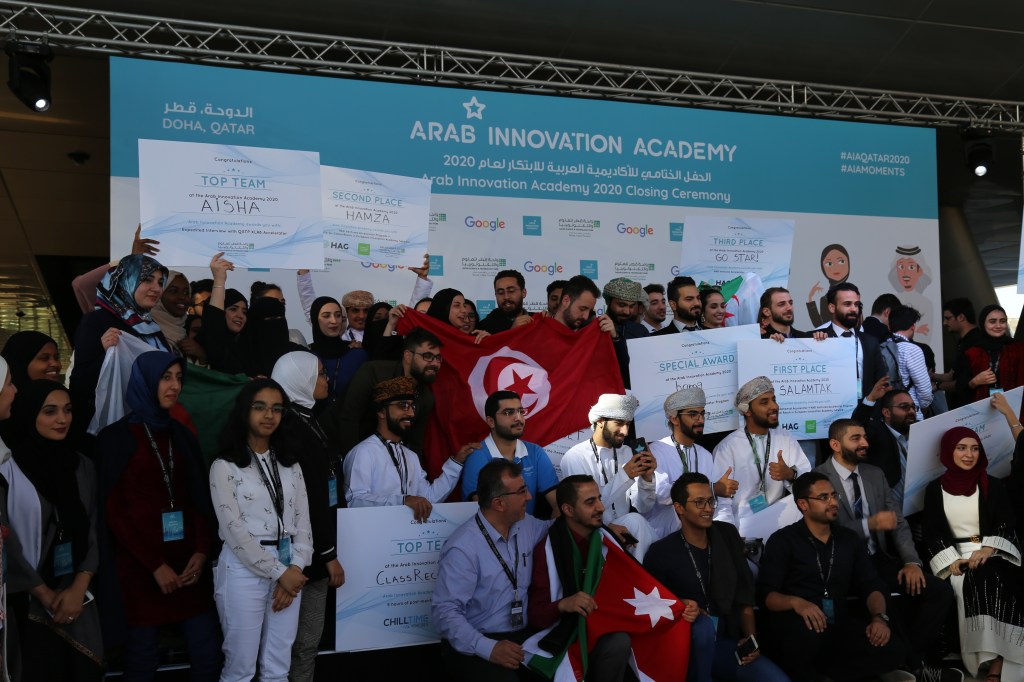
Participants at AIA 2020

On the last day of the 10-day program, participants have a chance to pitch a final pitch to investors and present the fund they would need to launch the startup. This allows the participants to experience real-life fund seeking. However, participants do not seek funding and find it hard to get any funding after the program ends. Therefore, the program should consider a fund for the winning team, to allow them to launch and witness their project come to life after working hard on it for days. As the Arab Innovation Academy clearly puts in effort to bring in mentors and speakers from around the world, it should keep in mind its aim, which is to allow youth to actively contribute in economic development.


Categories
-

Does Qatar Foundation Actually Care About Saving the Turtles?

  • Excessive plastic usage is so harmful to our environment that we need to take initiative now!
  • Since Qatar Foundation is responsible for teaching the youth, it is important for them to raise awareness of the issue.
  • Torba Framers Market is one of many initiatives that Qatar Foundation has to help promote sustainability and less plastic waste.
  • Individuals are also responsible in being mindful of their plastic consumption and to look for alternatives to decrease their plastic usage.

As we all know, excessive plastic consumption is a big deal! With increase in population, our demand for plastic has increased tremendously. We all know why we need it, it is cheap, versatile and resourceful. How do we know when it is necessary to look for alternatives?

We know the dangers in the future, we know the extent of damage of our actions but barely anyone is taking initiative. Marine life is drowning in plastic waste and the least we could do is attempt to care. 

Hygienic products being sold in reusable packaging which fits Torba’s guidelines. 

This is how Qatar Foundation comes into the picture. We’ve all probably seen the trash cans scattered around Education City that cater to different items of trash. Almost all of the universities on campus have them, dividing the garbage into metal, paper, glass, general and most importantly, plastic. This initiative helps students, faculty and staff to sort out their garbage and this also plays a big role in Qatar’s National Vision 2030. The development plan aims to transform Qatar into an advanced society capable of achieving sustainable development. One goal of this plan is to achieve an environmentally aware population. 

Divided trash cans scattered around every campus in Education City.

“It is so important for the younger generation to care about what they are doing before it is too late,” said Juhaina Al-Lanjawi, a youth ambassador in the Arab Youth Climate Movement in Qatar. “I think it is Qatar Foundation’s duty as a school to teach the students about how important plastic waste is and what we can do to minimize it as much as possible,” said Al-Lanjawi. 

Fridge at Farmers Market showcasing local foods and condiments in glass jars.

Qatar Foundation hosts a market every Saturday from November to April called Torba Farmers Market. Here, their aim is to promote healthy living and sustainability. Vendors sell local produce, cold-pressed juices and “everything-free” food like dairy-free, gluten-free and nut-free. All these promotional efforts come in short; however, if they sell their product with plastic, right? It would be ironic to encourage healthy living and a happy life if you are intentionally making no efforts to help mother nature. I spoke to one of the food vendor’s owners and she gave me some insight about the application process, “they ask you questions about the degree in which packaging is environmentally friendly? Or they have you explain how you will serve your product to reduce all waste including plastic,” said Fatima Ibrahim, owner of 3nb Leaves. 

“I have noticed that most of the items sold contain little to no plastic packaging,” said Noof Al-Naama, a regular customer at Torba. Even though some plastic is still used, their attempts to limit it as much as they could still help people be mindful and shows that we could still go on with our day to day lives while using as little plastic as we could, said Al-Naama. Even after Torba’s efforts to cut down on unnecessary plastic usage, some slip ups still happen like serving plastic straws with iced coffee. If it is so easy to switch from a plastic cup to a paper one, switching to paper straws should not be that big of an issue as well. Considering most restaurants at Qatar Foundation ban the use of plastic straws, Torba should not be the exception. “I was kind of surprised by the straw because when most people think of the easiest utensil to switch to, it would be a straw,” said Al-Naama.

Noof Al-Naama, taking a picture of her coffee.
Noof Al-Naama, seen enjoying her cup of coffee where Torba missed the simple step of providing the customer with a paper straw. 

As a student, you can take matters into your own hands because every little change is still change, even the baby steps matter. Anto Mohsin, a professor at Northwestern University in Qatar has taught in some of his classes about the issue of plastic. He said that some of his students have comprehended the seriousness of plastic waste and have switched their regular water bottles to reusable ones. Another initiative includes using reusable plastic bags and food containers. Even though they are still plastic, they are more durable and will last longer, said professor Mohsin. 

Produce being sold in baskets and jam in glass jars, ironically, a plastic lid is placed on the table.

We know the extent that plastic plays in the current situation of our environment. What we can do as a society is to be mindful of our waste and try and do our best to be as resourceful as possible because if that does not work, we do not have a planet B. 

Categories
-

The slow adoption of technology in global football: an Education City perspective

A look at how technology in football has progressed since 2010. To learn more about the evolution of Goal Line Tech and VAR, click here.

With both Goal Line Tech and VAR only having emerged in the last decade, their implementation has been skewed to leagues that can afford and support them. But why does a collegiate league lack the systems, and how does that affect the game?

Listen, as Manan Bhavnani and Younis Al-Agha, captain of the Georgetown University in Qatar’s football team, talk about the absence of Goal Line Tech and VAR in the Education City University League. They also discuss challenges relating to the adoption of the technologies. This episode was recorded ahead of the Spring 2020 season, which kicked off on 30 January.

Design a site like this with WordPress.com
Get started